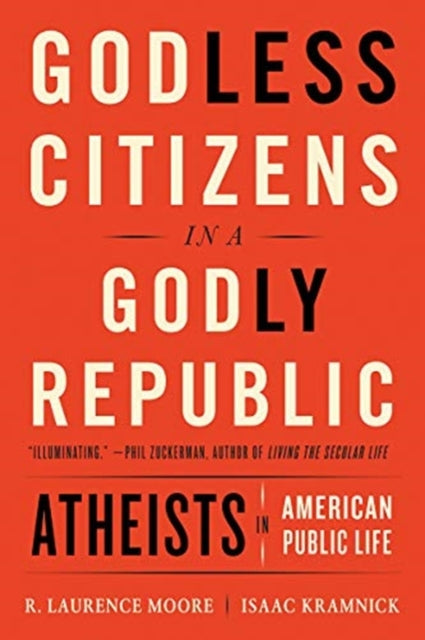
IsaacKramnick,R. LaurenceMoore
Godless Citizens in a Godly Republic: Atheists in American Public Life
Godless Citizens in a Godly Republic: Atheists in American Public Life
💎 Earn 54 Points (£0.54) on this item.
YOU SAVE £2.17
- Condition: Brand new
- UK Delivery times: Usually arrives within 2 - 3 working days
- UK Shipping: Fee starts at £2.39. Subject to product weight & dimension
Bulk ordering. Want 15 or more copies? Get a personalised quote and bigger discounts. Learn more about bulk orders.
Couldn't load pickup availability
- More about Godless Citizens in a Godly Republic: Atheists in American Public Life
The First Amendment protects the separation of church and state, yet atheists have had to fight for their rights. This book explores the history of atheism in America and the legal challenges to laws that made atheists second-class citizens.
Format: Paperback / softback
Length: 256 pages
Publication date: 17 September 2019
Publisher: WW Norton & Co
The First Amendment of the United States Constitution protects the separation of church and state, ensuring that government policies and practices do not favor any particular religion or religious belief. However, despite this constitutional protection, atheists have faced significant legal challenges throughout history in the United States.
In the early days of American history, atheism was not widely accepted or recognized. Many people believed that atheism was a threat to social stability and moral values, and atheists were often subjected to discrimination and persecution. For example, in the 17th century, the Massachusetts Bay Colony passed a law that prohibited atheists from holding public office or practicing their religion.
In the 19th century, the Supreme Court of the United States ruled in the case of Reynolds v. United States that the First Amendment protected the right of individuals to practice their religion without government interference. However, this ruling did not extend to atheists, who were still considered second-class citizens.
Despite these legal challenges, atheists have continued to fight for their rights throughout history. In the 20th century, the American Civil Liberties Union (ACLU) became a major advocate for atheists' rights, filing lawsuits and lobbying for legislation that would protect atheists from discrimination.
One of the most significant legal challenges to atheists' rights was the case of Engel v. Vitale, which was decided by the Supreme Court in 1962. In this case, the ACLU challenged a New York City school board's practice of opening school meetings with a prayer, which violated the First Amendment's prohibition on government establishment of religion. The Supreme Court ruled in favor of the ACLU, holding that the prayer was unconstitutional and that the school board could not promote religion in schools.
Another important legal challenge to atheists' rights was the case of McCreary County v. ACLU, which was decided by the Supreme Court in 2000. In this case, the ACLU challenged a Kentucky county's policy of displaying the Ten Commandments in public schools, which violated the First Amendment's prohibition on government establishment of religion. The Supreme Court ruled in favor of the ACLU, holding that the policy was unconstitutional and that the government could not promote religion in schools.
Despite these legal victories, atheists still face significant challenges in the United States. Many people believe that atheism is a threat to social stability and moral values, and atheists are often subjected to discrimination and prejudice. For example, in 2012, the American Humanist Association reported that 43% of Americans believe that atheists are less moral than people who believe in God, and that atheists are a threat to society.
In conclusion, the First Amendment of the United States Constitution protects the separation of church and state, ensuring that government policies and practices do not favor any particular religion or religious belief. However, atheists have faced significant legal challenges throughout history in the United States, including discrimination and persecution. Despite these challenges, atheists have continued to fight for their rights, and the ACLU has been a major advocate for atheists' rights. The legal challenges to atheists' rights have helped to promote a more inclusive and diverse society, and it is important to continue to protect the rights of atheists and other non-believers.
The First Amendment of the United States Constitution is a cornerstone of American democracy, protecting the right of individuals to practice their religion or lack thereof without government interference. However, despite this constitutional protection, atheists have faced significant legal challenges throughout history in the United States.
In the early days of American history, atheism was not widely accepted or recognized. Many people believed that atheism was a threat to social stability and moral values, and atheists were often subjected to discrimination and persecution. For example, in the 17th century, the Massachusetts Bay Colony passed a law that prohibited atheists from holding public office or practicing their religion.
In the 19th century, the Supreme Court of the United States ruled in the case of Reynolds v. United States that the First Amendment protected the right of individuals to practice their religion without government interference. However, this ruling did not extend to atheists, who were still considered second-class citizens.
Despite these legal challenges, atheists have continued to fight for their rights throughout history. In the 20th century, the American Civil Liberties Union (ACLU) became a major advocate for atheists' rights, filing lawsuits and lobbying for legislation that would protect atheists from discrimination.
One of the most significant legal challenges to atheists' rights was the case of Engel v. Vitale, which was decided by the Supreme Court in 1962. In this case, the ACLU challenged a New York City school board's practice of opening school meetings with a prayer, which violated the First Amendment's prohibition on government establishment of religion. The Supreme Court ruled in favor of the ACLU, holding that the prayer was unconstitutional and that the school board could not promote religion in schools.
Another important legal challenge to atheists' rights was the case of McCreary County v. ACLU, which was decided by the Supreme Court in 2000. In this case, the ACLU challenged a Kentucky county's policy of displaying the Ten Commandments in public schools, which violated the First Amendment's prohibition on government establishment of religion. The Supreme Court ruled in favor of the ACLU, holding that the policy was unconstitutional and that the government could not promote religion in schools.
Despite these legal victories, atheists still face significant challenges in the United States. Many people believe that atheism is a threat to social stability and moral values, and atheists are often subjected to discrimination and prejudice. For example, in 2012, the American Humanist Association reported that 43% of Americans believe that atheists are less moral than people who believe in God, and that atheists are a threat to society.
In conclusion, the First Amendment of the United States Constitution protects the separation of church and state, ensuring that government policies and practices do not favor any particular religion or religious belief. However, atheists have faced significant legal challenges throughout history in the United States, including discrimination and persecution. Despite these challenges, atheists have continued to fight for their rights, and the ACLU has been a major advocate for atheists' rights. The legal challenges to atheists' rights have helped to promote a more inclusive and diverse society, and it is important to continue to protect the rights of atheists and other non-believers.
Weight: 202g
Dimension: 139 x 210 x 12 (mm)
ISBN-13: 9780393357264
This item can be found in:
UK and International shipping information
UK and International shipping information
UK Delivery and returns information:
- Delivery within 2 - 3 days when ordering in the UK.
- Shipping fee for UK customers from £2.39. Fully tracked shipping service available.
- Returns policy: Return within 30 days of receipt for full refund.
International deliveries:
Shulph Ink now ships to Australia, Belgium, Canada, France, Germany, Ireland, Italy, India, Luxembourg Saudi Arabia, Singapore, Spain, Netherlands, New Zealand, United Arab Emirates, United States of America.
- Delivery times: within 5 - 10 days for international orders.
- Shipping fee: charges vary for overseas orders. Only tracked services are available for most international orders. Some countries have untracked shipping options.
- Customs charges: If ordering to addresses outside the United Kingdom, you may or may not incur additional customs and duties fees during local delivery.