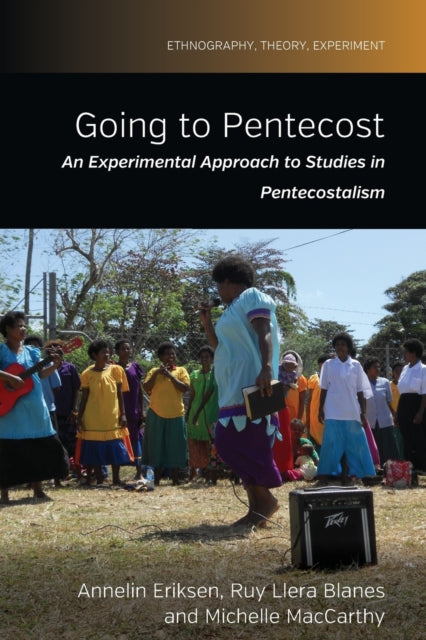
Annelin Eriksen,Ruy Llera Blanes,Michelle MacCarthy
Going to Pentecost: An Experimental Approach to Studies in Pentecostalism
Going to Pentecost: An Experimental Approach to Studies in Pentecostalism
💎 Earn 68 Points (£0.68) on this item.
We can order this item for you. Delivery usually takes about 4 to 6 weeks.
This item is not held in our immediate stock. We will order it for you after checkout.
Estimated delivery: About 4 to 6 weeks
YOU SAVE £2.31
- Condition: Brand new
- UK Delivery times: Usually arrives within 2 - 3 working days
- UK Shipping: Fee starts at £2.39. Subject to product weight & dimension
Bulk ordering. Want 15 or more copies? Get a personalised quote and bigger discounts. Learn more about bulk orders.
Couldn't load pickup availability
- More about Going to Pentecost: An Experimental Approach to Studies in Pentecostalism
Going to Pentecost offers a comparative study of Pentecostalism in Africa and Melanesia, focusing on economy, urban sociality, and healing, recognizing the changing nature of religion in the contemporary world and representing an experimental approach to the study of global religious movements.
Format: Paperback / softback
Length: 238 pages
Publication date: 09 December 2022
Publisher: Berghahn Books
Going to Pentecost: A Comparative Study of Pentecostalism in Africa and Melanesia
Co-authored by three anthropologists with extensive experience studying Pentecostalism in Vanuatu, Angola, and Papua New Guinea/the Trobriand Islands, respectively, Going to Pentecost offers a comparative study of Pentecostalism in Africa and Melanesia, focusing on key issues such as economy, urban sociality, and healing. More than an ordinary comparative book, it recognizes the changing nature of religion in the contemporary world, particularly the emergence of "non-territorial" religion (which is no longer specific to places or cultures) and represents an experimental approach to the study of global religious movements in general and Pentecostalism in particular.
The book begins with a brief overview of Pentecostalism in Africa and Melanesia, highlighting its historical roots, cultural diversity, and global spread. It then delves into the economic aspects of Pentecostalism, examining how it has impacted local economies, created new opportunities, and challenged traditional power structures. The authors also explore the urban sociality of Pentecostalism, examining how it has transformed urban spaces, created new social networks, and influenced social identities.
In the third chapter, the book focuses on the healing practices of Pentecostalism, examining how it has responded to health and illness in different contexts. It explores the role of healing in Pentecostal communities, the use of prayer, faith, and spiritual healing, and the challenges faced by Pentecostal healers. The authors also discuss the impact of Pentecostal healing practices on traditional medical systems and the broader healthcare landscape.
Going to Pentecost also examines the role of Pentecostalism in shaping cultural and social identities. It explores how Pentecostalism has influenced local languages, dress codes, and social norms, and how it has contributed to the formation of new cultural identities. The authors also discuss the challenges faced by Pentecostal communities in maintaining their cultural identities in the face of globalization and cultural change.
One of the key strengths of Going to Pentecost is its experimental approach to the study of global religious movements. The authors use a range of qualitative and quantitative methods to collect data, including interviews, surveys, and ethnographic observations. They also draw on a wide range of theoretical frameworks, including religious studies, anthropology, and sociology, to analyze their findings.
Another strength of the book is its ability to provide a nuanced and complex understanding of Pentecostalism. The authors recognize that Pentecostalism is a diverse and complex movement, with different practices and beliefs across different regions and communities. They avoid simplistic generalizations and provide a detailed and contextualized analysis of the various aspects of Pentecostalism.
However, Going to Pentecost also has some limitations. One of the main limitations is its focus on Africa and Melanesia, which means that it does not provide a comprehensive overview of Pentecostalism in other parts of the world. This can be a significant limitation for researchers and scholars who are interested in studying Pentecostalism in a broader context.
Another limitation is the book's reliance on qualitative data, which can be challenging to analyze and interpret. While qualitative data can provide rich and detailed insights into the experiences and perspectives of individuals, it can also be subjective and biased. The authors acknowledge this limitation and provide a detailed analysis of their methods and the potential biases that may affect their findings.
Despite these limitations, Going to Pentecost is a valuable contribution to the study of Pentecostalism. It offers a comparative study of Pentecostalism in Africa and Melanesia, focusing on key issues such as economy, urban sociality, and healing. It recognizes the changing nature of religion in the contemporary world and represents an experimental approach to the study of global religious movements in general and Pentecostalism in particular.
The book begins with a brief overview of Pentecostalism in Africa and Melanesia, highlighting its historical roots, cultural diversity, and global spread. It then delves into the economic aspects of Pentecostalism, examining how it has impacted local economies, created new opportunities, and challenged traditional power structures. The authors also explore the urban sociality of Pentecostalism, examining how it has transformed urban spaces, created new social networks, and influenced social identities.
In the third chapter, the book focuses on the healing practices of Pentecostalism, examining how it has responded to health and illness in different contexts. It explores the role of healing in Pentecostal communities, the use of prayer, faith, and spiritual healing, and the challenges faced by Pentecostal healers. The authors also discuss the impact of Pentecostal healing practices on traditional medical systems and the broader healthcare landscape.
Going to Pentecost also examines the role of Pentecostalism in shaping cultural and social identities. It explores how Pentecostalism has influenced local languages, dress codes, and social norms, and how it has contributed to the formation of new cultural identities. The authors also discuss the challenges faced by Pentecostal communities in maintaining their cultural identities in the face of globalization and cultural change.
One of the key strengths of Going to Pentecost is its experimental approach to the study of global religious movements. The authors use a range of qualitative and quantitative methods to collect data, including interviews, surveys, and ethnographic observations. They also draw on a wide range of theoretical frameworks, including religious studies, anthropology, and sociology, to analyze their findings.
Another strength of the book is its ability to provide a nuanced and complex understanding of Pentecostalism. The authors recognize that Pentecostalism is a diverse and complex movement, with different practices and beliefs across different regions and communities. They avoid simplistic generalizations and provide a detailed and contextualized analysis of the various aspects of Pentecostalism.
However, Going to Pentecost also has some limitations. One of the main limitations is its focus on Africa and Melanesia, which means that it does not provide a comprehensive overview of Pentecostalism in other parts of the world. This can be a significant limitation for researchers and scholars who are interested in studying Pentecostalism in a broader context.
Another limitation is the book's reliance on qualitative data, which can be challenging to analyze and interpret. While qualitative data can provide rich and detailed insights into the experiences and perspectives of individuals, it can also be subjective and biased. The authors acknowledge this limitation and provide a detailed analysis of their methods and the potential biases that may affect their findings.
Despite these limitations, Going to Pentecost is a valuable contribution to the study of Pentecostalism. It offers a comparative study of Pentecostalism in Africa and Melanesia, focusing on key issues such as economy, urban sociality, and healing. It recognizes the changing nature of religion in the contemporary world and represents an experimental approach to the study of global religious movements in general and Pentecostalism in particular.
Going to Pentecost: A Comparative Study of Pentecostalism in Africa and Melanesia
Co-authored by three anthropologists with extensive experience studying Pentecostalism in Vanuatu, Angola, and Papua New Guinea/the Trobriand Islands, respectively, Going to Pentecost offers a comparative study of Pentecostalism in Africa and Melanesia, focusing on key issues such as economy, urban sociality, and healing. More than an ordinary comparative book, it recognizes the changing nature of religion in the contemporary world – in particular the emergence of “non-territorial” religion (which is no longer specific to places or cultures) – and represents an experimental approach to the study of global religious movements in general and Pentecostalism in particular.
Overview of Pentecostalism in Africa and Melanesia
The book begins with a brief overview of Pentecostalism in Africa and Melanesia, highlighting its historical roots, cultural diversity, and global spread. It then delves into the economic aspects of Pentecostalism, examining how it has impacted local economies, created new opportunities, and challenged traditional power structures. The authors also explore the urban sociality of Pentecostalism, examining how it has transformed urban spaces, created new social networks, and influenced social identities.
Economic Aspects of Pentecostalism
In the third chapter, the book focuses on the economic aspects of Pentecostalism, examining how it has impacted local economies, created new opportunities, and challenged traditional power structures. The authors argue that Pentecostalism has had a significant impact on local economies, particularly in Africa, where it has created new opportunities for entrepreneurship and economic growth. However, they also note that Pentecostalism has also challenged traditional power structures, particularly in rural areas where it has disrupted traditional economic systems and created new forms of inequality.
Urban Sociality of Pentecostalism
In the third chapter, the book focuses on the urban sociality of Pentecostalism, examining how it has transformed urban spaces, created new social networks, and influenced social identities. The authors argue that Pentecostalism has had a significant impact on urban spaces, particularly in Africa, where it has created new social networks and transformed urban landscapes. However, they also note that Pentecostalism has also challenged traditional social structures, particularly in urban areas where it has disrupted traditional social norms and values.
Healing Practices of Pentecostalism
In the third chapter, the book focuses on the healing practices of Pentecostalism, examining how it has responded to health and illness in different contexts. The authors argue that Pentecostalism has a strong emphasis on healing and that it has been successful in addressing health and illness in many communities. However, they also note that Pentecostalism has also faced challenges in terms of the quality of care and the integration of traditional medical systems.
Cultural and Social Identities
In the third chapter, the book examines the role of Pentecostalism in shaping cultural and social identities. The authors argue that Pentecostalism has played a significant role in shaping cultural and social identities, particularly in Africa and Melanesia, where it has created new cultural identities and influenced local languages, dress codes, and social norms. However, they also note that Pentecostalism has also faced challenges in terms of maintaining its cultural identities in the face of globalization and cultural change.
Experimental Approach to the Study of Global Religious Movements
One of the key strengths of Going to Pentecost is its experimental approach to the study of global religious movements. The authors use a range of qualitative and quantitative methods to collect data, including interviews, surveys, and ethnographic observations. They also draw on a wide range of theoretical frameworks, including religious studies, anthropology, and sociology, to analyze their findings. This experimental approach allows the authors to explore the complex and diverse nature of global religious movements in a more nuanced and comprehensive way.
Limitations of the Book
However, Going to Pentecost also has some limitations. One of the main limitations is its focus on Africa and Melanesia, which means that it does not provide a comprehensive overview of Pentecostalism in other parts of the world. This can be a significant limitation for researchers and scholars who are interested in studying Pentecostalism in a broader context.
Another limitation is the book's reliance on qualitative data, which can be challenging to analyze and interpret. While qualitative data can provide rich and detailed insights into the experiences and perspectives of individuals, it can also be subjective and biased. The authors acknowledge this limitation and provide a detailed analysis of their methods and the potential biases that may affect their findings.
Despite these limitations, Going to Pentecost is a valuable contribution to the study of Pentecostalism. It offers a comparative study of Pentecostalism in Africa and Melanesia, focusing on key issues such as economy, urban sociality, and healing. It recognizes the changing nature of religion in the contemporary world and represents an experimental approach to the study of global religious movements in general and Pentecostalism in particular.
Weight: 358g
Dimension: 152 x 228 x 16 (mm)
ISBN-13: 9781800737341
This item can be found in:
UK and International shipping information
UK and International shipping information
UK Delivery and returns information:
- Delivery within 2 - 3 days when ordering in the UK.
- Shipping fee for UK customers from £2.39. Fully tracked shipping service available.
- Returns policy: Return within 30 days of receipt for full refund.
International deliveries:
Shulph Ink now ships to Australia, Belgium, Canada, France, Germany, Ireland, Italy, India, Luxembourg Saudi Arabia, Singapore, Spain, Netherlands, New Zealand, United Arab Emirates, United States of America.
- Delivery times: within 5 - 10 days for international orders.
- Shipping fee: charges vary for overseas orders. Only tracked services are available for most international orders. Some countries have untracked shipping options.
- Customs charges: If ordering to addresses outside the United Kingdom, you may or may not incur additional customs and duties fees during local delivery.