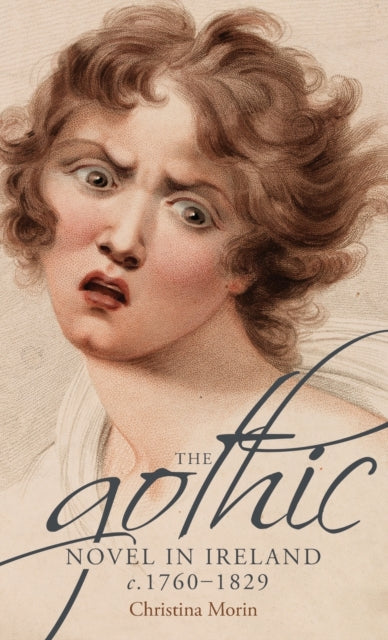
Christina Morin
Gothic Novel in Ireland, c. 1760-1829
Gothic Novel in Ireland, c. 1760-1829
💎 Earn 225 Points (£2.25) on this item.
YOU SAVE £39.86
- Condition: Brand new
- UK Delivery times: Usually arrives within 2 - 3 working days
- UK Shipping: Fee starts at £2.39. Subject to product weight & dimension
Bulk ordering. Want 15 or more copies? Get a personalised quote and bigger discounts. Learn more about bulk orders.
Couldn't load pickup availability
- More about Gothic Novel in Ireland, c. 1760-1829
The gothic novel in Ireland, c. 1760 – 1829, challenges traditional views of the 'rise of the gothic novel' and Irish Romantic literature by re-integrating overlooked works into the history of the literary gothic. Its quantitative and qualitative analysis of neglected Irish texts produces a new map of gothic literary production, positioning Irish works and authors at the center of a new critical paradigm.
Format: Hardback
Length: 248 pages
Publication date: 11 May 2018
Publisher: Manchester University Press
The gothic novel in Ireland, spanning from c. 1760 to 1829, presents a captivating narrative of the evolution of gothic literature during the late eighteenth and early nineteenth centuries. This study challenges prevailing scholarly perspectives that either attribute the emergence of the gothic novel solely to Britain or dismiss it altogether in favor of Irish Romantic literature. Through a rigorous quantitative and qualitative analysis of previously overlooked Irish texts, this study successfully reintegrates a significant body of works into the history of the literary gothic as it unfolded across Ireland, Britain, and Europe between 1760 and 1829. By employing a dual approach, this study generates a novel formal, generic, and ideological map of gothic literary production during this period, effectively placing Irish works and authors at the forefront of a new critical paradigm for understanding both Irish Romantic and gothic literary production.
The gothic genre emerged in Ireland during the late eighteenth century, coinciding with the country's transition from a predominantly agricultural society to an industrial one. This period witnessed a surge in the production of gothic literature, which was influenced by the broader cultural trends of Romanticism and the Gothic Revival. One of the notable features of gothic literature in Ireland was its emphasis on the supernatural and the occult, which were often used to explore the fears and anxieties of the emerging middle class.
One of the most influential gothic novels in Ireland was "The Castle of Otranto" by Horace Walpole, which was published in 1764. The novel tells the story of a young woman named Isabella, who is abducted by a mysterious count and taken to his castle in Italy. The castle is haunted by the spirits of the count's ancestors, and Isabella must navigate a series of supernatural challenges to escape. "The Castle of Otranto" was widely read and celebrated in Ireland, and it helped to establish the gothic genre as a popular form of literature in the country.
Another notable gothic novel in Ireland was "The Abbot" by Walter Scott, which was published in 1820. The novel tells the story of a young monk named Francis who is sent to investigate a series of strange occurrences at a monastery in the Scottish Highlands. The monastery is haunted by the ghost of a former abbot, who has been accused of murdering his brother. Francis must navigate a complex web of religious and supernatural tensions to uncover the truth behind the murders.
In addition to these novels, there were several other gothic works published in Ireland during the late eighteenth and early nineteenth centuries. These included "The Devout Communicant" by Maria Edgeworth, "The Mysteries of Udolpho" by Ann Radcliffe, and "The Well at the World's End" by William Hope Hodgeson.
The gothic genre continued to be popular in Ireland throughout the nineteenth century, with several notable works being published. These included "The Turn of the Screw" by Henry James, "The Picture of Dorian Gray" by Oscar Wilde, and "The Woman in White" by Wilkie Collins.
The gothic novel in Ireland played a significant role in the development of gothic literature as a whole, and it helped to establish Ireland as a significant literary region. The genre's emphasis on the supernatural and the occult, as well as its exploration of the fears and anxieties of the emerging middle class, made it particularly appealing to readers in Ireland and beyond.
In conclusion, the gothic novel in Ireland, spanning from c. 1760 to 1829, offers a compelling account of the development of gothic literature in late-eighteenth and early-nineteenth century Ireland. This study challenges traditional scholarly views and reintegrates a body of overlooked works into the history of the literary gothic as it emerged across Ireland, Britain, and Europe between 1760 and 1829. Through a rigorous quantitative and qualitative analysis, this study generates a novel formal, generic, and ideological map of gothic literary production during this period, effectively placing Irish works and authors at the forefront of a new critical paradigm for understanding both Irish Romantic and gothic literary production.
Weight: 418g
Dimension: 217 x 153 x 23 (mm)
ISBN-13: 9780719099175
UK and International shipping information
UK and International shipping information
UK Delivery and returns information:
- Delivery within 2 - 3 days when ordering in the UK.
- Shipping fee for UK customers from £2.39. Fully tracked shipping service available.
- Returns policy: Return within 30 days of receipt for full refund.
International deliveries:
Shulph Ink now ships to Australia, Belgium, Canada, France, Germany, Ireland, Italy, India, Luxembourg Saudi Arabia, Singapore, Spain, Netherlands, New Zealand, United Arab Emirates, United States of America.
- Delivery times: within 5 - 10 days for international orders.
- Shipping fee: charges vary for overseas orders. Only tracked services are available for most international orders. Some countries have untracked shipping options.
- Customs charges: If ordering to addresses outside the United Kingdom, you may or may not incur additional customs and duties fees during local delivery.