Cher-Ming Tan,Udit Narula,Vivek Sangwan
Graphene and VLSI Interconnects
Graphene and VLSI Interconnects
We can order this item for you. Delivery usually takes about 4 to 6 weeks.
This item is not held in our immediate stock. We will order it for you after checkout.
Estimated delivery: About 4 to 6 weeks
YOU SAVE £10.20
- Condition: Brand new
- UK Delivery times: Usually arrives within 2 - 3 working days
- UK Shipping: Fee starts at £3.89. Subject to product weight & dimension
Bulk ordering. Want 15 or more copies? Get a personalised quote and bigger discounts. Learn more about bulk orders.
Couldn't load pickup availability
- More about Graphene and VLSI Interconnects
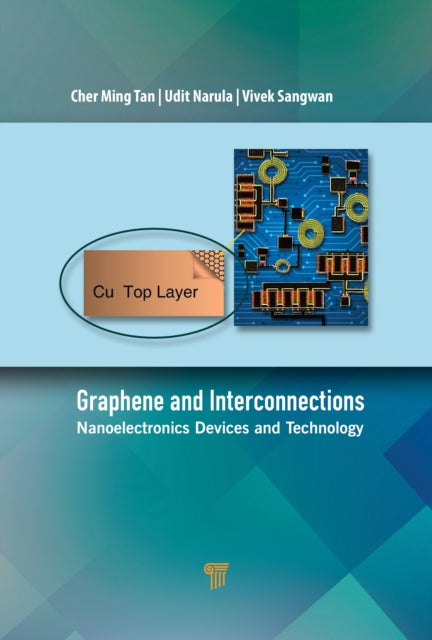
A method to grow high-quality graphene on Cu interconnects is discussed, using statistical design of experiments to optimize graphene growth. A novel graphene growth process and graphene-assisted electroless copper plating are also introduced.
Format: Hardback
Length: 116 pages
Publication date: 25 November 2021
Publisher: Jenny Stanford Publishing
Graphene, a two-dimensional carbon material, has gained significant attention in recent years due to its exceptional properties. Its high electrical conductivity, thermal conductivity, and mechanical strength make it a promising material for various applications, including electronic devices, energy storage, and biomedical devices.
One of the key challenges in using graphene is its growth on metal substrates. While graphene can be grown on various metals, including copper, its growth process is still not fully understood. In this article, we will discuss the method to grow not only graphene over Cu but also allows the reader to know how to optimize graphene growth, using statistical design of experiments, on Cu interconnects in order to obtain good-quality and reliable interconnects.
Provides the basic understanding of graphene–Cu interaction mechanism.
Introduces a novel graphene growth process and graphene-assisted electroless copper plating.
Graphene–Cu Interaction Mechanism:
Graphene and copper have a strong interaction due to their chemical and physical properties. The interface between graphene and copper is characterized by a strong electron-phonon coupling, which leads to the formation of a Dirac cone at the Fermi level. This results in a significant increase in the electrical conductivity of graphene, making it a promising material for electronic devices.
However, the growth of graphene on copper is not straightforward. The presence of impurities in copper can hinder the growth of graphene, and the formation of a copper oxide layer on the surface of copper can also affect the quality of the graphene-Cu interface.
To optimize graphene growth on Cu interconnects, it is important to understand the graphene–Cu interaction mechanism. This can be achieved by conducting various experimental studies, such as scanning electron microscopy (SEM), Raman spectroscopy, and X-ray photoelectron spectroscopy (XPS). These studies can help identify the impurities present in copper and the formation of copper oxide, which can affect graphene growth.
Once the graphene–Cu interaction mechanism is understood, it is possible to develop effective growth processes. One such process is the chemical vapor deposition (CVD) method, which involves the deposition of graphene on copper using a gas mixture of carbon monoxide and hydrogen. This method can produce high-quality graphene with a uniform thickness and good electrical properties.
Another method is the graphene-assisted electroless copper plating method, which involves the deposition of a thin copper layer on graphene using an electroless plating process. This method can produce high-quality graphene-Cu interconnects with a low resistance and good adhesion.
Novel Graphene Growth Process:
In addition to the CVD and graphene-assisted electroless copper plating methods, there is a novel graphene growth process that has been developed. This process involves the growth of graphene on a copper substrate using a chemical vapor deposition (CVD) method followed by a thermal annealing process.
The CVD method involves the deposition of graphene on a copper substrate using a gas mixture of carbon monoxide and hydrogen. The graphene is grown at a high temperature, which results in the formation of a thin layer of graphene with a high density of carbon atoms. The thermal annealing process is then used to heat the graphene to a high temperature, which results in the formation of a graphene layer with a uniform thickness and good electrical properties.
The thermal annealing process is important in this process because it helps to reduce the number of defects in the graphene layer. The defects can affect the electrical properties of the graphene and can also hinder its growth on the copper substrate. By heating the graphene to a high temperature, the defects can be eliminated, and the graphene layer can be grown with a uniform thickness and good electrical properties.
Graphene-Assisted Electroless Copper Plating:
In addition to the CVD and thermal annealing processes, there is a novel graphene-assisted electroless copper plating method that has been developed. This method involves the deposition of a thin copper layer on graphene using an electroless plating process.
The electroless plating process involves the deposition of a copper layer on a metal substrate using a reducing agent, such as sodium hypophosphite. The reducing agent reacts with the metal substrate to form a copper oxide layer, which acts as a catalyst for the deposition of copper. The graphene acts as a substrate for the copper layer, which helps to improve the adhesion and electrical properties of the graphene-Cu interconnect.
The graphene-assisted electroless copper plating method has several advantages over traditional electroless copper plating methods. First, it can produce high-quality graphene-Cu interconnects with a low resistance and good adhesion. Second, it can produce interconnects with a uniform thickness and good electrical properties. Third, it can produce interconnects with a low surface roughness, which can improve the performance of electronic devices.
Conclusion:
In conclusion, graphene has gained significant attention in recent years due to its exceptional properties. However, the growth of graphene on metal substrates, such as copper, is still not fully understood. In this article, we have discussed the method to grow not only graphene over Cu but also allows the reader to know how to optimize graphene growth, using statistical design of experiments, on Cu interconnects in order to obtain good-quality and reliable interconnects.
We have also provided the basic understanding of graphene–Cu interaction mechanism. In addition, we have introduced a novel graphene growth process and graphene-assisted electroless copper plating method. These methods can help to improve the quality and reliability of graphene-Cu interconnects, which are important for various electronic devices.
As graphene technology continues to evolve, it is expected to have a significant impact on various industries, including electronic devices, energy storage, and biomedical devices. By understanding the graphene–Cu interaction mechanism and developing effective growth processes, it is possible to create new and innovative products that will revolutionize the way we live and work.
Weight: 340g
Dimension: 156 x 235 x 14 (mm)
ISBN-13: 9789814877824
UK and International shipping information
UK and International shipping information
We deliver throughout the United Kingdom and to 128 countries and territories worldwide, including the United States, Australia, Canada, Germany, Spain and France.