Shulph Ink
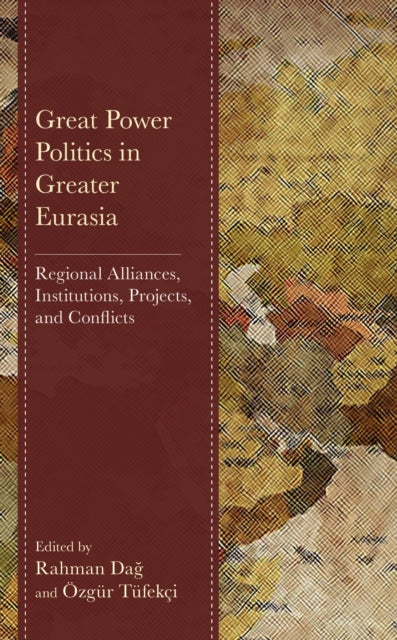
Great Power Politics in Greater Eurasia: Regional Alliances, Institutions, Projects, and Conflicts
Great Power Politics in Greater Eurasia: Regional Alliances, Institutions, Projects, and Conflicts
💎 Earn 424 Points (£4.24) on this item.
We can order this item for you. Delivery usually takes about 4 to 6 weeks.
This item is not held in our immediate stock. We will order it for you after checkout.
Estimated delivery: About 4 to 6 weeks
- Condition: Brand new
- UK Delivery times: Usually arrives within 2 - 3 working days
- UK Shipping: Fee starts at £2.39. Subject to product weight & dimension
Bulk ordering. Want 15 or more copies? Get a personalised quote and bigger discounts. Learn more about bulk orders.
Couldn't load pickup availability
- More about Great Power Politics in Greater Eurasia: Regional Alliances, Institutions, Projects, and Conflicts
Great power politics is a practical reality of world politics, and this book seeks to emphasize the ways it emerges within greater Eurasia. It categorizes the battlegrounds in their power politics with three aspects: national/regional/international conflicts, institutions-alliances, and projects.
Format: Hardback
Length: 240 pages
Publication date: 15 January 2023
Publisher: Lexington Books
Great power politics is a fundamental aspect of world politics that occurs on a daily basis, regardless of the international system in which it takes place. This book aims to highlight the ways in which great power politics emerge within Greater Eurasia. Many researchers believe that China is becoming powerful enough to counterbalance the United States, and there are potential power dynamics among rising powers such as China-India, China-Russia, and China-Japan. In this context, the book categorizes the battlegrounds of great power politics into three aspects: national/regional/international conflicts, institutions-alliances, and projects.
Great power politics is a complex and multifaceted phenomenon that plays a significant role in world politics. It involves the interactions and relationships between major powers, such as the United States, China, Russia, and Japan, as well as other regional and international actors. These interactions can take many forms, including economic, military, political, and cultural.
One of the key aspects of great power politics is the competition for power and influence. Major powers seek to expand their spheres of influence, secure their resources, and maintain their status as global leaders. This competition can lead to conflict, as countries seek to assert their dominance over others.
Great power politics also involves the formation of alliances and institutions. These alliances and institutions can provide stability and security to the international system, but they can also be sources of conflict. For example, the United States and its allies have formed a number of alliances, such as NATO and the European Union, to protect their interests and promote stability in the region. However, these alliances can also be seen as a threat to other countries, particularly those that are not part of the alliance.
In addition to competition and alliances, great power politics also involves the pursuit of projects. These projects can range from infrastructure development to environmental protection to humanitarian aid. These projects can have significant impacts on the world, but they can also be sources of conflict. For example, the construction of a new pipeline can lead to disputes between countries over the rights to the resources that are being transported.
Great power politics is also influenced by a number of factors, including geography, history, and culture. For example, the United States has a strong presence in the Pacific region, while China has a strong presence in the East Asia region. These differences in geography can lead to conflicts over resources and territory.
Great power politics can also have significant impacts on the global economy. For example, the United States and China are the two largest economies in the world, and their economic policies can have a significant impact on the global economy. If these two countries are in conflict, it can lead to a global economic crisis.
Despite the challenges that great power politics presents, it is important to recognize that it is a necessary aspect of world politics. Great powers are responsible for maintaining stability and security in the international system, and they are also responsible for promoting economic growth and development. However, it is important to ensure that great power politics is conducted in a responsible and ethical manner.
One way to ensure that great power politics is conducted in a responsible and ethical manner is to promote dialogue and cooperation. This can be done through a number of means, such as diplomatic negotiations, international organizations, and civil society organizations. By promoting dialogue and cooperation, countries can work together to address common challenges and promote peace and stability.
Another way to ensure that great power politics is conducted in a responsible and ethical manner is to promote transparency and accountability. This can be done through a number of means, such as publishing government budgets, conducting audits, and holding officials accountable for their actions. By promoting transparency and accountability, countries can ensure that their actions are in the best interests of their citizens and the global community.
In conclusion, great power politics is a fundamental aspect of world politics that plays a significant role in shaping the global economy and promoting stability and security. While it presents a number of challenges, it is important to recognize that it is a necessary aspect of world politics. By promoting dialogue and cooperation, promoting transparency and accountability, and conducting great power politics in a responsible and ethical manner, countries can work together to address common challenges and promote peace and stability.
Weight: 508g
Dimension: 158 x 236 x 23 (mm)
ISBN-13: 9781666914115
This item can be found in:
UK and International shipping information
UK and International shipping information
UK Delivery and returns information:
- Delivery within 2 - 3 days when ordering in the UK.
- Shipping fee for UK customers from £2.39. Fully tracked shipping service available.
- Returns policy: Return within 30 days of receipt for full refund.
International deliveries:
Shulph Ink now ships to Australia, Belgium, Canada, France, Germany, Ireland, Italy, India, Luxembourg Saudi Arabia, Singapore, Spain, Netherlands, New Zealand, United Arab Emirates, United States of America.
- Delivery times: within 5 - 10 days for international orders.
- Shipping fee: charges vary for overseas orders. Only tracked services are available for most international orders. Some countries have untracked shipping options.
- Customs charges: If ordering to addresses outside the United Kingdom, you may or may not incur additional customs and duties fees during local delivery.