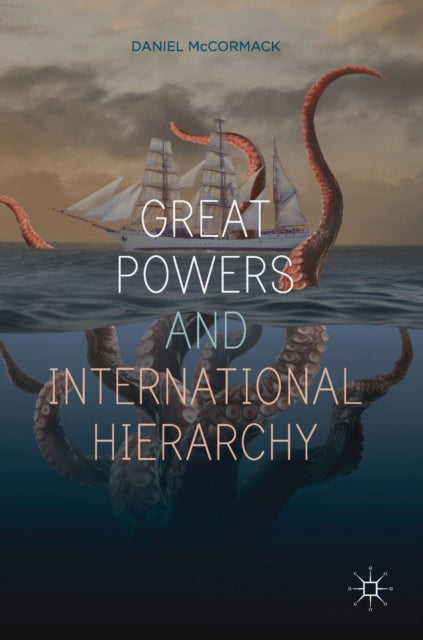
Daniel McCormack
Great Powers and International Hierarchy
Great Powers and International Hierarchy
💎 Earn 268 Points (£2.68) on this item.
We can order this item for you. Delivery usually takes about 4 to 6 weeks.
This item is not held in our immediate stock. We will order it for you after checkout.
Estimated delivery: About 4 to 6 weeks
YOU SAVE £11.31
- Condition: Brand new
- UK Delivery times: Usually arrives within 2 - 3 working days
- UK Shipping: Fee starts at £3.89. Subject to product weight & dimension
Bulk ordering. Want 15 or more copies? Get a personalised quote and bigger discounts. Learn more about bulk orders.
Couldn't load pickup availability
- More about Great Powers and International Hierarchy
This book discusses how great power negotiations over international political settlements both respond to domestic politics within weak states and structure the specific forms that hierarchy takes. It also deduces three sets of hypotheses about hierarchy maintenance, construction, and collapse during the post-war era.
Format: Hardback
Length: 246 pages
Publication date: 29 August 2018
Publisher: Springer International Publishing AG
The prevalence of hierarchical relationships, which govern international and domestic politics, is undeniable. However, our understanding of these dynamics remains limited. This book aims to bridge this gap by employing a two-pronged research approach. Firstly, it delves into the intricate dynamics of great power negotiations over international political settlements, exploring how these negotiations not only respond to domestic politics within weak states but also shape the specific forms that hierarchy takes. Secondly, it presents three sets of hypotheses regarding hierarchy maintenance, construction, and collapse during the post-war era. By developing a coherent theoretical framework of hierarchical politics within weaker states, the author aims to address critical questions such as why the United States frequently allies with autocratic states despite its long-standing relationships with democracies, why autocratic hierarchical relationships necessitate interstate coercion, why some hierarchies culminate in violent conflicts while others end peacefully, and why hierarchical competition sometimes escalates into interstate conflict and sometimes leads to civil unrest.
The study of hierarchical relationships, which play a significant role in both international and domestic politics, is crucial yet understudied. This book aims to address this gap by employing a two-pronged research approach. Firstly, it delves into the intricate dynamics of great power negotiations over international political settlements, exploring how these negotiations not only respond to domestic politics within weak states but also shape the specific forms that hierarchy takes. Secondly, it presents three sets of hypotheses regarding hierarchy maintenance, construction, and collapse during the post-war era. By developing a coherent theoretical framework of hierarchical politics within weaker states, the author aims to address critical questions such as why the United States frequently allies with autocratic states despite its long-standing relationships with democracies, why autocratic hierarchical relationships necessitate interstate coercion, why some hierarchies culminate in violent conflicts while others end peacefully, and why hierarchical competition sometimes escalates into interstate conflict and sometimes leads to civil unrest.
The prevalence of hierarchical relationships, which govern international and domestic politics, is undeniable. However, our understanding of these dynamics remains limited. This book aims to bridge this gap by employing a two-pronged research approach. Firstly, it delves into the intricate dynamics of great power negotiations over international political settlements, exploring how these negotiations not only respond to domestic politics within weak states but also shape the specific forms that hierarchy takes. Secondly, it presents three sets of hypotheses regarding hierarchy maintenance, construction, and collapse during the post-war era. By developing a coherent theoretical framework of hierarchical politics within weaker states, the author aims to address critical questions such as why the United States frequently allies with autocratic states despite its long-standing relationships with democracies, why autocratic hierarchical relationships necessitate interstate coercion, why some hierarchies culminate in violent conflicts while others end peacefully, and why hierarchical competition sometimes escalates into interstate conflict and sometimes leads to civil unrest.
The study of hierarchical relationships, which play a significant role in both international and domestic politics, is crucial yet understudied. This book aims to address this gap by employing a two-pronged research approach. Firstly, it delves into the intricate dynamics of great power negotiations over international political settlements, exploring how these negotiations not only respond to domestic politics within weak states but also shape the specific forms that hierarchy takes. Secondly, it presents three sets of hypotheses regarding hierarchy maintenance, construction, and collapse during the post-war era. By developing a coherent theoretical framework of hierarchical politics within weaker states, the author aims to address critical questions such as why the United States frequently allies with autocratic states despite its long-standing relationships with democracies, why autocratic hierarchical relationships necessitate interstate coercion, why some hierarchies culminate in violent conflicts while others end peacefully, and why hierarchical competition sometimes escalates into interstate conflict and sometimes leads to civil unrest.
The prevalence of hierarchical relationships, which govern international and domestic politics, is undeniable. However, our understanding of these dynamics remains limited. This book aims to bridge this gap by employing a two-pronged research approach. Firstly, it delves into the intricate dynamics of great power negotiations over international political settlements, exploring how these negotiations not only respond to domestic politics within weak states but also shape the specific forms that hierarchy takes. Secondly, it presents three sets of hypotheses regarding hierarchy maintenance, construction, and collapse during the post-war era. By developing a coherent theoretical framework of hierarchical politics within weaker states, the author aims to address critical questions such as why the United States frequently allies with autocratic states despite its long-standing relationships with democracies, why autocratic hierarchical relationships necessitate interstate coercion, why some hierarchies culminate in violent conflicts while others end peacefully, and why hierarchical competition sometimes escalates into interstate conflict and sometimes leads to civil unrest.
The prevalence of hierarchical relationships, which govern international and domestic politics, is undeniable. However, our understanding of these dynamics remains limited. This book aims to bridge this gap by employing a two-pronged research approach. Firstly, it delves into the intricate dynamics of great power negotiations over international political settlements, exploring how these negotiations not only respond to domestic politics within weak states but also shape the specific forms that hierarchy takes. Secondly, it presents three sets of hypotheses regarding hierarchy maintenance, construction, and collapse during the post-war era. By developing a coherent theoretical framework of hierarchical politics within weaker states, the author aims to address critical questions such as why the United States frequently allies with autocratic states despite its long-standing relationships with democracies, why autocratic hierarchical relationships necessitate interstate coercion, why some hierarchies culminate in violent conflicts while others end peacefully, and why hierarchical competition sometimes escalates into interstate conflict and sometimes leads to civil unrest.
The prevalence of hierarchical relationships, which govern international and domestic politics, is undeniable. However, our understanding of these dynamics remains limited. This book aims to bridge this gap by employing a two-pronged research approach. Firstly, it delves into the intricate dynamics of great power negotiations over international political settlements, exploring how these negotiations not only respond to domestic politics within weak states but also shape the specific forms that hierarchy takes. Secondly, it presents three sets of hypotheses regarding hierarchy maintenance, construction, and collapse during the post-war era. By developing a coherent theoretical framework of hierarchical politics within weaker states, the author aims to address critical questions such as why the United States frequently allies with autocratic states despite its long-standing relationships with democracies, why autocratic hierarchical relationships necessitate interstate coercion, why some hierarchies culminate in violent conflicts while others end peacefully, and why hierarchical competition sometimes escalates into interstate conflict and sometimes leads to civil unrest.
Weight: 438g
Dimension: 155 x 218 x 26 (mm)
ISBN-13: 9783319939759
Edition number: 1st ed. 2019
UK and International shipping information
UK and International shipping information
We deliver throughout the United Kingdom and to 128 countries and territories worldwide, including the United States, Australia, Canada, Germany, Spain and France.