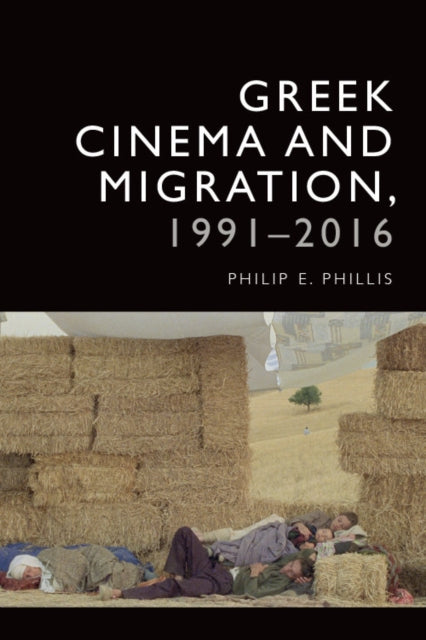
Philip-Edward Phillis
Greek Cinema and Migration, 1991-2016
Greek Cinema and Migration, 1991-2016
💎 Earn 88 Points (£0.88) on this item.
YOU SAVE £5.36
- Condition: Brand new
- UK Delivery times: Usually arrives within 2 - 3 working days
- UK Shipping: Fee starts at £2.39. Subject to product weight & dimension
Bulk ordering. Want 15 or more copies? Get a personalised quote and bigger discounts. Learn more about bulk orders.
Couldn't load pickup availability
- More about Greek Cinema and Migration, 1991-2016
The book explores the cultural impact of immigration in Greece and the challenges faced by contemporary Greek cinema in addressing the logic of Fortress Europe.
Format: Paperback / softback
Publication date: 31 August 2022
Publisher: Edinburgh University Press
The book responds to urgent calls to understand the cultural impact of immigration in Greece and to assess the ability of contemporary Greek cinema to challenge the logic of Fortress Europe.
Immigration has had a significant impact on Greek society, shaping its cultural landscape and contributing to its diversity. The book explores the various ways in which immigration has influenced Greek culture, including its food, music, literature, and visual arts. It also examines the challenges that immigrants face in integrating into Greek society and the role that the media plays in shaping public perceptions of immigration.
Contemporary Greek cinema has emerged as a powerful tool for addressing the complex issues surrounding immigration. The film industry in Greece has been thriving in recent years, producing a wide range of films that explore the experiences of immigrants and their integration into Greek society. These films often challenge the stereotypes and prejudices that exist about immigrants and provide a nuanced and empathetic portrayal of their lives.
One of the most notable examples of contemporary Greek cinema that addresses immigration is the film "The Island." Directed by Yannis Economides, the film tells the story of a group of immigrants who arrive on a small Greek island and struggle to find work and a sense of belonging. The film explores the complexities of the immigrant experience, including the challenges of language barriers, discrimination, and social exclusion. It also highlights the resilience and determination of the immigrants as they navigate their way through the challenges of their new environment.
Another notable film that addresses immigration is "The Cut." Directed by Athina Rachel Tsangari, the film tells the story of a young woman who returns to her hometown after living abroad for many years. The film explores the tensions between the traditional Greek culture and the modern world, particularly the impact of immigration on the local community. It also examines the complexities of identity and belonging, particularly for immigrants who struggle to reconcile their cultural heritage with their new experiences.
In addition to these films, contemporary Greek cinema has also explored the broader social and political implications of immigration. For example, the film "The Foreigner" directed by Kostas Karagiannis explores the issue of illegal immigration and the human rights abuses that immigrants face in Europe. The film highlights the importance of solidarity and compassion towards immigrants and the need for governments to address the root causes of migration.
Overall, the book provides a comprehensive and insightful analysis of the cultural impact of immigration in Greece and the capacity of contemporary Greek cinema to challenge the logic of Fortress Europe. The book is a valuable resource for scholars, students, and anyone interested in understanding the complex issues surrounding immigration and its impact on society.
Immigration has had a profound impact on Greek society, shaping its cultural landscape and contributing to its diversity. The book explores the various ways in which immigration has influenced Greek culture, including its food, music, literature, and visual arts. It also examines the challenges that immigrants face in integrating into Greek society and the role that the media plays in shaping public perceptions of immigration.
Contemporary Greek cinema has emerged as a powerful tool for addressing the complex issues surrounding immigration. The film industry in Greece has been thriving in recent years, producing a wide range of films that explore the experiences of immigrants and their integration into Greek society. These films often challenge the stereotypes and prejudices that exist about immigrants and provide a nuanced and empathetic portrayal of their lives.
One of the most notable examples of contemporary Greek cinema that addresses immigration is the film "The Island." Directed by Yannis Economides, the film tells the story of a group of immigrants who arrive on a small Greek island and struggle to find work and a sense of belonging. The film explores the complexities of the immigrant experience, including the challenges of language barriers, discrimination, and social exclusion. It also highlights the resilience and determination of the immigrants as they navigate their way through the challenges of their new environment.
Another notable film that addresses immigration is "The Cut." Directed by Athina Rachel Tsangari, the film tells the story of a young woman who returns to her hometown after living abroad for many years. The film explores the tensions between the traditional Greek culture and the modern world, particularly the impact of immigration on the local community. It also examines the complexities of identity and belonging, particularly for immigrants who struggle to reconcile their cultural heritage with their new experiences.
In addition to these films, contemporary Greek cinema has also explored the broader social and political implications of immigration. For example, the film "The Foreigner" directed by Kostas Karagiannis explores the issue of illegal immigration and the human rights abuses that immigrants face in Europe. The film highlights the importance of solidarity and compassion towards immigrants and the need for governments to address the root human rights abuses that immigrants face in Europe.
Overall, the book provides a comprehensive and insightful analysis of the cultural impact of immigration in Greece and the capacity of contemporary Greek cinema to challenge the logic of Fortress Europe. The book is a valuable resource for scholars, students, and anyone interested in understanding the complex issues surrounding immigration and its impact on society.
ISBN-13: 9781474437042
This item can be found in:
UK and International shipping information
UK and International shipping information
UK Delivery and returns information:
- Delivery within 2 - 3 days when ordering in the UK.
- Shipping fee for UK customers from £2.39. Fully tracked shipping service available.
- Returns policy: Return within 30 days of receipt for full refund.
International deliveries:
Shulph Ink now ships to Australia, Belgium, Canada, France, Germany, Ireland, Italy, India, Luxembourg Saudi Arabia, Singapore, Spain, Netherlands, New Zealand, United Arab Emirates, United States of America.
- Delivery times: within 5 - 10 days for international orders.
- Shipping fee: charges vary for overseas orders. Only tracked services are available for most international orders. Some countries have untracked shipping options.
- Customs charges: If ordering to addresses outside the United Kingdom, you may or may not incur additional customs and duties fees during local delivery.