KatarzynaJazdzewska
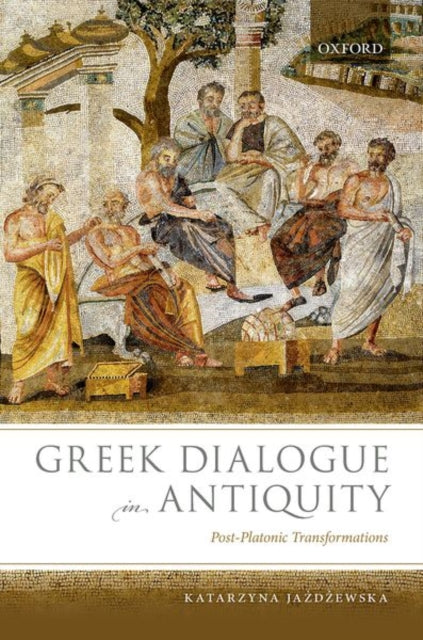
Greek Dialogue in Antiquity: Post-Platonic Transformations
Greek Dialogue in Antiquity: Post-Platonic Transformations
💎 Earn 570 Points (£5.70) on this item.
We can order this item for you. Delivery usually takes about 4 to 6 weeks.
This item is not held in our immediate stock. We will order it for you after checkout.
Estimated delivery: About 4 to 6 weeks
- Condition: Brand new
- UK Delivery times: Usually arrives within 2 - 3 working days
- UK Shipping: Fee starts at £2.39. Subject to product weight & dimension
Bulk ordering. Want 15 or more copies? Get a personalised quote and bigger discounts. Learn more about bulk orders.
Couldn't load pickup availability
- More about Greek Dialogue in Antiquity: Post-Platonic Transformations
Greek Dialogue in Antiquity challenges the narrative of the dialogue's decline and subsequent revival, suggesting that the genre's unbroken continuity from the Classical period to the Roman Empire was revived. It reassesses Post-Platonic and Hellenistic evidence, including papyri fragments, and proposes to reconceptualize the imperial period dialogue as evidence of continuity in this literary tradition.
Format: Hardback
Length: 320 pages
Publication date: 03 February 2022
Publisher: Oxford University Press
Greek Dialogue in Antiquity delves into a comprehensive examination of evidence surrounding Greek dialogue between the mid-fourth century BCE and the mid-first century CE. Spanning approximately from Plato's demise to the passing of Philo of Alexandria, this period has largely remained overlooked and under-researched, with scholars attributing a decline in the dialogue genre to this era and its subsequent revival during the Roman times. However, this book takes a fresh approach by meticulously reassessing Post-Platonic and Hellenistic evidence, including papyri fragments, which have previously been neglected in this context. It challenges the prevailing narrative of the dialogue's decline and subsequent revival, proposing instead a seamless continuity of the genre from the Classical period to the Roman Empire. The book argues that dialogues and texts creatively engaging with dialogic conventions were produced throughout Hellenistic times, and it suggests a reconceptualization of the imperial period dialogue as evidence of continuity rather than a resurgence in this literary tradition.
The study explores a rich tapestry of evidence, including literary works, inscriptions, and archaeological discoveries, to shed light on the evolution and significance of Greek dialogue in antiquity. It emphasizes the diverse range of dialogue genres, including philosophical, literary, and rhetorical, and their contributions to the intellectual and cultural landscape of the time. The book also delves into the social and political contexts in which dialogues were produced, examining the role they played in shaping public discourse, fostering intellectual exchange, and influencing political ideologies.
One of the key arguments put forth by the book is that dialogues and texts creatively interacting with dialogic conventions were composed throughout Hellenistic times. It challenges the notion that the dialogue genre experienced a decline or stagnation during this period and suggests that it continued to evolve and adapt to changing circumstances. The book proposes a reimagining of the imperial period dialogue as evidence of continuity rather than a resurgence, highlighting the ways in which dialogue remained an important literary and cultural form throughout the Roman Empire.
Furthermore, Greek Dialogue in Antiquity offers valuable insights into the relationship between dialogue and other literary genres, such as epic poetry and tragedy. It explores how dialogue influenced the development of these genres and how they, in turn, influenced the dialogue tradition. The book also examines the influence of Greek dialogue on later literary and cultural traditions, such as the Christian Middle Ages and the Renaissance.
In conclusion, Greek Dialogue in Antiquity is a groundbreaking work that significantly contributes to our understanding of Greek dialogue in antiquity. By reassessing evidence and challenging prevailing narratives, the book provides a fresh perspective on the dialogue genre and its enduring significance. It is a must-read for scholars and enthusiasts of ancient Greek literature, culture, and philosophy.
Weight: 632g
Dimension: 240 x 162 x 22 (mm)
ISBN-13: 9780192893352
This item can be found in:
UK and International shipping information
UK and International shipping information
UK Delivery and returns information:
- Delivery within 2 - 3 days when ordering in the UK.
- Shipping fee for UK customers from £2.39. Fully tracked shipping service available.
- Returns policy: Return within 30 days of receipt for full refund.
International deliveries:
Shulph Ink now ships to Australia, Belgium, Canada, France, Germany, Ireland, Italy, India, Luxembourg Saudi Arabia, Singapore, Spain, Netherlands, New Zealand, United Arab Emirates, United States of America.
- Delivery times: within 5 - 10 days for international orders.
- Shipping fee: charges vary for overseas orders. Only tracked services are available for most international orders. Some countries have untracked shipping options.
- Customs charges: If ordering to addresses outside the United Kingdom, you may or may not incur additional customs and duties fees during local delivery.