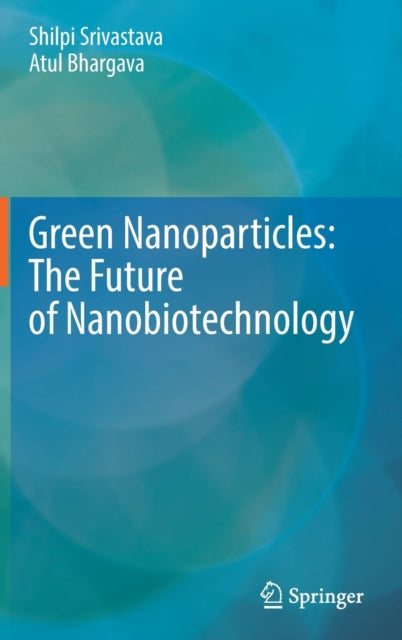
Shilpi Srivastava,Atul Bhargava
Green Nanoparticles: The Future of Nanobiotechnology
Green Nanoparticles: The Future of Nanobiotechnology
💎 Earn 578 Points (£5.78) on this item.
We can order this item for you. Delivery usually takes about 4 to 6 weeks.
This item is not held in our immediate stock. We will order it for you after checkout.
Estimated delivery: About 4 to 6 weeks
YOU SAVE £24.36
- Condition: Brand new
- UK Delivery times: Usually arrives within 2 - 3 working days
- UK Shipping: Fee starts at £3.89. Subject to product weight & dimension
Bulk ordering. Want 15 or more copies? Get a personalised quote and bigger discounts. Learn more about bulk orders.
Couldn't load pickup availability
- More about Green Nanoparticles: The Future of Nanobiotechnology
This book explores the green synthesis of nanoparticles and their applications, covering techniques, characterization, and toxicity. It is a valuable resource for students, researchers, and policymakers in nanobiotechnology and nanoscience.
Format: Hardback
Length: 352 pages
Publication date: 03 December 2021
Publisher: Springer Verlag, Singapore
This comprehensive book delves into the intricate realm of green synthesis of nanoparticles, offering a cutting-edge exploration of the latest advancements in this rapidly evolving field. Providing a thorough and detailed account of developments related to nanoparticle synthesis employing diverse biological systems, including fungi, algae, bryophytes, pteridophytes, gymnosperms, monocotyledons, dicotyledonous (angiosperms), and animal systems, the book also delves into techniques for characterizing these nanoparticles. Furthermore, it critically examines the applications and potential toxicity of biologically synthesized green nanoparticles. With its extensive coverage, this invaluable resource serves as a vital tool for students, researchers, and policymakers engaged in the domains of nanobiotechnology and nanoscience.
Introduction:
Nanoparticles have garnered significant attention in recent years due to their unique properties and vast potential applications. The green synthesis of nanoparticles, which involves the utilization of environmentally friendly and sustainable methods, has emerged as a promising approach to address the growing concerns about environmental pollution and resource depletion. This book aims to provide a comprehensive overview of the fundamental concepts and latest advances in green nanoparticle synthesis, encompassing a wide range of biological systems.
Biological Systems for Nanoparticle Synthesis:
The book begins by exploring the diverse biological systems that can be employed for nanoparticle synthesis. Fungi, algae, bryophytes, pteridophytes, gymnosperms, monocotyledons, dicotyledonous (angiosperms), and animal systems are among the diverse organisms that have been explored for their potential to produce nanoparticles. Each biological system is discussed in detail, highlighting their unique characteristics, advantages, and challenges in nanoparticle synthesis.
Techniques for Characterization of Biologically Synthesized Green Nanoparticles:
Once the nanoparticles have been synthesized, it is essential to characterize them to understand their properties, size, shape, and surface characteristics. The book provides a comprehensive review of various techniques used for characterizing biologically synthesized green nanoparticles, including microscopy, spectroscopy, X-ray diffraction, and other advanced analytical methods. These techniques enable researchers to gain insights into the structure, composition, and properties of the nanoparticles, which are crucial for their potential applications.
Applications and Toxicity of Biologically Synthesized Green Nanoparticles:
The final chapter of the book focuses on the applications and toxicity of biologically synthesized green nanoparticles. It explores the potential uses of these nanoparticles in various fields, such as medicine, agriculture, environmental remediation, and energy storage. Additionally, it examines the safety concerns associated with the exposure of nanoparticles to living organisms and the environment. The book provides a balanced perspective on the applications and toxicity of biologically synthesized green nanoparticles, highlighting the need for further research and development to ensure their safe and sustainable use.
Conclusion:
In conclusion, this book offers a comprehensive and up-to-date exploration of the green synthesis of nanoparticles. It provides a valuable resource for students, researchers, and policymakers working in the field of nanobiotechnology and nanoscience. By presenting a comprehensive overview of developments related to nanoparticle synthesis using diverse biological systems, the book enables readers to gain a deeper understanding of the potential applications and challenges of this emerging field. The book's emphasis on green synthesis and characterization techniques makes it an essential tool for those seeking to contribute to the development of sustainable and environmentally friendly technologies.
Weight: 717g
Dimension: 235 x 155 (mm)
ISBN-13: 9789811671050
Edition number: 1st ed. 2022
UK and International shipping information
UK and International shipping information
We deliver throughout the United Kingdom and to 128 countries and territories worldwide, including the United States, Australia, Canada, Germany, Spain and France.