Shulph Ink
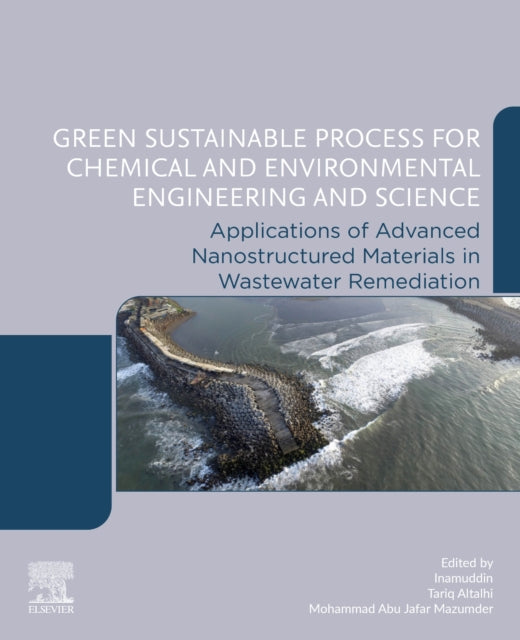
Green Sustainable Process for Chemical and Environmental Engineering and Science: Applications of Advanced Nanostructured Materials in Wastewater Remediation
Green Sustainable Process for Chemical and Environmental Engineering and Science: Applications of Advanced Nanostructured Materials in Wastewater Remediation
💎 Earn 783 Points (£7.83) on this item.
YOU SAVE £23.40
- Condition: Brand new
- UK Delivery times: Usually arrives within 2 - 3 working days
- UK Shipping: Fee starts at £2.39. Subject to product weight & dimension
Bulk ordering. Want 15 or more copies? Get a personalised quote and bigger discounts. Learn more about bulk orders.
Couldn't load pickup availability
- More about Green Sustainable Process for Chemical and Environmental Engineering and Science: Applications of Advanced Nanostructured Materials in Wastewater Remediation
Green Sustainable Process for Chemical and Environmental Engineering and Science: Applications of Advanced Nanostructured Materials in Wastewater Remediation explores the use of nanostructured materials for water remediation, including adsorbents, functionalized magnetic nanomaterials, polymer hydrogels, carbon nanomaterials, biogenic nanoparticles, green chemistry concepts, aqua defluoridation, and advanced remediation techniques. It also highlights the current status and challenges of wastewater treatment using nanomaterials.
Format: Paperback / softback
Length: 354 pages
Publication date: 01 May 2023
Publisher: Elsevier - Health Sciences Division
Green Sustainable Process for Chemical and Environmental Engineering and Science: Applications of Advanced Nanostructured Materials in Wastewater Remediation delves into the recent advancements in the utilization of nanostructured materials for wastewater remediation, encompassing their preparation, characterization, and efficiency in water purification technologies. This comprehensive book offers insightful perspectives on how nanomaterials can serve as the ultimate solution for water purification or address emerging environmental challenges. It explores various aspects of nanomaterials, including adsorbents, functionalized magnetic nanomaterials, nanostructured polymer hydrogels, carbon nanomaterials, biogenic nanoparticles, green chemistry concepts, aqua defluoridation, and advanced remediation techniques. Furthermore, the book provides a comprehensive overview of the current status of wastewater treatment employing nanomaterials, highlighting both the challenges and opportunities for further improvements in this field.
Nanomaterials have emerged as powerful tools in various fields, including environmental remediation, due to their unique properties and capabilities. In the context of wastewater remediation, nanostructured materials have shown promising results in removing contaminants from water sources. One of the key applications of nanomaterials is in the development of adsorbents. Adsorbents are materials that can adsorb or bind to contaminants present in wastewater, making them easier to remove from the water. Nanomaterials, such as graphene oxide, zeolite, and magnetic nanoparticles, have been extensively studied for their adsorption properties and have shown excellent efficiency in removing pollutants such as heavy metals, organic compounds, and pathogens.
Functionalized magnetic nanomaterials have also been utilized in wastewater remediation. Magnetic nanoparticles can be engineered to have specific properties that make them attractive for removing contaminants. For example, magnetic nanoparticles can be functionalized with enzymes or bacteria that can degrade organic pollutants or remove heavy metals. This approach allows for the targeted removal of contaminants while minimizing the use of chemicals or energy-intensive processes.
Nanostructured polymer hydrogels are another promising material for wastewater remediation. These hydrogels are made up of polymer chains that are cross-linked to form a three-dimensional network. Nanomaterials, such as carbon nanotubes, can be incorporated into the polymer hydrogel to enhance its adsorption and degradation properties. Nanostructured polymer hydrogels have shown excellent ability to remove pollutants from water, including heavy metals, organic compounds, and pathogens.
Carbon nanomaterials have also been explored for wastewater remediation. Carbon nanotubes, in particular, have shown great potential in removing contaminants from water due to their high surface area, small size, and unique chemical properties. Carbon nanotubes can be functionalized with specific molecules or enzymes that can degrade organic pollutants or remove heavy metals. This approach allows for the targeted removal of contaminants while minimizing the use of chemicals or energy-intensive processes.
Biogenic nanoparticles, such as bacteria and viruses, have also been used in wastewater remediation. These nanoparticles can be engineered to have specific properties that make them effective in removing contaminants. For example, bacteria can be engineered to produce enzymes that can degrade organic pollutants or viruses can be engineered to infect and degrade pathogens. This approach allows for the natural removal of contaminants while minimizing the use of chemicals or energy-intensive processes.
Green chemistry concepts have also been applied in wastewater remediation using nanomaterials. Green chemistry is a philosophy that emphasizes the use of environmentally friendly and sustainable processes in the synthesis and production of chemicals. Nanomaterials can be used in green chemistry to enhance the efficiency and sustainability of wastewater remediation processes. For example, nanomaterials can be used to improve the efficiency of adsorption processes, reduce the use of chemicals, and minimize the energy consumption of wastewater treatment processes.
Aqua defluoridation is another advanced remediation technique that has been explored using nanomaterials. Aqua defluoridation is a process that involves the removal of fluoride from water sources. Nanomaterials, such as zeolite and activated carbon, have been used to enhance the efficiency of aqua defluoridation processes. Zeolite, in particular, has shown great potential in removing fluoride from water due to its high fluoride adsorption capacity and its ability to regenerate after use.
In conclusion, the use of nanostructured materials in wastewater remediation has shown great promise in improving the efficiency and sustainability of water purification processes. Nanomaterials have the potential to remove contaminants from water sources, including heavy metals, organic compounds, and pathogens, while minimizing the use of chemicals or energy-intensive processes. The development of new and innovative nanomaterials will continue to drive the progress in wastewater remediation and other environmental applications.
Weight: 450g
Dimension: 235 x 191 (mm)
ISBN-13: 9780443187469
This item can be found in:
UK and International shipping information
UK and International shipping information
UK Delivery and returns information:
- Delivery within 2 - 3 days when ordering in the UK.
- Shipping fee for UK customers from £2.39. Fully tracked shipping service available.
- Returns policy: Return within 30 days of receipt for full refund.
International deliveries:
Shulph Ink now ships to Australia, Belgium, Canada, France, Germany, Ireland, Italy, India, Luxembourg Saudi Arabia, Singapore, Spain, Netherlands, New Zealand, United Arab Emirates, United States of America.
- Delivery times: within 5 - 10 days for international orders.
- Shipping fee: charges vary for overseas orders. Only tracked services are available for most international orders. Some countries have untracked shipping options.
- Customs charges: If ordering to addresses outside the United Kingdom, you may or may not incur additional customs and duties fees during local delivery.