DR.Elke Weesjes
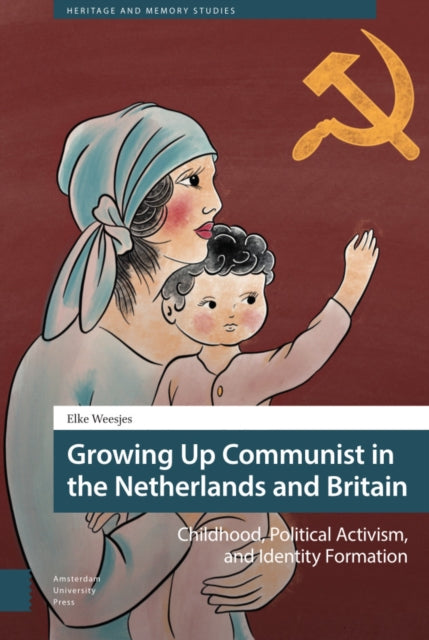
Growing Up Communist in the Netherlands and Britain: Childhood, Political Activism, and Identity Formation
Growing Up Communist in the Netherlands and Britain: Childhood, Political Activism, and Identity Formation
💎 Earn 689 Points (£6.89) on this item.
We can order this item for you. Delivery usually takes about 4 to 6 weeks.
This item is not held in our immediate stock. We will order it for you after checkout.
Estimated delivery: About 4 to 6 weeks
YOU SAVE £8.18
- Condition: Brand new
- UK Delivery times: Usually arrives within 2 - 3 working days
- UK Shipping: Fee starts at £2.39. Subject to product weight & dimension
Bulk ordering. Want 15 or more copies? Get a personalised quote and bigger discounts. Learn more about bulk orders.
Couldn't load pickup availability
- More about Growing Up Communist in the Netherlands and Britain: Childhood, Political Activism, and Identity Formation
Growing Up Communist in the Netherlands and Britain: Childhood, Political Activism, and Identity Formation explores the experiences of communist children in the Netherlands and Britain, highlighting their struggle to establish communities and define their identities within the specific cultural, social, and political frameworks of their countries.
Format: Hardback
Length: 294 pages
Publication date: 25 October 2021
Publisher: Amsterdam University Press
Growing up as a communist in the Netherlands and Britain during the 20th century presented unique challenges and opportunities for individuals seeking to connect with the major social and political movements of the time. Communist parties in both countries emerged from the Second World War with high hopes of playing a significant role in post-war society, owing to their domestic anti-fascist activities and their alignment with the Soviet Union in defeating fascism. However, the Cold War shattered these hopes, isolating communist parties and their members. By examining the accounts of communist children, Weesjes sheds light on their arduous journey to establish communities and define their identities within the distinct cultural, social, and political frameworks of their respective countries.
The Second World War marked a pivotal period for communist parties in Britain and the Netherlands. Following the defeat of fascism, these parties anticipated a significant role in shaping the post-war world. They drew strength from their domestic anti-fascist campaigns and their alliance with the Soviet Union, which played a crucial role in defeating **** Germany. However, the Cold War emerged as a defining feature of the post-war era, casting a shadow over these parties and their aspirations.
The Cold War divided the world into two camps: the United States and its allies, known as the Western Bloc, and the Soviet Union and its allies, known as the Eastern Bloc. The Western Bloc was characterized by capitalist economies, democratic governments, and a focus on individual freedom and human rights. In contrast, the Eastern Bloc was dominated by communist governments, state control of the economy, and a strict adherence to Marxist-Leninist ideology.
The Cold War had a profound impact on communist parties in Britain and the Netherlands. The Soviet Union's dominance in Eastern Europe and its support for communist regimes led to a sense of isolation and marginalization for these parties. They faced opposition from both the Western Bloc and their own governments, which saw them as a threat to national security and stability. As a result, communist parties were banned in many countries, and their members were persecuted and forced into hiding.
Despite these challenges, communist children grew up in a time of political turmoil and social change. They witnessed the rise and fall of communist regimes, the emergence of new political movements, and the struggles for civil rights and social justice. These experiences shaped their perspectives and influenced their political activism.
One of the key themes in Weesjes's book is the struggle of communist children to establish communities and define their identities within the specific cultural, social, and political frameworks of their countries. The Cold War created a sense of isolation and division, making it difficult for communist children to connect with their peers and form meaningful relationships. However, they found ways to overcome these barriers and create networks of support and solidarity.
Communist children often faced discrimination and prejudice from their non-communist peers and their families. They were labeled as "enemies of the state" and subjected to surveillance and harassment. However, they refused to be silenced and used their experiences to raise awareness about the injustices of the Cold War and the need for social change.
In addition to their political activism, communist children also played a significant role in shaping the cultural and intellectual life of their countries. They were involved in literary and artistic movements, advocating for socialist and communist ideals and promoting the works of socialist and communist writers and artists. They also participated in student movements and labor unions.
Despite the challenges they faced, communist children grew up with a sense of pride and purpose. They believed in the ideals of social justice, equality, and the abolition of class struggle. They saw themselves as part of a larger movement, working towards the day to build a better world for themselves and future generations.
In conclusion, growing up as a communist in the Netherlands and Britain during the 20th century was a complex and challenging experience. Communist parties emerged from the Second World War with high hopes of playing a significant role in post-war society, but the Cold War shattered these hopes, isolating them and their members. By examining the accounts of communist children, Weesjes sheds light on their arduous journey to establish communities and define their identities within the distinct cultural, social, and political frameworks of their respective countries. The Cold War divided the world into two camps, with the Western Bloc characterized by capitalist economies, democratic governments, and individual freedom, and the Eastern Bloc dominated by communist governments, state control of the economy, and strict adherence to Marxist-Leninist ideology. Despite the challenges they faced, communist children grew up with a sense of pride and purpose, believing in the ideals of social justice, equality, and the abolition of class struggle. They saw themselves as part of a larger movement, working towards a day to build a better world for themselves and future generations.
Weight: 588g
Dimension: 162 x 241 x 23 (mm)
ISBN-13: 9789463726634
This item can be found in:
UK and International shipping information
UK and International shipping information
UK Delivery and returns information:
- Delivery within 2 - 3 days when ordering in the UK.
- Shipping fee for UK customers from £2.39. Fully tracked shipping service available.
- Returns policy: Return within 30 days of receipt for full refund.
International deliveries:
Shulph Ink now ships to Australia, Belgium, Canada, France, Germany, Ireland, Italy, India, Luxembourg Saudi Arabia, Singapore, Spain, Netherlands, New Zealand, United Arab Emirates, United States of America.
- Delivery times: within 5 - 10 days for international orders.
- Shipping fee: charges vary for overseas orders. Only tracked services are available for most international orders. Some countries have untracked shipping options.
- Customs charges: If ordering to addresses outside the United Kingdom, you may or may not incur additional customs and duties fees during local delivery.