Zuzanna Bogumil
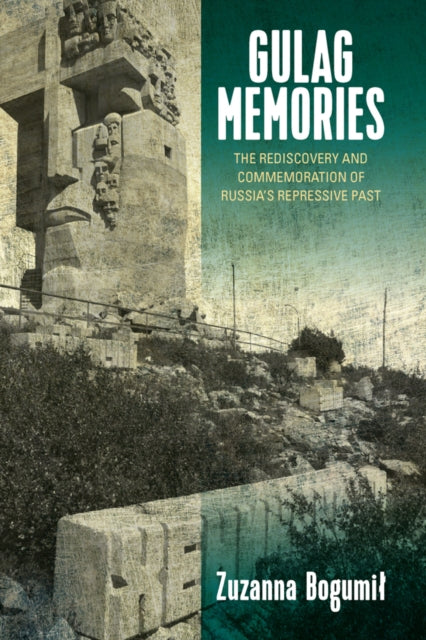
Gulag Memories: The Rediscovery and Commemoration of Russia's Repressive Past
Gulag Memories: The Rediscovery and Commemoration of Russia's Repressive Past
💎 Earn 119 Points (£1.19) on this item.
We can order this item for you. Delivery usually takes about 4 to 6 weeks.
This item is not held in our immediate stock. We will order it for you after checkout.
Estimated delivery: About 4 to 6 weeks
YOU SAVE £4.04
- Condition: Brand new
- UK Delivery times: Usually arrives within 2 - 3 working days
- UK Shipping: Fee starts at £2.39. Subject to product weight & dimension
Bulk ordering. Want 15 or more copies? Get a personalised quote and bigger discounts. Learn more about bulk orders.
Couldn't load pickup availability
- More about Gulag Memories: The Rediscovery and Commemoration of Russia's Repressive Past
This ethnographic study explores the memories of the Gulag in present-day Russian society, focusing on four regions of historical significance. It examines how memories become a social phenomenon, how objects become heritage, and how the human need to create sites of memory has preserved the Gulag.
Format: Paperback / softback
Length: 248 pages
Publication date: 01 April 2022
Publisher: Berghahn Books
Though the Gulag institution was officially closed over half a decade ago, its impact on memory persists in the post-socialist era. This ethnographic study adopts a holistic and comprehensive approach to understanding the memories of the Gulag, particularly the language of commemoration that surrounds it in contemporary Russian society. It delves into four regions of significant historical importance: the Solovetsky Islands, the Komi Republic, the Perm region, and Kolyma. Through meticulous exploration, the study seeks to unravel how memories emerge as a social phenomenon, how objects acquire heritage status, and how the human urge to create memory sites has uniquely preserved the Gulag in specific ways today.
The Solovetsky Islands, located in the Arctic Ocean, hold a particularly poignant connection to the Gulag. These islands were once home to a forced labor camp where thousands of political prisoners were exiled during the Soviet era. Today, the remnants of the camp serve as a haunting reminder of the Gulag's brutal history. Visitors can explore the dilapidated buildings, walk through the former barracks, and witness the remnants of the prisoners' lives. The Solovetsky Islands are a testament to the human resilience and the enduring power of memory.
The Komi Republic, in northern Russia, is another region with a rich history of Gulag labor. The region was known for its harsh winters and difficult terrain, making it an ideal location for the construction of Gulag camps. The Komi Republic's history of forced labor and political repression is deeply intertwined with the Gulag, and the region continues to bear the scars of this past. Today, visitors can explore the former Gulag camps, visit memorial sites, and learn about the lives of the prisoners who were exiled there.
The Perm region, located in western Russia, was also a site of significant Gulag activity. The region was known for its rich natural resources, including oil and timber, which were exploited by the Soviet government to fuel its industrialization efforts. However, the exploitation of these resources also led to the forced labor of millions of prisoners, many of whom were sent to Gulag camps in the Perm region. Today, visitors can explore the former Gulag camps, visit memorial sites, and learn about the lives of the prisoners who were exiled there.
Kolyma, in northeastern Russia, was one of the largest and most notorious Gulag camps. The camp was built in the 1930s to extract gold and other minerals from the region's vast deposits. Conditions in Kolyma were harsh, with prisoners subjected to long hours of labor, inadequate food, and extreme temperatures. Thousands of prisoners died in Kolyma, and the camp remains a symbol of the Gulag's darkest days. Today, visitors can explore the former Gulag camps, visit memorial sites, and learn about the lives of the prisoners who were exiled there.
The language of commemoration surrounding the Gulag is a crucial aspect of this ethnographic study. In present-day Russian society, there is a growing recognition of the Gulag's historical significance and the need to commemorate its victims. Memorial ceremonies, exhibitions, and public discussions are increasingly being held to honor the memory of the Gulag's victims and to raise awareness about the ongoing human rights abuses in Russia.
However, the language of commemoration also presents challenges. There are differing perspectives on the Gulag's history and its victims, and there are tensions between different groups and communities. Some argue that the Gulag was a necessary tool of political repression and that its victims deserved their fate. Others argue that the Gulag was a human rights violation and that its victims should be remembered and honored for their suffering.
Despite these challenges, the language of commemoration surrounding the Gulag continues to evolve and grow. It is a testament to the human capacity for healing and reconciliation, and it serves as a reminder of the importance of remembering and addressing the past to prevent future atrocities.
In conclusion, the Gulag institution may have been officially closed over half a decade ago, but its impact on memory persists in the post-socialist era. This ethnographic study takes a holistic and comprehensive approach to understanding the memories of the Gulag, particularly the language of commemoration that surrounds it in contemporary Russian society. Through meticulous exploration of four regions of significant historical importance, the study seeks to unravel how memories emerge as a social phenomenon, how objects acquire heritage status, and how the human urge to create memory sites has uniquely preserved the Gulag in specific ways today. The Solovetsky Islands, the Komi Republic, the Perm region, and Kolyma serve as poignant reminders of the Gulag's brutal history and the human resilience and suffering that it engendered. The language of commemoration surrounding the Gulag is a testament to the human capacity for healing and reconciliation, and it serves as a reminder of the importance of remembering and addressing the past to prevent future atrocities.
ISBN-13: 9781800734371
UK and International shipping information
UK and International shipping information
UK Delivery and returns information:
- Delivery within 2 - 3 days when ordering in the UK.
- Shipping fee for UK customers from £2.39. Fully tracked shipping service available.
- Returns policy: Return within 30 days of receipt for full refund.
International deliveries:
Shulph Ink now ships to Australia, Belgium, Canada, France, Germany, Ireland, Italy, India, Luxembourg Saudi Arabia, Singapore, Spain, Netherlands, New Zealand, United Arab Emirates, United States of America.
- Delivery times: within 5 - 10 days for international orders.
- Shipping fee: charges vary for overseas orders. Only tracked services are available for most international orders. Some countries have untracked shipping options.
- Customs charges: If ordering to addresses outside the United Kingdom, you may or may not incur additional customs and duties fees during local delivery.