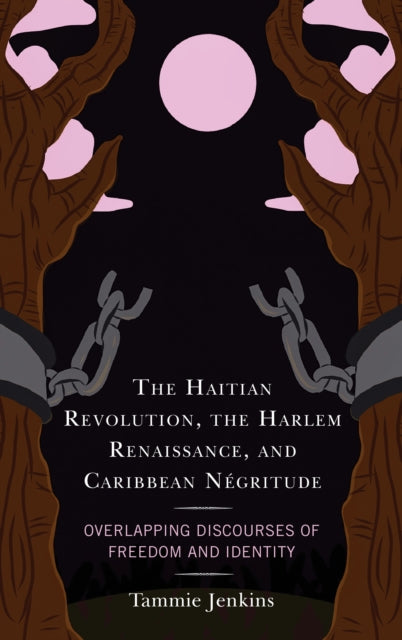
Tammie Jenkins
Haitian Revolution, the Harlem Renaissance, and Caribbean Negritude: Overlapping Discourses of Freedom and Identity
Haitian Revolution, the Harlem Renaissance, and Caribbean Negritude: Overlapping Discourses of Freedom and Identity
💎 Earn 451 Points (£4.51) on this item.
We can order this item for you. Delivery usually takes about 4 to 6 weeks.
This item is not held in our immediate stock. We will order it for you after checkout.
Estimated delivery: About 4 to 6 weeks
- Condition: Brand new
- UK Delivery times: Usually arrives within 2 - 3 working days
- UK Shipping: Fee starts at £3.89. Subject to product weight & dimension
Bulk ordering. Want 15 or more copies? Get a personalised quote and bigger discounts. Learn more about bulk orders.
Couldn't load pickup availability
- More about Haitian Revolution, the Harlem Renaissance, and Caribbean Negritude: Overlapping Discourses of Freedom and Identity
In the book "In The Haitian Revolution, the Harlem Renaissance, and Caribbean Negritude: Overlapping Discourses of Freedom and Identity," Tammie Jenkins explores how the concepts of freedom and identity developed during the Haitian Revolution were reinvigorated in Harlem Renaissance texts and contributed to the development of Caribbean Negritude. She analyzes the precipitating events of the Haitian Revolution and how they connected to Harlem Renaissance publications by Eric D. Walrond and Joel Augustus "J.A." Rogers. Jenkins traces these movements to Paris, where black American expatriates, Harlem Renaissance members, and Francophones from Africa and the Caribbean gathered to share their experiences of racism, oppression, and disenfranchisement. Through these dialogical exchanges, Jenkins investigates how the Haitian Revolution and Harlem Renaissance principles influenced the modernization of Caribbean Negritude's development.
Format: Hardback
Length: 160 pages
Publication date: 10 August 2021
Publisher: Lexington Books
In her groundbreaking work, "In The Haitian Revolution, the Harlem Renaissance, and Caribbean Negritude: Overlapping Discourses of Freedom and Identity," Tammie Jenkins explores the profound connections between the ideas of freedom and identity cultivated during the Haitian Revolution and their reinvigoration in Harlem Renaissance texts. Jenkins delves into the precipitating events that led to the Haitian Revolution and establishes a link between these historical events and the influential Harlem Renaissance publications by Eric D. Walrond and Joel Augustus "J.A." Rogers. Through meticulous analysis, Jenkins traces the movements of black American expatriates, Harlem Renaissance members, and Francophones from Africa and the Caribbean to Paris, where they gathered at Le Salon Clamart on a weekly basis to share their personal experiences with racism, oppression, and disenfranchisement in their home countries. These dialogical exchanges serve as the foundation for Jenkins's insightful investigation into how the principles of the Haitian Revolution and the Harlem Renaissance influenced the modernization of Caribbean Negritude's development.
The Harlem Renaissance, a cultural and artistic movement that emerged in the mid-19th century in New York City, was a vibrant and transformative period that marked a significant shift in African American identity and culture. During this time, African Americans sought to reclaim their cultural heritage and assert their place in society after centuries of oppression and marginalization. The Renaissance was characterized by a renewed interest in African art, literature, music, and culture, as well as a celebration of African American achievements and contributions to society.
One of the key themes of the Harlem Renaissance was the concept of freedom. African Americans during this period were acutely aware of the limitations and restrictions imposed on them by white society, and they sought to break free from these constraints and forge their own path. The Renaissance was a time of great creativity and innovation, as African Americans explored new artistic forms and expressed their ideas and experiences in ways that had never been done before.
One of the most notable figures of the Harlem Renaissance was Langston Hughes. Hughes was a poet, novelist, and playwright who emerged as a leading voice of the African American community during the Renaissance. His works, such as "The Harlem Renaissance," "The Big Sea," and "I, Too, Sing America," celebrated the beauty and richness of African American culture and explored the themes of freedom, identity, and social justice.
Another important figure of the Harlem Renaissance was W.E.B. Du Bois. Du Bois was a sociologist, writer, and civil rights activist who played a critical role in shaping the African American experience during the 20th century. He was the founder of the NAACP and was a leading advocate for civil rights and social equality. Du Bois's works, such as "The Souls of Black Folk" and "The Color Line," challenged the dominant narratives of white supremacy and advocated for the rights and dignity of African Americans.
The Harlem Renaissance also had a significant impact on the development of Caribbean Negritude. Caribbean Negritude was a literary and cultural movement that emerged in the late 19th and early 20th centuries in response to the experiences of African Americans in the Caribbean. Caribbean Negritude writers and artists sought to reclaim their cultural heritage and assert their place in the world, often drawing on the rich traditions and experiences of their ancestors.
One of the key figures of Caribbean Negritude was Aimé Césaire. Césaire was a poet, playwright, and political activist from Martinique who emerged as a leading voice of the Caribbean Negritude movement. His works, such as "A Season in the Congo" and "Discourse on Colonialism," explored the themes of colonialism, identity, and the struggle for liberation.
Caribbean Negritude also had a significant impact on the development of African American literature and culture. African American writers and artists during this period were influenced by the ideas and experiences of Caribbean Negritude, and they sought to incorporate these themes into their own work. This led to the emergence of a new genre of African American literature, known as the Harlem Renaissance, which was characterized by a renewed interest in African American history, culture, and identity.
In conclusion, the Harlem Renaissance, the Haitian Revolution, and Caribbean Negritude were three interconnected movements that shaped the African American experience and contributed to the development of a new sense of identity and freedom. The Harlem Renaissance celebrated the beauty and richness of African American culture and explored the themes of freedom, identity, and social justice. The Haitian Revolution was a struggle for liberation and self-determination that led to the establishment of the first black-led nation in the world. Caribbean Negritude was a response to the experiences of African Americans in the Caribbean and sought to reclaim their cultural heritage and assert their place in the world. These movements were interconnected and shaped the course, African American experience and contributed to the development of a new sense of identity and freedom.
Weight: 422g
Dimension: 228 x 163 x 19 (mm)
ISBN-13: 9781793633781
UK and International shipping information
UK and International shipping information
We deliver throughout the United Kingdom and to 128 countries and territories worldwide, including the United States, Australia, Canada, Germany, Spain and France.