Shulph Ink
Handbook Integrated Care
Handbook Integrated Care
💎 Earn 849 Points (£8.49) on this item.
YOU SAVE £30.08
- Condition: Brand new
- UK Delivery times: Usually arrives within 2 - 3 working days
- UK Shipping: Fee starts at £2.39. Subject to product weight & dimension
Bulk ordering. Want 15 or more copies? Get a personalised quote and bigger discounts. Learn more about bulk orders.
Couldn't load pickup availability
- More about Handbook Integrated Care
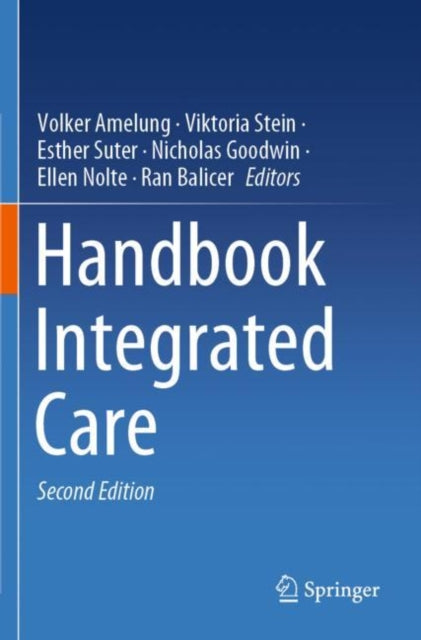
This handbook provides insights into integrated care, emphasizing patient-orientation, efficiency, and quality through management approaches. It highlights international best practices and showcases how integrated care can work in various health systems. The second edition includes new chapters on people-centredness, complexity theories, and evaluation methods, offering practical tools and experiences from different countries. It is a valuable resource for health policymakers and practitioners.
Format: Paperback / softback
Length: 1212 pages
Publication date: 14 July 2022
Publisher: Springer Nature Switzerland AG
This comprehensive handbook delves into the core principles and concepts of integrated care, providing a multi-disciplinary perspective with a strong emphasis on patient-centeredness, efficiency, and quality. By applying widely recognized management approaches to the field of healthcare, it seeks to enhance the overall delivery of care. Moreover, the handbook showcases international best practices and demonstrates how integrated care can effectively function within diverse health systems.
In many healthcare systems worldwide, the delivery of healthcare and social care is characterized by fragmentation and complexity. As a result, there has been a significant focus on integrated care in recent international discussions in health policy and health management. The term "integrated" recognizes the multifaceted nature of patients' needs and aims to address them by considering both health and social care aspects. At the core of this approach lies the coordination of processes to achieve seamless and effective outcomes.
The second edition of this handbook introduces several new chapters, including those on people-centeredness, complexity theories, and evaluation methods. It also includes additional management tools and a wealth of experiences from various countries and localities. This edition serves as an essential resource for health policymakers seeking inspiration for legislation and for practitioners involved in the management of public health services who wish to learn from successful practices.
By integrating health and social care, integrated care aims to improve patient outcomes, reduce healthcare costs, and enhance the overall well-being of individuals and communities. It recognizes that healthcare and social care services are interconnected and that a holistic approach is necessary to meet the complex needs of patients. Through the application of management principles and the adoption of best practices, integrated care seeks to create a seamless and coordinated system that delivers high-quality care to all patients, regardless of their age, medical condition, or social background.
One of the key principles of integrated care is patient-centeredness, which involves putting the patient at the center of all care decisions and interactions. This approach recognizes that patients have unique needs and preferences, and it aims to provide care that is tailored to their individual needs and circumstances. Patient-centered care involves active engagement with patients, their families, and their care teams, and it involves collaboration and communication across different healthcare providers and disciplines.
Another important principle of integrated care is efficiency, which involves optimizing the use of resources and improving the productivity of healthcare services. This includes the use of technology, standardized processes, and effective workforce management to ensure that care is delivered in a timely and cost-effective manner. Efficiency also involves reducing waste and duplication of services, and it involves working towards
collaboratively with other healthcare providers and stakeholders to ensure that resources are used in the most effective and efficient way possible.
Quality is another key principle of integrated care, which involves delivering care that is safe, effective, patient-centered, and timely. This includes the use of evidence-based practices, quality improvement initiatives, and patient-reported outcomes to measure and monitor the quality of care. Quality also involves promoting patient safety and reducing the risk of harm to patients, and it involves working collaboratively
collaboratively with other healthcare providers and stakeholders to ensure that patients receive care that is of the highest
highest quality.
In addition to these key principles, integrated care also involves a number of other important concepts and concepts, including the following
Collaboration and coordination: Integrated care involves collaboration and coordination between healthcare providers and social care providers to ensure that patients receive care that is seamless and coordinated across different settings and settings. This includes working closely with primary care providers, secondary care providers, community care providers, mental health providers, and other stakeholders to ensure that patients receive care that is integrated and coordinated across different settings and settings.
Communication and information sharing: Integrated care involves effective communication and information sharing between healthcare providers and social care providers to ensure that patients receive care that is integrated and coordinated across different settings and settings. This includes the use of electronic health records, shared care plans, and other forms of communication to ensure that patients receive care that is integrated and coordinated across different settings and settings.
Person-centered care: Integrated care involves person-centered care, which involves putting the person at the center of all care decisions and interactions. This involves working closely with patients and their families to understand their needs and preferences and working closely with them to develop a care plan that is tailored to their individual needs and circumstances. Person-centered care involves working closely with patients and their families to understand their needs and preferences and working closely with them to develop a care plan that is tailored to their individual needs and circumstances.
Complexity theories: Integrated care involves complexity theories, which involve understanding the complex and interconnected care needs of patients and working closely with them to develop a care plan that is tailored to their individual needs and circumstances. This involves working closely with patients and their families to understand their needs and preferences and working closely with them to develop a care plan that is tailored to their individual needs and circumstances.
Evaluation methods: Integrated care involves evaluation methods, which involve measuring and monitoring the effectiveness
The second edition of this handbook introduces several new chapters, including those on people-centeredness, complexity theories, and evaluation methods. It also includes additional management tools and a wealth of experiences from various countries and localities. This edition serves as an essential resource for health policymakers.
By integrating health and social care, integrated care aims to improve patient outcomes, reduce healthcare costs, and enhance the overall well-being of individuals and communities. It recognizes that healthcare and social care services are interconnected and that a holistic approach is necessary to meet the complex needs of patients. Through the application of management principles.
Another important principle of integrated care is efficiency, which involves optimizing the use of resources and improving the productivity of healthcare services. This includes the use of technology, standardized processes, and effective workforce management to ensure that care is delivered in a timely and cost-effective manner. Efficiency also involves reducing waste and duplication of services, and it involves working collaboratively
Collaboration and coordination: Integrated care involves collaboration and coordination between healthcare providers and social care providers to ensure that patients receive care that is seamless and coordinated across different settings and settings. This includes working closely with primary care providers, secondary care providers, community care providers, mental health providers, and other stakeholders to ensure that patients receive care that is integrated and coordinated across different settings and settings.
Communication and information sharing: Integrated care involves effective communication and information sharing between healthcare providers and social care providers to ensure that patients receive care that is integrated and coordinated across different settings and settings. This includes the use of electronic health records, shared care plans, and other forms of communication to ensure that patients receive care that is integrated and coordinated across different settings and settings.
Person-centered care: Integrated care involves person-centered care, which involves putting the person at the center of all care decisions and interactions. This involves working closely with patients and their families to understand their needs and preferences and working closely with them to develop a care plan that is tailored to their individual needs and circumstances. Person-centered care involves working closely with patients and their families to understand their needs and preferences and working closely with them to develop a care plan that is tailored to their individual needs and circumstances.
Complexity theories: Integrated care involves complexity theories, which involve understanding the complex and care needs of patients and working closely with them to develop a care plan that is tailored to their individual needs and circumstances. This involves working closely with patients and their families to understand their needs and preferences and working closely with them to develop a care plan that is tailored to their individual needs and circumstances.
Evaluation methods: Integrated care involves evaluation methods, which involve measuring and monitoring the
The second edition of this handbook, introduces several new chapters, including those on people-centeredness, complexity theories, and evaluation methods. It also includes additional management tools and a wealth of experiences from various countries and localities. This edition serves as an essential resource for health policymakers.
By integrating health and social care, integrated care aims to improve patient outcomes, reduce healthcare costs, and enhance the overall well-being of individuals and communities. It recognizes that healthcare and social care services are interconnected and that a holistic approach is necessary to meet the complex needs of patients. Through the application of management principles.
Another important principle of integrated care is efficiency, which involves optimizing the use of resources and improving the productivity of healthcare services. This includes the use of technology, standardized processes, and effective workforce management to ensure that care is delivered in a timely and cost-effective manner. Efficiency also involves reducing waste and duplication of services, and it involves working
Collaboration and coordination: Integrated care involves collaboration and coordination between healthcare providers and social care providers to ensure that patients receive care that is seamless and coordinated across different settings and settings. This includes working closely with primary care providers, secondary care providers, community care providers, mental health providers, and other stakeholders to ensure that patients receive care that is integrated and coordinated across different settings and settings.
Communication and information sharing: Integrated care involves effective communication and information sharing between healthcare providers and social care providers to ensure that patients receive care that is integrated and coordinated across different settings and settings. This includes the use of electronic health records, shared care plans, and other forms of communication to ensure that patients receive care that is integrated and coordinated across different settings and settings.
Person-centered care: Integrated care involves person-centered care, which involves putting the person at the center of all care decisions and interactions. This involves working closely with patients and their families to understand their needs and preferences and working closely with them to develop a care plan that is tailored to their individual needs and circumstances. Person-centered care involves working closely with patients and their families to understand their needs and preferences and working closely with them to develop a care plan that is tailored to their individual needs and circumstances.
Complexity theories: Integrated care involves complexity theories, which involve understanding the complex and care needs of patients and working closely with them to develop a care plan that is tailored to their individual needs and circumstances. This involves working closely with patients and their families to understand their needs and preferences and working closely with them to develop a care plan that is tailored to their individual needs and circumstances.
Evaluation methods: Integrated care involves evaluation methods, which involve measuring and monitoring the
The second edition of this handbook introduces several new chapters, including those on people-centeredness, complexity theories, and evaluation methods. It also includes additional management tools and a wealth of experiences from various countries and localities. This edition serves as an essential resource for health policymakers.
By integrating health and social care, integrated care aims to improve patient outcomes, reduce healthcare costs, and enhance the overall well-being of individuals and communities. It recognizes that healthcare and social care services are interconnected and that a holistic approach is necessary to meet the complex needs of patients. Through the application of management principles.
Another important principle of integrated care is efficiency, which involves optimizing the use of resources and improving the productivity of healthcare services. This includes the use of technology, standardized processes, and effective workforce management to ensure that care is delivered in a timely and cost-effective manner. Efficiency also involves reducing waste and duplication of services, and it involves working
Collaboration and coordination: Integrated care involves collaboration and coordination between healthcare providers and social care providers to ensure that patients receive care that is seamless and coordinated across different settings and settings. This includes working closely with primary care providers, secondary care providers, community care providers, mental health providers, and other stakeholders to ensure that patients receive care that is integrated and coordinated across different settings and settings.
Communication and information sharing: Integrated care involves effective communication and information sharing between healthcare providers and social care providers to ensure that patients receive care that is integrated and coordinated across different settings and settings. This includes the use of electronic health records, shared care plans, and other forms of communication to ensure that patients receive care that is integrated and coordinated across different settings and settings.
Person-centered care: Integrated care involves person-centered care, which involves putting the person at the center of all care decisions and interactions. This involves working closely with patients and their families to understand their needs and preferences and working closely with them to develop a care plan that is tailored to their individual needs and circumstances. Person-centered care involves working closely with patients and their families to understand their needs and preferences and working closely with them to develop a care plan that is tailored to their individual needs and circumstances.
Complexity theories: Integrated care involves complexity theories, which involve understanding the complex and care needs of patients and working closely with them to develop a care plan that is tailored to their individual needs and circumstances. This involves working closely with patients and their families to understand their needs and preferences and working closely with them to develop a care plan that is tailored to their individual needs and circumstances.
Evaluation methods: Integrated care involves evaluation methods, which involve measuring and monitoring the
Weight: 1881g
Dimension: 235 x 155 (mm)
ISBN-13: 9783030692636
Edition number: 2nd ed. 2021
UK and International shipping information
UK and International shipping information
UK Delivery and returns information:
- Delivery within 2 - 3 days when ordering in the UK.
- Shipping fee for UK customers from £2.39. Fully tracked shipping service available.
- Returns policy: Return within 30 days of receipt for full refund.
International deliveries:
Shulph Ink now ships to Australia, Belgium, Canada, France, Germany, Ireland, Italy, India, Luxembourg Saudi Arabia, Singapore, Spain, Netherlands, New Zealand, United Arab Emirates, United States of America.
- Delivery times: within 5 - 10 days for international orders.
- Shipping fee: charges vary for overseas orders. Only tracked services are available for most international orders. Some countries have untracked shipping options.
- Customs charges: If ordering to addresses outside the United Kingdom, you may or may not incur additional customs and duties fees during local delivery.