PradeepVenkatesh
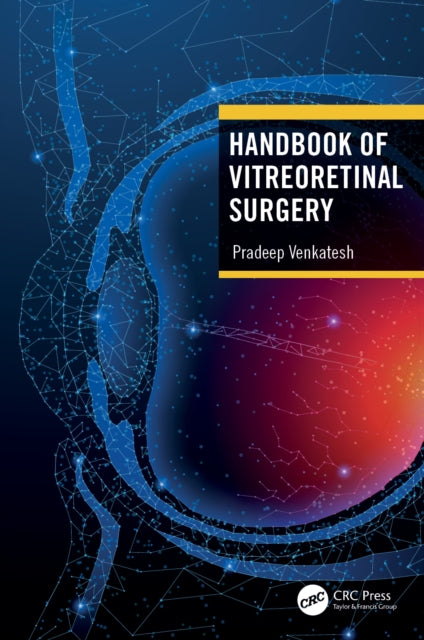
Handbook of Vitreoretinal Surgery
Handbook of Vitreoretinal Surgery
💎 Earn 991 Points (£9.91) on this item.
We can order this item for you. Delivery usually takes about 4 to 6 weeks.
This item is not held in our immediate stock. We will order it for you after checkout.
Estimated delivery: About 4 to 6 weeks
YOU SAVE £11.76
- Condition: Brand new
- UK Delivery times: Usually arrives within 2 - 3 working days
- UK Shipping: Fee starts at £2.39. Subject to product weight & dimension
Bulk ordering. Want 15 or more copies? Get a personalised quote and bigger discounts. Learn more about bulk orders.
Couldn't load pickup availability
- More about Handbook of Vitreoretinal Surgery
Recent advancements in vitreoretinal surgery, such as 3-D surgery, telescopic IOL, bionic implants, and robotic surgery, are covered in this article, along with case selection and important precautions for vitreoretinal surgeons and senior residents. It also discusses controversies surrounding primary VR versus RD surgery, positioning after macular hole/VR surgery, and to peel or not peel ILM in non-macular hole retinal surgery.
Format: Hardback
Length: 214 pages
Publication date: 05 July 2022
Publisher: Taylor & Francis Ltd
Here is the rephrased text:
Recent advancements in ophthalmology have brought about remarkable developments, including 3-D surgery, telescopic IOLs, bionic implants, and robotic surgery. These cutting-edge techniques have revolutionized the field, offering new possibilities for patients with various eye conditions.
One of the most significant advancements is 3-D surgery, which enables surgeons to perform complex procedures with greater precision and accuracy. This technique uses advanced imaging technology to create a 3-dimensional map of the eye, allowing surgeons to navigate through the eye with ease and visualize the structures more clearly.
Telescopic IOLs have also become increasingly popular, offering patients the option of replacing their natural lenses with artificial ones. These lenses are designed to provide improved vision and reduce the risk of complications such as cataracts.
Bionic implants, such as artificial eyes and hearing aids, have also made significant strides in recent years. These devices are designed to mimic the functions of natural organs and provide patients with improved quality of life.
Robotic surgery, which involves the use of surgical robots, has become increasingly popular for certain procedures. These robots allow surgeons to perform delicate surgeries with greater control and precision, reducing the risk of complications and improving patient outcomes.
In addition to these advancements, vitreoretinal surgeons and senior residents must also consider several important factors when selecting cases and taking precautions. One of the most critical considerations is the type of surgery required. Primary vitreoretinal surgery, which involves repairing or replacing the retina, is commonly used for various conditions, including retinal detachment, macular hole, and vitreous detachment.
However, there are controversies surrounding primary VR versus RD surgery in certain situations. For example, in phakic, fresh retinal detachments, primary VR surgery may be preferred over RD surgery due to its potential for better visual outcomes. In contrast, in macular hole/VR surgery, the decision between primary VR and RD surgery depends on factors such as the size and location of the hole, the patient's age, and other medical conditions.
Another important consideration is positioning after macular hole/VR surgery. Proper positioning is essential to ensure the success of the procedure and prevent complications such as retinal reattachment. Different surgeons may have different techniques and preferences for positioning, and it is important to discuss these factors with the surgeon before the surgery.
Finally, the decision to peel or not peel the ILM (inner limiting membrane) in non-macular hole retinal surgery is a controversial topic. Some surgeons believe that peeling the ILM can improve visual outcomes, while others argue that it may increase the risk of complications such as retinal detachment. It is important to discuss the benefits and risks of peeling the ILM with the surgeon before the surgery to make an informed decision.
In conclusion, recent advancements in ophthalmology have brought about remarkable developments in 3-D surgery, telescopic IOLs, bionic implants, and robotic surgery. These techniques have improved patient outcomes and quality of life, but vitreoretinal surgeons and senior residents must carefully consider various factors when selecting cases and taking precautions. By staying up-to-date with the latest research and techniques, surgeons can provide their patients with the best possible care and treatment.
Weight: 580g
Dimension: 254 x 178 (mm)
ISBN-13: 9781032016221
This item can be found in:
UK and International shipping information
UK and International shipping information
UK Delivery and returns information:
- Delivery within 2 - 3 days when ordering in the UK.
- Shipping fee for UK customers from £2.39. Fully tracked shipping service available.
- Returns policy: Return within 30 days of receipt for full refund.
International deliveries:
Shulph Ink now ships to Australia, Belgium, Canada, France, Germany, Ireland, Italy, India, Luxembourg Saudi Arabia, Singapore, Spain, Netherlands, New Zealand, United Arab Emirates, United States of America.
- Delivery times: within 5 - 10 days for international orders.
- Shipping fee: charges vary for overseas orders. Only tracked services are available for most international orders. Some countries have untracked shipping options.
- Customs charges: If ordering to addresses outside the United Kingdom, you may or may not incur additional customs and duties fees during local delivery.