Michelle Leigh Gompf
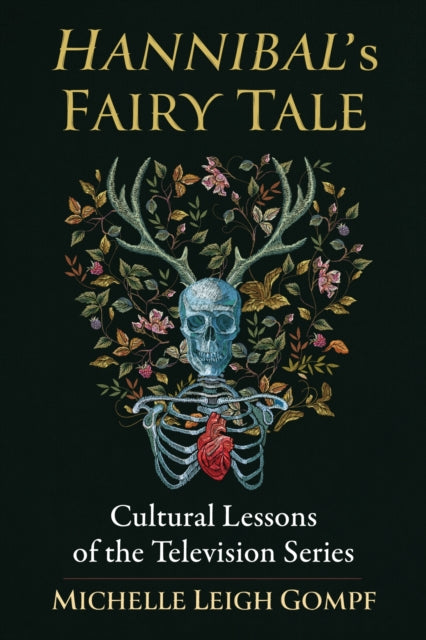
Hannibal's Fairy Tale: Cultural Lessons of the Television Series
Hannibal's Fairy Tale: Cultural Lessons of the Television Series
💎 Earn 221 Points (£2.21) on this item.
We can order this item for you. Delivery usually takes about 4 to 6 weeks.
This item is not held in our immediate stock. We will order it for you after checkout.
Estimated delivery: About 4 to 6 weeks
YOU SAVE £2.63
- Condition: Brand new
- UK Delivery times: Usually arrives within 2 - 3 working days
- UK Shipping: Fee starts at £2.39. Subject to product weight & dimension
Bulk ordering. Want 15 or more copies? Get a personalised quote and bigger discounts. Learn more about bulk orders.
Couldn't load pickup availability
- More about Hannibal's Fairy Tale: Cultural Lessons of the Television Series
The television series Hannibal is positioned as a fairy tale in its third season, offering an understanding of its appeal and lessons such as the importance and danger of family and friends, the complicated nature of humanity, and the arbitrariness of society's definitions and taboos. It encourages viewers to retell and add to the story.
Format: Paperback / softback
Length: 277 pages
Publication date: 31 January 2024
Publisher: McFarland & Co Inc
Much has been written about the aesthetics of the television series "Hannibal" and its devoted fans, and some have discussed its philosophical ideas and its Gothic characteristics, but until now, there has been no in-depth reading of the show as a fairy tale. However, the show positions itself as a fairy tale in its third season. Recognizing it as a fairy tale provides an understanding of its appeal and forces us to consider its lessons.
Like a fairy tale, "Hannibal" plays with time and reality and teaches its audience about their world and how to survive in it. From the show, the audience learns both the importance and the danger of family and friends, the complicated nature of humanity containing the capability for good and evil, and the arbitrariness of society's definitions and taboos. As a fairy tale, it draws its viewers in and encourages them not only to come back time and again but to retell and even add to the story.
The show's third season is particularly noteworthy in this regard, as it explicitly embraces the fairy tale genre and incorporates various fairy tale elements into its narrative. For example, the show features a mysterious and powerful creature known as the Red Dragon, who serves as a metaphor for the forces of evil and chaos in the world. The Red Dragon is often depicted as a fearsome and monstrous figure, reminiscent of classic fairy tale villains such as the Wicked Witch of the West or the Evil Queen.
In addition to the Red Dragon, "Hannibal" also incorporates other fairy tale elements into its narrative. For instance, the show features a character named Hannibal Lecter, who is a brilliant and charismatic serial killer. Lecter is often portrayed as a hero or antihero, depending on one's perspective, and his story is filled with moral dilemmas and complex character relationships.
Another key element of "Hannibal" as a fairy tale is its use of symbolism and metaphor. The show often employs visual imagery and symbolism to convey its themes and messages, such as the use of blood and gore to represent violence and the use of birds and animals to represent the darker aspects of human nature.
Despite its dark and violent nature, "Hannibal" is also a deeply introspective and thought-provoking series. It explores themes of morality, ethics, and the nature of good and evil, and it forces its audience to confront their own beliefs and values. The show's complex and nuanced characters, such as Hannibal Lecter and Will Graham, provide a rich and complex tapestry of personalities and motivations, and their interactions and conflicts provide a rich source of drama and tension.
In conclusion, "Hannibal" is a fascinating and complex television series that can be read as a fairy tale. The show's use of fairy tale elements, such as the Red Dragon, symbolism, and metaphor, provides a rich and evocative narrative that encourages its audience to consider its lessons and themes. While the show may be dark and violent, it is also deeply introspective and thought-provoking, and it provides a unique and engaging perspective on the nature of good and evil.
Weight: 272g
Dimension: 229 x 152 (mm)
ISBN-13: 9781476676111
This item can be found in:
UK and International shipping information
UK and International shipping information
UK Delivery and returns information:
- Delivery within 2 - 3 days when ordering in the UK.
- Shipping fee for UK customers from £2.39. Fully tracked shipping service available.
- Returns policy: Return within 30 days of receipt for full refund.
International deliveries:
Shulph Ink now ships to Australia, Belgium, Canada, France, Germany, Ireland, Italy, India, Luxembourg Saudi Arabia, Singapore, Spain, Netherlands, New Zealand, United Arab Emirates, United States of America.
- Delivery times: within 5 - 10 days for international orders.
- Shipping fee: charges vary for overseas orders. Only tracked services are available for most international orders. Some countries have untracked shipping options.
- Customs charges: If ordering to addresses outside the United Kingdom, you may or may not incur additional customs and duties fees during local delivery.