Shulph Ink
Hegel's Encyclopedic System
Hegel's Encyclopedic System
💎 Earn 207 Points (£2.07) on this item.
YOU SAVE £2.47
- Condition: Brand new
- UK Delivery times: Usually arrives within 2 - 3 working days
- UK Shipping: Fee starts at £2.39. Subject to product weight & dimension
Bulk ordering. Want 15 or more copies? Get a personalised quote and bigger discounts. Learn more about bulk orders.
Couldn't load pickup availability
- More about Hegel's Encyclopedic System
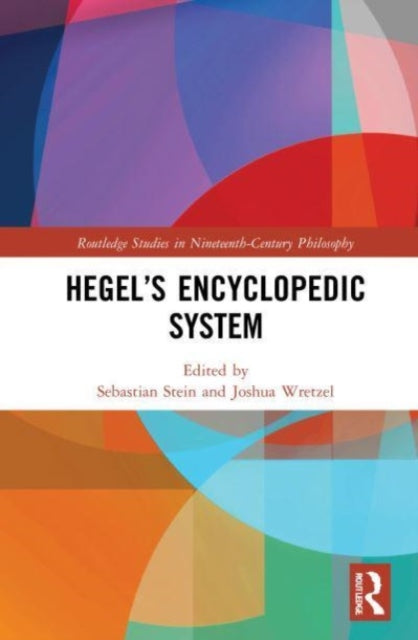
This book explores Hegel's Encyclopedia of the Philosophical Sciences in Outline, presenting original essays by renowned and emerging scholars. It discusses Hegel's conceptions of philosophy, science, dialectic, speculative thinking, and their relevance to contemporary notions of nature, history, religion, freedom, and cultural praxis.
Format: Paperback / softback
Length: 274 pages
Publication date: 25 September 2023
Publisher: Taylor & Francis Ltd
This comprehensive book delves into Hegel's renowned Encyclopedia of the Philosophical Sciences in Outline, a work that has long been overlooked in the realm of Hegel scholarship. It presents a collection of original essays by renowned and emerging scholars in the field, offering insightful perspectives on fundamental aspects of Hegel's encyclopedic system. Through their contributions, these scholars shed light on the contemporary relevance of Hegel's unique conceptions of philosophy, philosophical science, and its method, dialectic, speculative thinking, and their interconnections with both Hegelian and contemporary notions of nature, history, religion, freedom, and cultural praxis.
The Encyclopedia of the Philosophical Sciences in Outline represents Hegel's most extensive and comprehensive work, encompassing a vast range of philosophical topics and concepts. It serves as a comprehensive guide to Hegel's philosophical system, providing a systematic exploration of his ideas and arguments. The book is divided into several sections, each dedicated to a specific aspect of Hegel's philosophy.
One of the key themes of the Encyclopedia is Hegel's concept of philosophy. Hegel argues that philosophy is not merely an academic discipline but a way of life that seeks to understand the ultimate nature of reality and the human experience. Hegel's philosophy is characterized by his dialectic method, which involves the interplay of opposing ideas and the eventual resolution of conflict through synthesis.
Another important aspect of Hegel's philosophy is his concept of philosophical science. Hegel believes that philosophical science is the ultimate goal of philosophy and that it can be achieved through the systematic study of nature and history. Hegel's philosophical science is based on the idea that the world is governed by the laws of dialectic, which are the dynamic forces of change and development.
The Encyclopedia also explores Hegel's speculative thinking, which is characterized by his belief in the possibility of knowing the absolute truth about the world. Hegel's speculative thinking is based on the idea that the mind is capable of grasping the underlying structure of reality and that this structure is ultimately rational and logical.
In addition to these philosophical themes, the Encyclopedia also discusses Hegel's views on nature, history, religion, freedom, and cultural praxis. Hegel believes that nature is not merely an external reality but is also an internal aspect of the human mind and spirit. Hegel's views on history are influenced by his belief in the progressive development of human consciousness and the unfolding of the divine plan.
Hegel's views on religion are also significant, as he argues that religion is not merely a belief system but is also a way of life that seeks to connect humans with the divine. Hegel's religious philosophy is characterized by his belief in the unity of all religions and his rejection of dogmatic theology.
Finally, Hegel's views on freedom and cultural praxis are also explored in the Encyclopedia. Hegel believes that freedom is not merely an individualistic concept but is also a social and political reality that requires the collective effort of individuals and societies to achieve. Hegel's cultural philosophy is characterized by his belief in the importance of art and culture in shaping human consciousness and the development of society.
Overall, the Encyclopedia of the Philosophical Sciences in Outline is a crucial work in the field of Hegel scholarship. It offers a comprehensive exploration of Hegel's philosophical system, providing insights into his ideas and arguments and their contemporary relevance. Through the contributions of renowned and emerging scholars, the book sheds light on the fundamental aspects of Hegel's encyclopedic system, including his concept of philosophy, philosophical science, dialectic, speculative thinking, and their interconnections with other fields of knowledge.
Weight: 453g
Dimension: 229 x 152 (mm)
ISBN-13: 9781032059129
This item can be found in:
UK and International shipping information
UK and International shipping information
UK Delivery and returns information:
- Delivery within 2 - 3 days when ordering in the UK.
- Shipping fee for UK customers from £2.39. Fully tracked shipping service available.
- Returns policy: Return within 30 days of receipt for full refund.
International deliveries:
Shulph Ink now ships to Australia, Belgium, Canada, France, Germany, Ireland, Italy, India, Luxembourg Saudi Arabia, Singapore, Spain, Netherlands, New Zealand, United Arab Emirates, United States of America.
- Delivery times: within 5 - 10 days for international orders.
- Shipping fee: charges vary for overseas orders. Only tracked services are available for most international orders. Some countries have untracked shipping options.
- Customs charges: If ordering to addresses outside the United Kingdom, you may or may not incur additional customs and duties fees during local delivery.