Shulph Ink
Heidegger on Logic
Heidegger on Logic
💎 Earn 387 Points (£3.87) on this item.
We can order this item for you. Delivery usually takes about 4 to 6 weeks.
This item is not held in our immediate stock. We will order it for you after checkout.
Estimated delivery: About 4 to 6 weeks
YOU SAVE £4.59
- Condition: Brand new
- UK Delivery times: Usually arrives within 2 - 3 working days
- UK Shipping: Fee starts at £2.39. Subject to product weight & dimension
Bulk ordering. Want 15 or more copies? Get a personalised quote and bigger discounts. Learn more about bulk orders.
Couldn't load pickup availability
- More about Heidegger on Logic
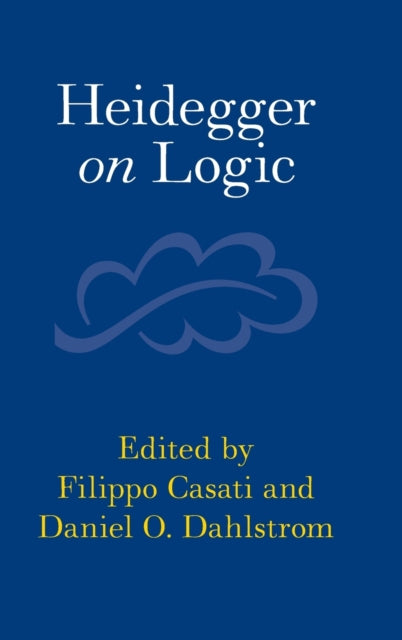
The principles of logic do not necessarily commit us to a particular way of viewing the world, but there are ways of being that ground the normative constraints that logic imposes. The fact that assertions are typically made about beings present a problem for metaphysical prospects of making assertions meaningfully about being. Thinking about being (as opposed to beings) requires revising or restricting logic's reach, but there is something precious about the idea of thinking the limits of thinking. Contemporary scholars have explored these questions in Heidegger's work, and Heidegger on Logic is a collection of new essays that critically ponder his responses.
Format: Hardback
Length: 300 pages
Publication date: 22 September 2022
Publisher: Cambridge University Press
Logic is a set of principles that governs how we think and reason. It provides a framework for organizing our thoughts and arguments and helps us to identify errors and inconsistencies in our thinking. However, the principles of logic do not necessarily dictate how we should view the world. While logic can be used to establish certain truths about the world, it does not necessarily provide us with a complete understanding of everything that exists.
There are different ways of being in the world, including ways of thinking, feeling, and speaking, that ground the normative constraints that logic imposes. These ways of being are often influenced by our cultural, social, and personal experiences and can vary greatly from person to person. For example, some people may rely more on intuition and emotion than on logical reasoning, while others may be more analytical and logical in their thinking.
The fact that assertions, the traditional elements of logic, are typically made about beings present a problem for metaphysical (or post-metaphysical) prospects of making assertions meaningfully about being. This is because assertions are typically made about things that exist in the physical world, while being is a more abstract concept that refers to the nature of existence itself. To make assertions about being, we would need to revise or restrict the reach of logic in some way.
However, some scholars argue that thinking about being (as opposed to beings) accordingly requires revising or restricting logic's reach. They argue that logic is designed to deal with the physical world and that it cannot be used to understand the abstract nature of being. This view is supported by the fact that many philosophical questions, such as the nature of consciousness and the existence of God, cannot be answered using logical reasoning alone.
On the other hand, there is something precious about the very idea of thinking the limits of thinking. Thinking about the limits of our knowledge and understanding can help us to be more open-minded and critical of our own beliefs and assumptions. It can also help us to develop a deeper understanding of the world and our place in it.
Contemporary scholars have become increasingly sensitive to how Heidegger, much like Wittgenstein, instructively poses such questions. Heidegger on Logic is a collection of new essays by leading scholars who critically ponder the efficacy of his responses to them. These essays explore a range of topics, including the nature of truth, the relationship between logic and language, and the role of intuition in philosophical inquiry.
In conclusion, while the principles of logic provide a valuable framework for thinking and reasoning, they do not necessarily dictate how we should view the world. There are different ways of being in the world that ground the normative constraints that logic imposes, and thinking about being (as opposed to beings) accordingly requires revising or restricting logic's reach in some way. However, there is something precious about the very idea of thinking the limits.
Weight: 558g
ISBN-13: 9781108835794
This item can be found in:
UK and International shipping information
UK and International shipping information
UK Delivery and returns information:
- Delivery within 2 - 3 days when ordering in the UK.
- Shipping fee for UK customers from £2.39. Fully tracked shipping service available.
- Returns policy: Return within 30 days of receipt for full refund.
International deliveries:
Shulph Ink now ships to Australia, Belgium, Canada, France, Germany, Ireland, Italy, India, Luxembourg Saudi Arabia, Singapore, Spain, Netherlands, New Zealand, United Arab Emirates, United States of America.
- Delivery times: within 5 - 10 days for international orders.
- Shipping fee: charges vary for overseas orders. Only tracked services are available for most international orders. Some countries have untracked shipping options.
- Customs charges: If ordering to addresses outside the United Kingdom, you may or may not incur additional customs and duties fees during local delivery.