Shulph Ink
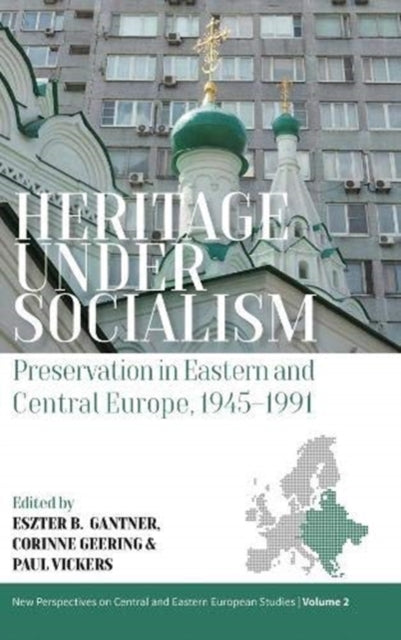
Heritage under Socialism: Preservation in Eastern and Central Europe, 1945-1991
Heritage under Socialism: Preservation in Eastern and Central Europe, 1945-1991
💎 Earn 496 Points (£4.96) on this item.
We can order this item for you. Delivery usually takes about 4 to 6 weeks.
This item is not held in our immediate stock. We will order it for you after checkout.
Estimated delivery: About 4 to 6 weeks
- Condition: Brand new
- UK Delivery times: Usually arrives within 2 - 3 working days
- UK Shipping: Fee starts at £2.39. Subject to product weight & dimension
Bulk ordering. Want 15 or more copies? Get a personalised quote and bigger discounts. Learn more about bulk orders.
Couldn't load pickup availability
- More about Heritage under Socialism: Preservation in Eastern and Central Europe, 1945-1991
This volume explores how heritage was understood and implemented in European socialist states after World War II, highlighting the diverse interpretations and impact of socialist heritage on present-day preservation practices through a transnational approach.
Format: Hardback
Length: 254 pages
Publication date: 15 October 2021
Publisher: Berghahn Books
After World War II, European socialist states grappled with diverse interpretations and implementations of heritage. This volume, through a transnational approach, explores the intricate nuances of heritage within these states, highlighting their unique national and regional characteristics within the broader context of internationalization. By examining a series of captivating case studies, it expands the conceptual, methodological, and empirical dimensions of heritage studies, offering valuable insights into the complex ways in which socialist worlds have shaped the trajectories of present-day preservation practices.
In the aftermath of World War II, European socialist states faced a complex task of understanding and implementing heritage. The war had left a profound impact on the continent, with many cities and regions devastated and in need of reconstruction. At the same time, socialist governments sought to create a new society that was based on social justice, equality, and collective ownership of the means of production.
Heritage played a significant role in these efforts, as it was seen as a way to connect people to their past and promote a sense of national identity. However, the interpretation and implementation of heritage varied greatly across different socialist states. Some states prioritized the preservation of historical landmarks and cultural heritage sites, while others focused more on the promotion of socialist values and the creation of new cultural institutions.
One of the key challenges facing socialist states was the balance between preserving heritage and promoting social change. Many socialist governments believed that heritage should be used to promote socialist values and the ideals of the working class. However, this approach often led to the marginalization of certain groups and the suppression of dissenting voices.
To address these challenges, socialist states developed a range of policies and institutions to manage and preserve heritage. These included state-owned museums, archives, and cultural institutions, as well as community-based organizations and grassroots initiatives. State-owned museums, for example, played a crucial role in promoting socialist values and showcasing the achievements of the working class.
However, these institutions were often subject to political pressure and censorship, which limited their ability to present a comprehensive and accurate representation of history. Community-based organizations and grassroots initiatives, on the other hand, provided a more inclusive and diverse perspective on heritage, often focusing on marginalized communities and their experiences.
Despite these challenges, socialist states made significant contributions to the field of heritage studies. They pioneered the use of heritage as a tool for social and political change, and their policies and institutions have had a lasting impact on the preservation and management of cultural heritage around the world.
In conclusion, the interpretation and implementation of heritage in European socialist states after World War II were complex and multifaceted. While socialist governments sought to use heritage to promote socialist values and the ideals of the working class, they also faced challenges in balancing preservation and social change. Through a transnational approach, this volume explores the diverse interpretations and implementations of heritage in these states, highlighting the ways in which they have shaped the trajectories of present-day preservation practices.
Dimension: 229 x 152 (mm)
ISBN-13: 9781800732278
This item can be found in:
UK and International shipping information
UK and International shipping information
UK Delivery and returns information:
- Delivery within 2 - 3 days when ordering in the UK.
- Shipping fee for UK customers from £2.39. Fully tracked shipping service available.
- Returns policy: Return within 30 days of receipt for full refund.
International deliveries:
Shulph Ink now ships to Australia, Belgium, Canada, France, Germany, Ireland, Italy, India, Luxembourg Saudi Arabia, Singapore, Spain, Netherlands, New Zealand, United Arab Emirates, United States of America.
- Delivery times: within 5 - 10 days for international orders.
- Shipping fee: charges vary for overseas orders. Only tracked services are available for most international orders. Some countries have untracked shipping options.
- Customs charges: If ordering to addresses outside the United Kingdom, you may or may not incur additional customs and duties fees during local delivery.