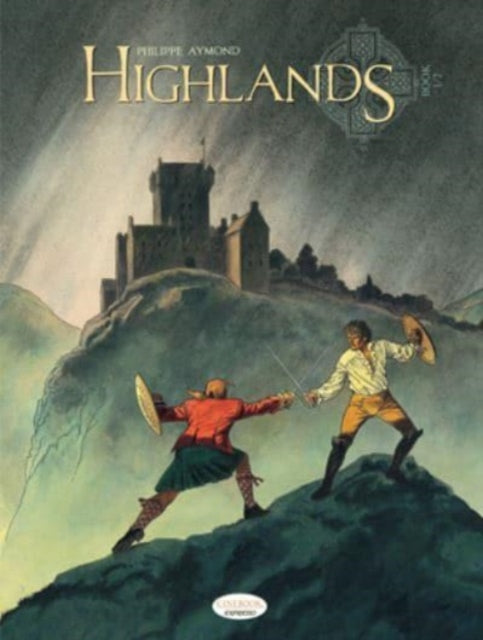
Philippe Aymond
Highlands - Book 1 Of 2
Highlands - Book 1 Of 2
💎 Earn 31 Points (£0.31) on this item.
YOU SAVE £2.63
- Condition: Brand new
- UK Delivery times: Usually arrives within 2 - 3 working days
- UK Shipping: Fee starts at £2.39. Subject to product weight & dimension
Bulk ordering. Want 15 or more copies? Get a personalised quote and bigger discounts. Learn more about bulk orders.
Couldn't load pickup availability
- More about Highlands - Book 1 Of 2
Blackwater Castle is the setting for the 1743 novel "The Master of Blackwater." The Duke of Plaxton is looking for a new portrait painter, and Joseph Callander, a talented painter from Italy, arrives.
Format: Paperback / softback
Length: 48 pages
Publication date: 20 July 2023
Publisher: Cinebook Ltd
In the year 1743, nestled within the picturesque Highlands of Scotland, Blackwater Castle stood as a beacon of history and intrigue. Within its walls, the Duke of Plaxton, a staunch supporter of the Act of Union with England, sought the services of a new portrait painter. The duke's household was a tapestry of contrasting emotions, with his son, William, deeply rooted in the Jacobite cause, and his daughter, Amelia, betrothed to an English lord she had never met. It was within this crucible of rebellion and ambition that Joseph Callander, a local boy returned from years spent in Italy, arrived. Joseph was a talented painter, his strokes imbuing life into his canvases with a mastery that was both captivating and enigmatic. As he entered the castle, he was met with a mixture of curiosity and suspicion from the duke's family. The duke, intrigued by Joseph's foreign background and artistic prowess, invited him to stay and work on a portrait of himself and his family. Little did the duke know that Joseph's arrival would set in motion a series of events that would forever change the course of Scottish history. Joseph's presence in the castle brought a fresh perspective and artistic flair to the duke's household. He spent hours observing the duke and his family, capturing their essence in his paintings with a keen eye for detail and a subtle understanding of their complex relationships. As he worked, Joseph began to form connections with the duke's daughter, Amelia. He saw beyond the surface of her reserved demeanor and discovered a kindred spirit that shared his love for art and his longing for adventure. Their conversations were filled with dreams and aspirations, and Joseph found himself drawn to Amelia in a way he had never felt before. However, their relationship was fraught with danger and uncertainty. Amelia was betrothed to an English lord, and her loyalty was to her family and the traditions of her homeland. Joseph, on the other hand, was a foreigner with a rebellious spirit and a penchant for defying authority. As their conversations grew more intimate, Joseph began to sense that Amelia was torn between her loyalty to her family and her growing affection for him. He knew that he had to tread carefully, lest he risked alienating her and jeopardizing his position in the castle. Despite the challenges and risks, Joseph and Amelia's relationship continued to blossom. They spent countless hours together, exploring the castle's vast grounds and discussing their dreams and aspirations. Joseph's paintings became more vibrant and expressive, capturing the essence of their love and the beauty of the Scottish countryside. However, their happiness was short-lived. One day, news reached the castle that the Jacobite rebellion had begun in the Highlands. The duke, fearing for the safety of his family and his kingdom, ordered Joseph to leave the castle immediately. Joseph, unable to bear the thought of leaving Amelia behind, refused to comply with the duke's orders. He knew that his presence in the castle was a threat to the duke's authority and that he had to make a difficult decision. In a moment of desperation, Joseph decided to use his artistic skills to his advantage. He painted a portrait of Amelia, capturing her beauty and her longing for freedom. He then presented the painting to the duke, hoping that it would sway. The duke, moved by Joseph's bravery and talent, allowed him to stay in the castle under the condition that he remain silent about his relationship with Amelia. Joseph, grateful for the duke's generosity, agreed to the terms. As the Jacobite rebellion grew in intensity, Joseph found himself caught up in the chaos and turmoil of the times. He witnessed the burning of villages, the execution of rebels, and the suffering of the people. He saw the clash of loyalties and the betrayal of friends, and he knew that he had to make a choice. He could continue to stay in the castle, hiding his true feelings and his involvement in the rebellion, or he could risk everything and join the cause of freedom. Joseph's decision was a difficult one, but he knew that he could not stand by and watch his countrymen suffer. He joined the Jacobite rebellion, fighting alongside his fellow Scotsmen against the tyranny of the English government. The years that followed were filled with battles, hardships, and sacrifice. Joseph's paintings became a symbol of the rebellion, capturing the bravery and resilience of the Scottish people. He painted portraits of the leaders, the soldiers, and the ordinary people who had been forced to sacrifice everything for their cause. His work inspired countless others to join the cause, and his name became synonymous with freedom and rebellion. In the end, the Jacobite rebellion was defeated, and Joseph Callander was forced to flee Scotland. He left behind a legacy of art and bravery that would inspire generations to come. His paintings, which are now housed in museums and galleries around the world, continue to evoke a sense of pride and nostalgia for the Scottish people. Joseph Callander's story is a testament to the power of art and the resilience of the human spirit. In the year 1743, nestled within the picturesque Highlands of Scotland, Blackwater Castle stood as a beacon of history and intrigue. Within its walls, the Duke of Plaxton, a staunch supporter of the Act of Union with England, sought the services of a new portrait painter. The duke's household was a tapestry of contrasting emotions, with his son, William, deeply rooted in the Jacobite cause, and his daughter, Amelia, betrothed to an English lord she had never met. It was within this crucible of rebellion and ambition that Joseph Callander, a local boy returned from years spent in Italy, arrived. Joseph was a talented painter, his strokes imbuing life into his canvases with a mastery that was both captivating and enigmatic. As he entered the castle, he was met with a mixture of curiosity and suspicion from the duke's family. The duke, intrigued by Joseph's foreign background and artistic prowess, invited him to stay and work on a portrait of himself and his family. Little did the duke know that Joseph's arrival would set in motion a series of events that would forever change the course of Scottish history. Joseph's presence in the castle brought a fresh perspective and artistic flair to the duke's household. He spent hours observing the duke and his family, capturing their essence in his paintings with a keen eye for detail and a subtle understanding of their complex relationships. As he worked, Joseph began to form connections with the duke's daughter, Amelia. He saw beyond the surface of her reserved demeanor and discovered a kindred spirit that shared his love for art and his longing for adventure. Their conversations were filled with dreams and aspirations, and Joseph found himself drawn to Amelia in a way that he had never felt before. However, their relationship was fraught with danger and uncertainty. Amelia was betrothed to an English lord, and her loyalty was to her family and the traditions of her homeland. Joseph, on the other hand, was a foreigner with a rebellious spirit and a penchant for defying authority. As their conversations grew more intimate, Joseph began to sense that Amelia was torn between her loyalty to her family and her growing affection for him. He knew that he had to tread carefully, lest he risked alienating her and jeopardizing his position in the castle. Despite the challenges and risks, Joseph and Amelia's relationship continued to blossom. They spent countless hours together, exploring the castle's vast grounds and discussing their dreams and aspirations. Joseph's paintings became more vibrant and expressive, capturing the essence of their love and the beauty of the Scottish countryside. However, their happiness was short-lived. One day, news reached the castle that the Jacobite rebellion had begun in the Highlands. The duke, fearing for the safety of his family and his kingdom, ordered Joseph to leave the castle immediately. Joseph, unable to bear the thought of leaving Amelia behind, refused to comply with the duke's orders. He knew that his presence in the castle was a threat to the duke's authority. He knew that his presence in the castle was a threat to the duke's authority. He knew that he had to make a difficult decision. In a moment of desperation, Joseph decided to use his artistic skills to his advantage. He painted a portrait of Amelia, capturing her beauty and her longing for freedom. He then presented the painting to the duke, hoping that it would. The duke, moved by Joseph's bravery and talent, allowed him to stay in the castle under the condition that he remain silent about his relationship with Amelia. Joseph, grateful for the duke's generosity, agreed to the terms. As the Jacobite rebellion grew in intensity, Joseph found himself caught up in the chaos and turmoil of the times. He witnessed the burning of villages, the execution of rebels, and the suffering of the people. He saw the clash of loyalties and the betrayal of friends, and he knew that he had to make a choice. He could continue to stay in the castle, hiding his true feelings and his involvement in the rebellion, or he could risk everything and join the cause of freedom. Joseph's decision was a difficult one, but he knew that he could not stand by and watch his countrymen suffer. He joined the Jacobite rebellion, fighting alongside his fellow Scotsmen against the tyranny of the English government. The years that followed were filled with battles, hardships, and sacrifice. Joseph's paintings became a symbol of the rebellion, capturing the bravery and resilience of the Scottish people. He painted portraits of the leaders, the soldiers, and the ordinary people who had been forced to sacrifice everything for their cause. His work inspired countless others to join the cause, and his name became synonymous with freedom and rebellion. In the end, the Jacobite rebellion was defeated, and Joseph Callander was forced to flee Scotland. He left behind a legacy of art and bravery that would inspire generations to come. His paintings, which are now housed in museums and galleries around the world, continue to evoke a sense of pride and nostalgia for the Scottish people. Joseph Callander's story is a testament to the power of art and the resilience of the human spirit. In the year 1743, nestled within the picturesque Highlands of Scotland, Blackwater Castle stood as a beacon of history and intrigue. Within its walls, the Duke of Plaxton, a staunch supporter of the Act of Union with England, sought the services of a new portrait painter. The duke's household was a tapestry of contrasting emotions, with his son, William, deeply rooted in the Jacobite cause, and his daughter, Amelia, betrothed to an English lord she had never met. It was within this crucible of rebellion and ambition that Joseph Callander, a local boy returned from years spent in Italy, arrived. Joseph was a talented painter, his strokes imbuing life into his canvases with a mastery that was both captivating and enigmatic. As he entered the castle, he was met with a mixture of curiosity and suspicion from the duke's family. The duke, intrigued by Joseph's foreign background and artistic prowess, invited him to stay and work on a portrait of himself and his family. Little did the duke know that Joseph's arrival would set in motion a series of events that would forever change the course of Scottish history. Joseph's presence in the castle brought a fresh perspective and artistic flair to the duke's household. He spent hours observing the duke and his family, capturing their essence in his paintings with a keen eye for detail and a subtle understanding of their complex relationships. As he worked, Joseph began to form connections with the duke's daughter, Amelia. He saw beyond the surface of her reserved demeanor and discovered a kindred spirit that shared his love for art and his longing for adventure. Their conversations were filled with dreams and aspirations, and Joseph found himself drawn to Amelia in a way he had never felt before. However, their relationship was fraught with danger and uncertainty. Amelia was betrothed to an English lord, and her loyalty was to her family and the traditions of her homeland. Joseph, on the other hand, was a foreigner with a rebellious spirit and a penchant for defying authority. As their conversations grew more intimate, Joseph began to sense that Amelia was torn between her loyalty to her family and her growing affection for him. He knew that he had to tread carefully, lest he risked alienating her and jeopardizing his position in the castle. Despite the challenges and risks, Joseph and Amelia's relationship continued to blossom. They spent countless hours together, exploring the castle's vast grounds and discussing their dreams and aspirations. Joseph's paintings became more vibrant and expressive, capturing the essence of their love and the beauty of the Scottish countryside. However, their happiness was short-lived. One day, news reached the castle that the Jacobite rebellion had begun in the Highlands. The duke, fearing for the safety of his family and his kingdom, ordered Joseph to leave the castle immediately. Joseph, unable to bear the thought of leaving Amelia behind, refused to comply with the duke's orders. He knew that his presence in the castle was a threat to the duke's authority and that he had to make a difficult decision. In a moment of desperation, Joseph decided to use his artistic skills to his advantage. He painted a portrait of Amelia, capturing her beauty and her longing for freedom. He then presented the painting to the duke, hoping that it would. The duke, moved by Joseph's bravery and talent, allowed him to stay in the castle under the condition that he remain silent about his relationship with Amelia. Joseph, grateful for the duke's generosity, agreed to the terms. As the Jacobite rebellion grew in intensity, Joseph found himself caught up in the chaos and turmoil of the times. He witnessed the burning of villages, the execution of rebels, and the suffering of the people. He saw the clash of loyalties and the betrayal of friends, and he knew that he had to make a choice. He could continue to stay in the castle, hiding his true feelings and his involvement in the rebellion, or he could risk everything and join the cause of freedom. Joseph's decision was a difficult one, but he knew that he could not stand by and watch his countrymen suffer. He joined the Jacobite rebellion, fighting alongside his fellow Scotsmen against the tyranny of the English government. The years that followed were filled with battles, hardships, and sacrifice. Joseph's paintings became a symbol of the rebellion, capturing the bravery and resilience of the Scottish people. He painted portraits of the leaders, the soldiers, and the ordinary people who had been forced to sacrifice everything for their cause. His work inspired countless others to join the cause, and his name became synonymous with freedom and rebellion. In the end, the Jacobite rebellion was defeated, and Joseph Callander was forced to flee Scotland. He left behind a legacy of art and bravery that would inspire generations to come. His paintings, which are now housed in museums and galleries around the world, continue to evoke a sense of pride and nostalgia for the Scottish people. Joseph Callander's story is a testament to the power of art and the resilience of the human spirit. In the year 1743, nestled within the picturesque Highlands of Scotland, Blackwater Castle stood as a beacon of history and intrigue. Within its walls, the Duke of Plaxton, a staunch supporter of the Act of Union with England, sought the services of a new portrait painter. The duke's household was a tapestry of contrasting emotions, with his son, William, deeply rooted in the Jacobite cause, and his daughter, Amelia, betrothed to an English lord she had never met. It was within this crucible of rebellion and ambition that Joseph Callander, a local boy returned from years spent in Italy, arrived. Joseph was a talented painter, his strokes imbuing life into his canvases with a mastery that was both captivating and enigmatic. As he entered the castle, he was met with a mixture of curiosity and suspicion from the duke's family. The duke, intrigued by Joseph's foreign background and artistic prowess, invited him to stay and work on a portrait of himself and his family. Little did the duke know that Joseph's arrival would set in motion a series of events that would forever change the course of Scottish history. Joseph's presence in the castle brought a fresh perspective and artistic flair to the duke's household. He spent hours observing the duke and his family, capturing their essence in his paintings with a keen eye for detail and a subtle understanding of their complex relationships. As he worked, Joseph began to form connections with the duke's daughter, Amelia. He saw beyond the surface of her reserved demeanor and discovered a kindred spirit that shared his love for art and his longing for adventure. Their conversations were filled with dreams and aspirations, and Joseph found himself drawn to Amelia in a way he had never felt before. However, their relationship was fraught with danger and uncertainty. Amelia was betrothed to an English lord, and her loyalty was to her family and the traditions of her homeland. Joseph, on the other hand, was a foreigner with a rebellious spirit and a penchant for defying authority. As their conversations grew more intimate, Joseph began to sense that Amelia was torn between her loyalty to her family and her growing affection for him. He knew that he had to tread carefully, lest he risked alienating her and jeopardizing his position in the castle. Despite the challenges and risks, Joseph and Amelia's relationship continued to blossom. They spent countless hours together, exploring the castle's vast grounds and discussing their dreams and aspirations. Joseph's paintings became more vibrant and expressive, capturing the essence of their love and the beauty of the Scottish countryside. However, their happiness was short-lived. One day, news reached the castle that the Jacobite rebellion had begun in the Highlands. The duke, fearing for the safety of his family and his kingdom, ordered Joseph to leave the castle immediately. Joseph, unable to bear the thought of leaving Amelia behind, refused to comply with the duke's orders. He knew that his presence in the castle was a threat to the duke's authority and that he had to make a difficult decision. In a moment of desperation, Joseph decided to use his artistic skills to his advantage. He painted a portrait of Amelia, capturing her beauty and her longing for freedom. He then presented the painting to the duke, hoping that it would. The duke, moved by Joseph's bravery and talent, allowed him to stay in the castle under the condition that he remain silent about his relationship with Amelia. Joseph, grateful for the duke's generosity, agreed to the terms. As the Jacobite rebellion grew in intensity, Joseph found himself caught up in the chaos and turmoil of the times. He witnessed the burning of villages, the execution of rebels, and the suffering of the people. He saw the clash of loyalties and the betrayal of friends, and he knew that he had to make a choice. He could continue to stay in the castle, hiding his true feelings and his involvement in the rebellion, or he could risk everything and join the cause of freedom. Joseph's decision was a difficult one, but he knew that he could not stand by and watch his countrymen suffer. He joined the Jacobite rebellion, fighting alongside his fellow Scotsmen against the tyranny of the English government. The years that followed were filled with battles, hardships, and sacrifice. Joseph's paintings became a symbol of the rebellion, capturing the bravery and resilience of the Scottish people. He painted portraits of the leaders, the soldiers, and the ordinary people who had been forced to sacrifice everything for their cause. His work inspired countless others to join the cause, and his name became synonymous with freedom and rebellion. In the end, the Jacobite rebellion was defeated, and Joseph Callander was forced to flee Scotland. He left behind a legacy of art and bravery that would inspire generations to come. His paintings, which are now housed in museums and galleries around the world, continue to evoke a sense of pride and nostalgia for the Scottish people. Joseph Callander's story is a testament to the power of art and the resilience of the human spirit.
Dimension: 217 x 287 (mm)
ISBN-13: 9781800441101
UK and International shipping information
UK and International shipping information
UK Delivery and returns information:
- Delivery within 2 - 3 days when ordering in the UK.
- Shipping fee for UK customers from £2.39. Fully tracked shipping service available.
- Returns policy: Return within 30 days of receipt for full refund.
International deliveries:
Shulph Ink now ships to Australia, Belgium, Canada, France, Germany, Ireland, Italy, India, Luxembourg Saudi Arabia, Singapore, Spain, Netherlands, New Zealand, United Arab Emirates, United States of America.
- Delivery times: within 5 - 10 days for international orders.
- Shipping fee: charges vary for overseas orders. Only tracked services are available for most international orders. Some countries have untracked shipping options.
- Customs charges: If ordering to addresses outside the United Kingdom, you may or may not incur additional customs and duties fees during local delivery.