Shulph Ink
Historical Understanding: Past, Present, and Future
Historical Understanding: Past, Present, and Future
💎 Earn 451 Points (£4.51) on this item.
We can order this item for you. Delivery usually takes about 4 to 6 weeks.
This item is not held in our immediate stock. We will order it for you after checkout.
Estimated delivery: About 4 to 6 weeks
- Condition: Brand new
- UK Delivery times: Usually arrives within 2 - 3 working days
- UK Shipping: Fee starts at £2.39. Subject to product weight & dimension
Bulk ordering. Want 15 or more copies? Get a personalised quote and bigger discounts. Learn more about bulk orders.
Couldn't load pickup availability
- More about Historical Understanding: Past, Present, and Future
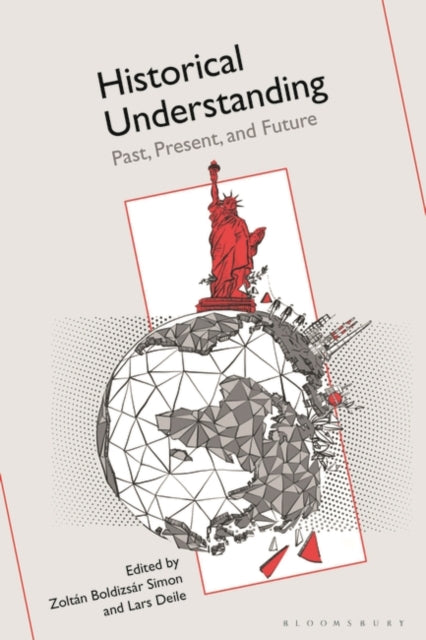
The first decades of the new century challenge our understanding of history, with the demise of humanities education, technological alterations, anthropogenic changes, and memory, trauma, and historical injustice. This volume explores the current shape of historical understanding, surveying a variety of historical relations to the past, present, and future in the face of socio-political, ecological, and technological upheavals. It is an invaluable research tool for students and researchers.
Format: Hardback
Length: 320 pages
Publication date: 24 March 2022
Publisher: Bloomsbury Publishing PLC
The first decades of the new century bring about a seismic shift in our understanding of the past. In a whirlwind of profound changes, we grapple with the question of whether we have more history or less. The answers are elusive, and the challenges we face are complex. The recent decline in humanities education, the technological transformations of our social lives, the human condition, the anthropogenic changes in the Earth system, the growing awareness of memory, trauma, and historical injustice as alternative approaches to the past, and the contradictions and complexities they introduce, all pose significant challenges to our existing notions of historical understanding.
Historical thought, as we know it, is facing a multitude of obstacles, and we struggle to grasp a comprehensive perspective that can encompass them. This volume, a compilation of insightful essays from esteemed scholars, aims to provide just that. Through a diverse range of historical perspectives, Historical Understanding explores the current state of historical understanding in the face of socio-political, ecological, and technological upheavals. This book serves as an invaluable resource for students and researchers alike, offering a kaleidoscopic overview of manifold new ways in which we navigate the past in order to cope with the challenges of the present, both in society at large and in the field of historiography.
In the opening chapter, "The Changing Face of History," the authors examine the evolving nature of historical knowledge and the challenges it faces. They argue that the traditional notion of history as a linear narrative is being challenged by the emergence of new approaches, such as postcolonialism, environmental history, and the study of memory and trauma. These approaches offer fresh insights into the past but also raise questions about the validity and reliability of historical evidence.
Chapter 2, "Historical Understanding in the Age of Technological Change," explores the impact of technology on our understanding of the past. The authors argue that the digital revolution has transformed the way we access and interpret historical information, and that this has led to a shift in the way we think about history. They discuss the challenges and opportunities presented by new technologies, such as digital archives, virtual reality, and social media, and argue that these tools can be used to enhance our understanding of the past but also pose risks to historical accuracy and integrity.
Chapter 3, "The Human Condition in the Age of Globalization," examines the ways in which globalization has shaped our understanding of the past. The authors argue that globalization has created new connections between people and places, and that this has led to a reevaluation of traditional historical narratives. They discuss the impact of globalization on cultural identity, social inequality, and environmental sustainability, and argue that historical understanding must be integrated with these broader social and environmental concerns.
Chapter 4, "Historical Understanding and the Crisis of the Humanities," explores the decline of humanities education in recent years and its implications for historical understanding. The authors argue that the loss of expertise in the humanities has led to a narrowing of our perspective on the past, and that this has contributed to a lack of critical thinking and empathy. They suggest that the revival of humanities education is essential for promoting a broader and more nuanced understanding of the past.
Chapter 5, "Memory, Trauma, and Historical Injustice," examines the role of memory, trauma, and historical injustice in shaping our understanding of the past. The authors argue that these experiences can be powerful tools for understanding the past but also pose challenges to historical accuracy and integrity. They discuss the ways in which these experiences can be represented and interpreted in historical narratives, and argue that historical understanding must be sensitive to the complexities and nuances of these experiences.
Chapter 6, "Historical Understanding and the Future," explores the possibilities and challenges of historical understanding in the future. The authors argue that historical understanding is not just about the past but also about the present and the future. They discuss the ways in which historical knowledge can be used to inform decision-making and policy-making, and argue that historical understanding must be integrated with other disciplines, such as science and technology, in order to address the complex challenges of the 21st century.
In conclusion, Historical Understanding offers a comprehensive and thought-provoking exploration of the current state of historical understanding in the face of socio-political, ecological, and technological upheavals. The volume provides a valuable resource for students and researchers alike, offering a kaleidoscopic overview of manifold new ways in which we navigate the past in order to cope with the challenges of the present, both in society at large and in the field of historiography. As we continue to grapple with the complexities and contradictions of the past, this book serves as a reminder of the importance of critical thinking, empathy, and a nuanced understanding of the past in order to shape a better future.
Weight: 630g
Dimension: 163 x 240 x 26 (mm)
ISBN-13: 9781350168619
UK and International shipping information
UK and International shipping information
UK Delivery and returns information:
- Delivery within 2 - 3 days when ordering in the UK.
- Shipping fee for UK customers from £2.39. Fully tracked shipping service available.
- Returns policy: Return within 30 days of receipt for full refund.
International deliveries:
Shulph Ink now ships to Australia, Belgium, Canada, France, Germany, Ireland, Italy, India, Luxembourg Saudi Arabia, Singapore, Spain, Netherlands, New Zealand, United Arab Emirates, United States of America.
- Delivery times: within 5 - 10 days for international orders.
- Shipping fee: charges vary for overseas orders. Only tracked services are available for most international orders. Some countries have untracked shipping options.
- Customs charges: If ordering to addresses outside the United Kingdom, you may or may not incur additional customs and duties fees during local delivery.