Kenneth Norrie
History of Scottish Child Protection Law
History of Scottish Child Protection Law
💎 Earn 748 Points (£7.48) on this item.
- Condition: Brand new
- UK Delivery times: Usually arrives within 2 - 3 working days
- UK Shipping: Fee starts at £3.89. Subject to product weight & dimension
Bulk ordering. Want 15 or more copies? Get a personalised quote and bigger discounts. Learn more about bulk orders.
Couldn't load pickup availability
- More about History of Scottish Child Protection Law
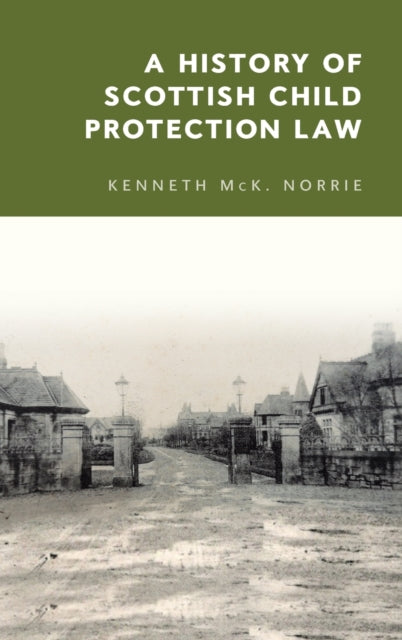
Kenneth Norrie's book provides a comprehensive account of the development of child protection law and practice in Scotland, from its earliest origins to the present day, within the context of a changing world. It places the Scottish juvenile court in worldwide perspective and explores why the juvenile court ideals remain central to the contemporary children's hearing system. It gives detailed analysis of the legislation and explores the parliamentary debates surrounding Acts including the Children Act 1908, the Adoption of Children (Scotland) Act 1930, the Children and Young Persons (Scotland) Acts 1932 and 1937, the Children Act 1948, the Social Work (Scotland) Act 1968, the Children (Scotland) Act 1995 and the Children and Young People (Scotland) Act 2014. It preserves in accessible form many long-forgotten legal and social aims, cases and secondary legislation, and identifies the pressures for change. Particular issues are traced in legislative detail, including court processes, the changing thresholds for state intervention, the increasing regulation of children's homes and foster care, the developing rules on corporal punishment and the earlier practice of compulsory emigration to the colonies of children removed from their parents. The transformation of adoption is also covered in comprehensive detail.
Format: Hardback
Length: 336 pages
Publication date: 30 June 2020
Publisher: Edinburgh University Press
The Scottish juvenile court has a rich history that dates back to its earliest origins and has evolved to become a central part of the contemporary children's hearing system in Scotland. This book provides a comprehensive account of how the law and practice of child protection in Scotland has developed over time, within the context of a changing world. The book places the Scottish juvenile court in a worldwide perspective and explores why the juvenile court ideals remain central to the contemporary children's hearing system in Scotland. It gives detailed analysis of the legislation and explores the parliamentary debates surrounding Acts such as the Children Act 1908, the Adoption of Children (Scotland) Act 1930, the Children and Young Persons (Scotland) Acts 1932 and 1937, the Children Act 1948, the Social Work (Scotland) Act 1968, the Children (Scotland) Act 1995, and the Children and Young People (Scotland) Act 2014. The book preserves in accessible form many long-forgotten legal and social aims, cases, and secondary legislation. Kenneth Norrie traces the assumptions that underlay child protection law at particular periods of time and identifies the pressures for change, giving a clearer understanding of how and why the contemporary law is designed and operates as it does. Particular issues are traced in legislative detail, including court processes, the changing thresholds for state intervention, the increasing regulation of children's homes and foster care, the developing rules on corporal punishment, and the earlier practice of compulsory emigration to the colonies of children removed from their parents. The transformation of adoption is also covered in comprehensive detail. In drawing out key themes and common threads, Norrie sets contemporary developments against their historical context and offers a fuller understanding of child protection law in Scotland.
Weight: 810g
Dimension: 162 x 240 x 31 (mm)
ISBN-13: 9781474444170
UK and International shipping information
UK and International shipping information
We deliver throughout the United Kingdom and to 128 countries and territories worldwide, including the United States, Australia, Canada, Germany, Spain and France.