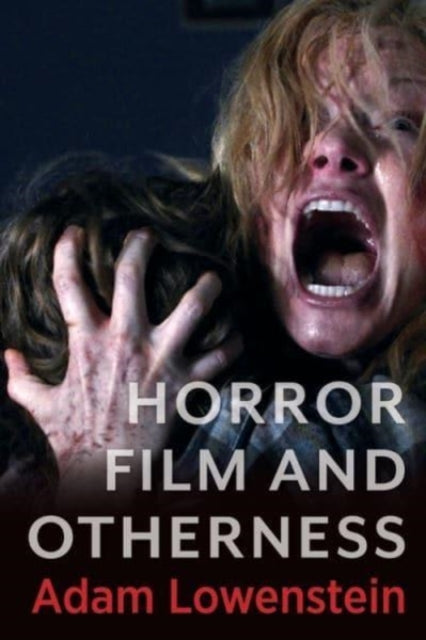
Adam Lowenstein
Horror Film and Otherness
Horror Film and Otherness
💎 Earn 121 Points (£1.21) on this item.
YOU SAVE £5.72
- Condition: Brand new
- UK Delivery times: Usually arrives within 2 - 3 working days
- UK Shipping: Fee starts at £2.39. Subject to product weight & dimension
Bulk ordering. Want 15 or more copies? Get a personalised quote and bigger discounts. Learn more about bulk orders.
Couldn't load pickup availability
- More about Horror Film and Otherness
Horror films depict social difference in the everyday world by using unearthly creatures and deranged killers as metaphors for society's fear of the "others" that threaten the "normal." These images can be sympathetic to their exclusion or complicit in their oppression, but ultimately, they stand in for the others that the majority dreads and marginalizes. Adam Lowenstein offers a new account of horror and why it matters for understanding social otherness, arguing that the genre captures ongoing metamorphoses across "normal" self and "monstrous" other, challenging viewers to recognize that we are all vulnerable to becoming or being seen as the other.
Format: Paperback / softback
Length: 248 pages
Publication date: 19 July 2022
Publisher: Columbia University Press
Horror films have a unique ability to shed light on social differences in the everyday world. By using unearthly creatures and deranged killers as metaphors for society's fear of the "others" that threaten the "normal," these films can be seen as critiquing the dominant societal structures that perpetuate inequality and discrimination. The monstrous other in horror films can represent a wide range of marginalized groups, including women, Jews, Blacks, Indigenous, queer, poor, elderly, or disabled people.
The way in which horror films depict these minorities can vary, from sympathetic portrayals that highlight their exclusion and oppression to complicit portrayals that reinforce their marginalization. However, ultimately, these images are understood to stand in for the "others" that the majority dreads and marginalizes.
Adam Lowenstein, in his book "Horror Film and Otherness," offers a fresh perspective on horror and its significance for understanding social otherness. He argues that horror films reveal how the category of the other is not fixed but rather constantly evolving. The genre captures ongoing metamorphoses across the "normal" self and the "monstrous" other, challenging viewers to recognize the vulnerability of both selves and others.
Horror films expose the ongoing struggle to acknowledge self and other as fundamentally intertwined, rather than separate entities. By exploring the fears and anxieties associated with otherness, horror films can provide a platform for empathy and understanding, challenging viewers to confront their own biases and prejudices.
In addition to their critical role in revealing social differences, horror films also have a significant impact on culture, politics, and art. These films often explore themes of power, control, and the boundaries between the human and the supernatural, providing a commentary on the social and political climate of their time.
One of the most notable examples of horror films that address social otherness is "The Exorcist." This film, released in 1973, tells the story of a young girl who is possessed by a demon and the Catholic priests who attempt to exorcise it. Through its portrayal of the demonic other, "The Exorcist" explores themes of religious extremism, gender roles, and the power of the supernatural.
Another example is "Get Out," a film that was released in 2017 and directed by Jordan Peele. This film explores the experiences of a Black man who visits his white girlfriend's family and discovers that they are harboring a dark secret. Through its portrayal of racial otherness, "Get Out" challenges viewers to confront their own biases and prejudices and to recognize the ways in which systemic racism and discrimination operate in society.
Horror films also have a significant impact on popular culture and the way in which we perceive the world. They often tap into our deepest fears and anxieties, providing a cathartic release for those who are struggling with their own sense of otherness. By exploring the dark corners of the human psyche, horror films can provide a unique perspective on the world and help us to understand ourselves and our place in it.
In conclusion, horror films have a unique ability to reveal social differences in the everyday world. By using unearthly creatures and deranged killers as metaphors for society's fear of the "others," these films can be seen as critiquing the dominant societal structures that perpetuate inequality and discrimination. Through their exploration of the fears and anxieties associated with otherness, horror films can provide a platform for empathy and understanding, challenging viewers to confront their own biases and prejudices. Moreover, horror films have a significant impact on culture, politics, and art, providing a commentary on the social and political climate of their time. By tapping into our deepest fears and anxieties, horror films can provide a unique perspective on the world and help us to understand ourselves and our place in it.
Weight: 388g
Dimension: 156 x 235 x 17 (mm)
ISBN-13: 9780231205771
This item can be found in:
UK and International shipping information
UK and International shipping information
UK Delivery and returns information:
- Delivery within 2 - 3 days when ordering in the UK.
- Shipping fee for UK customers from £2.39. Fully tracked shipping service available.
- Returns policy: Return within 30 days of receipt for full refund.
International deliveries:
Shulph Ink now ships to Australia, Belgium, Canada, France, Germany, Ireland, Italy, India, Luxembourg Saudi Arabia, Singapore, Spain, Netherlands, New Zealand, United Arab Emirates, United States of America.
- Delivery times: within 5 - 10 days for international orders.
- Shipping fee: charges vary for overseas orders. Only tracked services are available for most international orders. Some countries have untracked shipping options.
- Customs charges: If ordering to addresses outside the United Kingdom, you may or may not incur additional customs and duties fees during local delivery.