Emily Raij
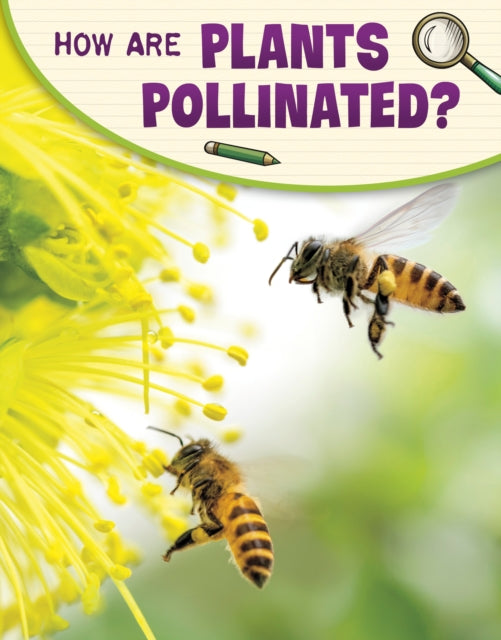
How Are Plants Pollinated?
How Are Plants Pollinated?
💎 Earn 31 Points (£0.31) on this item.
YOU SAVE £2.63
- Condition: Brand new
- UK Delivery times: Usually arrives within 2 - 3 working days
- UK Shipping: Fee starts at £2.39. Subject to product weight & dimension
Bulk ordering. Want 15 or more copies? Get a personalised quote and bigger discounts. Learn more about bulk orders.
Couldn't load pickup availability
- More about How Are Plants Pollinated?
Pollination is the process by which pollen is transferred from the male reproductive organ (anther) of a flower to the female reproductive organ (stigma) of another flower, allowing for the growth of more plants.
Format: Paperback / softback
Length: 32 pages
Publication date: 13 April 2023
Publisher: Capstone Global Library Ltd
Plants produce pollen to facilitate the growth of more plants. To achieve this, the pollen must travel from one plant to another. Let us delve into the fascinating process of pollination and explore how this crucial reproductive mechanism works.
Pollination is a vital process that plays a crucial role in the reproduction of many plant species. It occurs when pollen, the male reproductive cell of a plant, is transferred from the anthers (stamen) of a flower to the stigma (stylus) of another flower, which is the female reproductive organ. This process allows for the fusion of male and female gametes, leading to the formation of seeds and the continuation of the plant species.
There are several mechanisms by which pollination can occur. One of the most common is wind pollination, where pollen is carried from one flower to another by the wind. This can happen over long distances, allowing plants to reproduce with individuals that are not closely related. Another mechanism is water pollination, where pollen is carried from one flower to another by water, such as in rivers or streams. This mechanism is particularly important in plants that grow in water-rich environments, such as marshes or swamps.
In addition to wind and water, pollination can also occur through other means, such as insects, birds, and mammals. Insects, for example, can carry pollen from one flower to another as they visit flowers for nectar or pollen. Birds, on the other hand, can pollinate flowers by landing on them and transferring pollen from their beaks to the stigma. Mammals, such as bees, can also pollinate flowers by visiting them and transferring pollen from their anthers to the stigma.
Pollination is not only important for the reproduction of plants but also for the production of many crops. Many fruits, such as apples, oranges, and bananas, require pollination to produce seeds. Without pollination, these crops would not be able to reproduce, leading to a shortage of food and a decline in crop production.
In addition to its importance for agriculture, pollination is also important for the conservation of plant species. Many plant species rely on pollinators to reproduce, and if pollinators are lost or become extinct, the plant species may be at risk of extinction. For example, many species of bees are important pollinators for wildflowers, and if these bees are lost or become extinct, the wildflowers may not be able to reproduce, leading to a decline in the diversity of plant species in the wild.
To protect pollinators and promote pollination, there are several steps that can be taken. One of the most important is to create habitats that are conducive to pollinators. This can include planting a variety of flowers that provide nectar and pollen to pollinators, such as native flowers, wildflowers, and garden flowers. Additionally, reducing the use of pesticides and herbicides can help protect pollinators by reducing the exposure of pollinators to harmful chemicals.
Another important step is to promote education and awareness about the importance of pollination. This can include teaching students about the role of pollinators in the ecosystem and the importance of protecting them. Additionally, promoting public awareness about the importance of pollination can help raise awareness about the conservation of plant species and the importance of protecting pollinators.
In conclusion, pollination is a vital process that plays a crucial role in the reproduction of many plant species. It occurs when pollen is transferred from the anthers of a flower to the stigma of another flower, allowing for the fusion of male and female gametes and the formation of seeds. Pollination can occur through wind, water, insects, birds, and mammals, and is important for the production of many crops and the conservation of plant species. To protect pollinators and promote pollination, it is important to create habitats that are conducive to pollinators, reduce the use of pesticides and herbicides, and promote education and awareness about the importance of pollination. By taking these steps, we can help ensure that pollinators continue to play a vital role in our ecosystem and that our plants and crops continue to thrive.
Weight: 104g
Dimension: 173 x 229 x 10 (mm)
ISBN-13: 9781398225299
UK and International shipping information
UK and International shipping information
UK Delivery and returns information:
- Delivery within 2 - 3 days when ordering in the UK.
- Shipping fee for UK customers from £2.39. Fully tracked shipping service available.
- Returns policy: Return within 30 days of receipt for full refund.
International deliveries:
Shulph Ink now ships to Australia, Belgium, Canada, France, Germany, Ireland, Italy, India, Luxembourg Saudi Arabia, Singapore, Spain, Netherlands, New Zealand, United Arab Emirates, United States of America.
- Delivery times: within 5 - 10 days for international orders.
- Shipping fee: charges vary for overseas orders. Only tracked services are available for most international orders. Some countries have untracked shipping options.
- Customs charges: If ordering to addresses outside the United Kingdom, you may or may not incur additional customs and duties fees during local delivery.