Victoria Williams
How It Works: Electricity
How It Works: Electricity
💎 Earn 38 Points (£0.38) on this item.
YOU SAVE £3.21
- Condition: Brand new
- UK Delivery times: Usually arrives within 2 - 3 working days
- UK Shipping: Fee starts at £2.39. Subject to product weight & dimension
Bulk ordering. Want 15 or more copies? Get a personalised quote and bigger discounts. Learn more about bulk orders.
Couldn't load pickup availability
- More about How It Works: Electricity
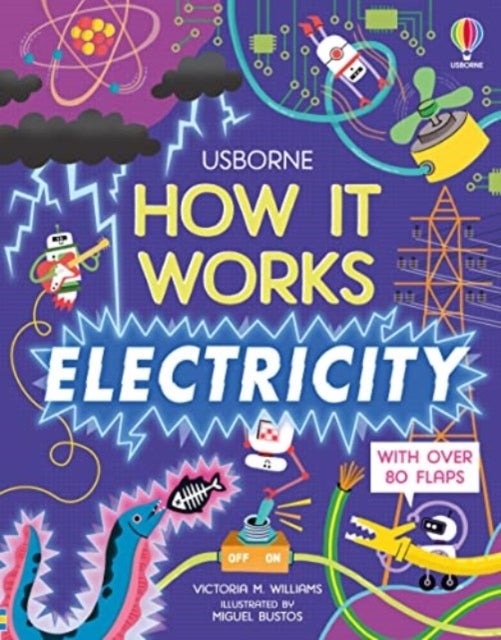
Electricity is a type of energy that can be found in many things, such as smartphones, thunderstorms, and vacuum cleaners. It is produced by power plants and used to power homes and cook food.
Format: Board book
Length: 16 pages
Publication date: 12 October 2023
Publisher: Usborne Publishing Ltd
Electricity, the enigmatic force that propels smartphones, thunderstorms, and vacuum cleaners, holds immense power within our daily lives. It illuminates our homes, warms our meals, and powers a multitude of devices that simplify our existence. Yet, despite its omnipresence, many of us may wonder: what exactly is electricity, and where does it originate from? In this captivating exploration, we will delve into the mysteries of electricity, uncovering its origins, properties, and applications.
Electricity, a fundamental concept in physics, is the movement of charged particles. It can exist in various forms, including electric currents, electric fields, and electric potentials. At its core, electricity is the result of the interaction between charged particles, such as electrons and protons. These particles are governed by the principles of electromagnetism, which describe the forces that attract and repel them.
Electricity can be generated through various means, including power plants, batteries, and renewable energy sources such as solar and wind power. In power plants, electricity is produced by converting the energy of fossil fuels, such as coal, oil, or natural gas, into electrical energy. This process involves the combustion of the fuel, which heats water to produce steam. The steam then drives a turbine, which generates electricity through the rotation of a shaft.
Batteries, on the other hand, store electrical energy in the form of chemical reactions. When a battery is charged, electrons move from the negative terminal to the positive terminal, creating an electric current. This current can be used to power devices such as smartphones, laptops, and electric vehicles.
Renewable energy sources, such as solar and wind power, harness the energy of the sun and wind to generate electricity. Solar panels convert sunlight into electrical energy, while wind turbines convert the kinetic energy of the wind into electrical energy. These sources of energy are environmentally friendly and have the potential to reduce our dependence on fossil fuels.
Electricity has numerous applications in our daily lives. It powers lighting, heating, and cooling systems in homes and buildings. It drives transportation, including electric cars, trains, and airplanes. It enables communication, through technologies such as electricity, telephones, and the internet. Electricity also plays a crucial role in medical imaging, diagnosis, and treatment.
However, with the increasing demand for electricity, there are concerns about the impact of energy production on the environment. Power plants emit greenhouse gases, such as carbon dioxide, which contribute to climate change. Additionally, the extraction and processing of fossil fuels can have negative environmental consequences.
To address these concerns, there is a growing emphasis on renewable energy sources and energy efficiency. Governments and organizations are investing in research and development to improve the efficiency of energy production and reduce the environmental impact of energy consumption.
In conclusion, electricity is a powerful force that has transformed our lives in countless ways. It is the backbone of modern technology, from smartphones to power plants. While its origins and applications may be complex, its impact on our world is undeniable. By understanding the principles of electricity and embracing renewable energy sources, we can work towards a more sustainable and energy-efficient future.
Electricity, the enigmatic force that propels smartphones, thunderstorms, and vacuum cleaners, holds immense power within our daily lives. It illuminates our homes, warms our meals, and powers a multitude of devices that simplify our existence. Yet, despite its omnipresence, many of us may wonder: what exactly is electricity, and where does it originate from? In this captivating exploration, we will delve into the mysteries of electricity, uncovering its origins, properties, and applications.
Electricity, a fundamental concept in physics, is the movement of charged particles. It can exist in various forms, including electric currents, electric fields, and electric potentials. At its core, electricity is the result of the interaction between charged particles, such as electrons and protons. These particles are governed by the principles of electromagnetism, which describe the forces that attract and repel them.
Electricity can be generated through various means, including power plants, batteries, and renewable energy sources such as solar and wind power. In power plants, electricity is produced by converting the energy of fossil fuels, such as coal, oil, or natural gas, into electrical energy. This process involves the combustion of the fuel, which heats water to produce steam. The steam then drives a turbine, which generates electricity through the rotation of a shaft.
Batteries, on the other hand, store electrical energy in the form of chemical reactions. When a battery is charged, electrons move from the negative terminal to the positive terminal, creating an electric current. This current can be used to power devices such as smartphones, laptops, and electric vehicles.
Renewable energy sources, such as solar and wind power, harness the energy of the sun and wind to generate electricity. Solar panels convert sunlight into electrical energy, while wind turbines convert the kinetic energy of the wind into electrical energy. These sources of energy are environmentally friendly and have the potential to reduce our dependence on fossil fuels.
Electricity has numerous applications in our daily lives. It powers lighting, heating, and cooling systems in homes and buildings. It drives transportation, including electric cars, trains, and airplanes. It enables communication, through technologies such as electricity, telephones, and the internet. Electricity also plays a crucial role in medical imaging, diagnosis, and treatment.
However, with the increasing demand for electricity, there are concerns about the impact of energy production on the environment. Power plants emit greenhouse gases, such as carbon dioxide, which contribute to climate change. Additionally, the extraction and processing of fossil fuels can have negative environmental consequences.
To address these concerns, there is a growing emphasis on renewable energy sources and energy efficiency. Governments and organizations are investing in research and development to improve the efficiency of energy production and reduce the environmental impact of energy consumption.
In conclusion, electricity is a powerful force that has transformed our lives in countless ways. It is the backbone of modern technology, from smartphones to power plants. While its origins and applications may be complex, its impact on our world is undeniable. By understanding the principles of electricity and embracing renewable energy sources, we can work towards a more sustainable and energy-efficient future.
Weight: 558g
Dimension: 222 x 283 x 16 (mm)
ISBN-13: 9781474998888
This item can be found in:
UK and International shipping information
UK and International shipping information
UK Delivery and returns information:
- Delivery within 2 - 3 days when ordering in the UK.
- Shipping fee for UK customers from £2.39. Fully tracked shipping service available.
- Returns policy: Return within 30 days of receipt for full refund.
International deliveries:
Shulph Ink now ships to Australia, Belgium, Canada, France, Germany, Ireland, Italy, India, Luxembourg Saudi Arabia, Singapore, Spain, Netherlands, New Zealand, United Arab Emirates, United States of America.
- Delivery times: within 5 - 10 days for international orders.
- Shipping fee: charges vary for overseas orders. Only tracked services are available for most international orders. Some countries have untracked shipping options.
- Customs charges: If ordering to addresses outside the United Kingdom, you may or may not incur additional customs and duties fees during local delivery.