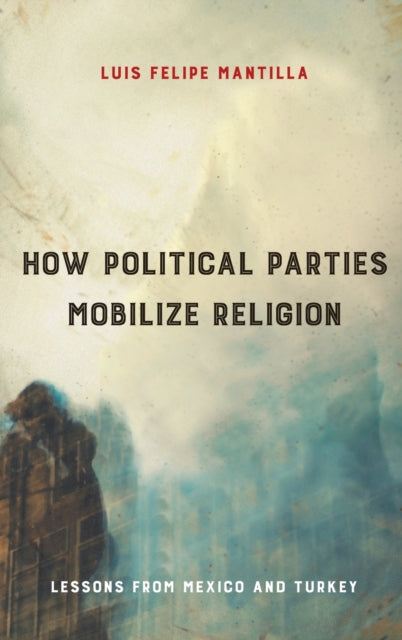
Luis Felipe Mantilla
How Political Parties Mobilize Religion: Lessons from Mexico and Turkey
How Political Parties Mobilize Religion: Lessons from Mexico and Turkey
💎 Earn 399 Points (£3.99) on this item.
YOU SAVE £11.15
- Condition: Brand new
- UK Delivery times: Usually arrives within 2 - 3 working days
- UK Shipping: Fee starts at £2.39. Subject to product weight & dimension
Bulk ordering. Want 15 or more copies? Get a personalised quote and bigger discounts. Learn more about bulk orders.
Couldn't load pickup availability
- More about How Political Parties Mobilize Religion: Lessons from Mexico and Turkey
Political mobilization in Catholic- and Sunni-majority countries takes different forms due to changes in religious communities and political institutions. Luis Felipe Mantilla's book "How Political Parties Mobilize Religion" explores the emergence and success of religious parties in Mexico and Turkey, highlighting their responsiveness to political institutions and the structure of religious communities. While electoral success was initially a boon for democracy in Mexico, it was later marred by political mismanagement and violence. In Turkey, the democratic credentials of religious mobilizers were eroded by autocratic government. Mantilla investigates the role of religious mobilization in the evolution of electoral politics and democratic institutions and its reflection of broader trends in political Catholicism and Islam.
Format: Hardback
Length: 259 pages
Publication date: 18 June 2021
Publisher: Temple University Press,U.S.
Political mobilization in contemporary Catholic- and Sunni-majority countries manifests in diverse forms, influenced by transformations within religious communities and the political institutions governing religious political engagement. In his insightful book, How Political Parties Mobilize Religion, Luis Felipe Mantilla explores the rise and success of religious parties in Mexico and Turkey, countries characterized by assertive secular regimes. Through meticulous analysis, Mantilla demonstrates that religious parties are highly responsive to both political institutions, such as electoral laws, and the broader structure of religious communities.
While the electoral success of religious mobilizers initially brought about positive outcomes for democracy in both Mexico and Turkey, their journey was marked by contrasting developments. In Mexico, the initial electoral triumph of religious parties was marred by political mismanagement, leading to corruption, escalating violence, and a decline in democratic credentials. On the other hand, in Turkey, the democratic legitimacy of religious mobilizers was profoundly eroded as the government transitioned into an increasingly autocratic regime, concentrating power in the hands of a few and rolling back fundamental liberal rights.
Mantilla delves into the intricate role of religious mobilization in shaping electoral politics and democratic institutions. He examines how these parties navigate the complex terrain of religious diversity, political competition, and societal change. By analyzing their trajectories, he seeks to understand how they reflect broader trends in political Catholicism and Islam.
The book offers valuable insights into the dynamics of religious politics and their implications for democratic development. It sheds light on the challenges and opportunities faced by religious parties and their supporters as they navigate the complex web of religious, political, and social dynamics. It also raises important questions about the role of religious institutions in shaping political outcomes and the potential conflicts that may arise between religious and secular values.
In conclusion, How Political Parties Mobilize Religion is a thought-provoking and timely book that contributes to our understanding of the complex relationship between religion, politics, and democracy. By examining the experiences of Mexico and Turkey, Mantilla provides valuable insights into the challenges and opportunities facing religious parties and their supporters in diverse contexts. This book is a must-read for scholars, policymakers, and anyone interested in understanding the dynamics of religious politics and their impact on democratic development.
Dimension: 229 x 152 (mm)
ISBN-13: 9781439920152
This item can be found in:
UK and International shipping information
UK and International shipping information
UK Delivery and returns information:
- Delivery within 2 - 3 days when ordering in the UK.
- Shipping fee for UK customers from £2.39. Fully tracked shipping service available.
- Returns policy: Return within 30 days of receipt for full refund.
International deliveries:
Shulph Ink now ships to Australia, Belgium, Canada, France, Germany, Ireland, Italy, India, Luxembourg Saudi Arabia, Singapore, Spain, Netherlands, New Zealand, United Arab Emirates, United States of America.
- Delivery times: within 5 - 10 days for international orders.
- Shipping fee: charges vary for overseas orders. Only tracked services are available for most international orders. Some countries have untracked shipping options.
- Customs charges: If ordering to addresses outside the United Kingdom, you may or may not incur additional customs and duties fees during local delivery.