MattGrossmann
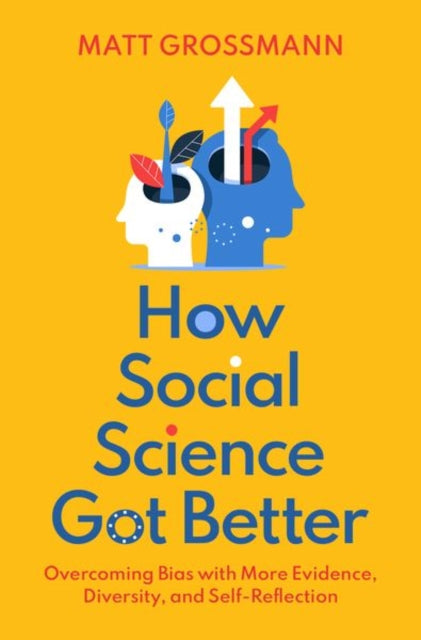
How Social Science Got Better: Overcoming Bias with More Evidence, Diversity, and Self-Reflection
How Social Science Got Better: Overcoming Bias with More Evidence, Diversity, and Self-Reflection
💎 Earn 127 Points (£1.27) on this item.
We can order this item for you. Delivery usually takes about 4 to 6 weeks.
This item is not held in our immediate stock. We will order it for you after checkout.
Estimated delivery: About 4 to 6 weeks
YOU SAVE £1.51
- Condition: Brand new
- UK Delivery times: Usually arrives within 2 - 3 working days
- UK Shipping: Fee starts at £2.39. Subject to product weight & dimension
Bulk ordering. Want 15 or more copies? Get a personalised quote and bigger discounts. Learn more about bulk orders.
Couldn't load pickup availability
- More about How Social Science Got Better: Overcoming Bias with More Evidence, Diversity, and Self-Reflection
The academic social sciences are facing criticism, but Matt Grossmann argues that they are undergoing an unparalleled renaissance of ever-broader understanding and application. He highlights how scholars now closely analyze the impact of racial, gender, geographic, methodological, political, and ideological differences on research questions, how the incentives of academia influence our research practices, and how universal human desires to avoid uncomfortable truths and easily solve problems affect our conclusions. Grossmann's account of current trends will force critics to rethink their lazy critiques and acknowledge the path-breaking advances occurring in the social sciences today.
Format: Hardback
Length: 352 pages
Publication date: 11 November 2021
Publisher: Oxford University Press Inc
The academic social sciences are often portrayed in the mainstream media in a negative light, facing mounting criticism. This criticism encompasses issues such as the failure of canonical studies to replicate, the prevalence of questionable research practices, and concerns about researcher social and political biases. In response to these criticisms, Matt Grossmann offers a robust defense of the current state of the social sciences in his book, How Social Science Got Better. Grossmann applies insights from the philosophy, history, and sociology of science to provide a comprehensive analysis of the field. He argues that social science is not in crisis but rather undergoing an unparalleled renaissance, characterized by a broader understanding and application of its principles.
One of the key arguments Grossmann makes is that social science research has never been more relevant, rigorous, or self-reflective. Scholars now have a better understanding of their blind spots and biases, which allows them to critically analyze the impact of various factors on research questions. Grossmann highlights how scholars closely examine the influence of racial, gender, geographic, methodological, political, and ideological differences on research outcomes. He also explores how academic incentives shape research practices and how universal human desires to avoid uncomfortable truths and find easy solutions can influence our conclusions.
Despite the existence of misaligned incentive structures, Grossmann argues that a messy, collective deliberation across the research community has led to an unprecedented age of theoretical diversity, open and connected data, and public scholarship. He notes that the social sciences have made significant advancements in fields such as psychology, economics, sociology, and political science, contributing to our understanding of human behavior, social systems, and societal challenges.
Grossmann's wide-ranging account of current trends in the social sciences challenges the criticisms of its critics and highlights the path-breaking advances occurring in the field. He encourages scholars and the broader public to recognize the value and significance of social science research and its potential to address pressing social, economic, and political issues.
In conclusion, the academic social sciences are facing challenges, but they are also undergoing a transformative period. Grossmann's book provides a compelling defense of the current state of the social sciences, highlighting its relevance, rigor, and self-reflection. By applying insights from various disciplines and providing new data on research trends and scholarly views, Grossmann argues that social science is not in crisis but rather poised for an unprecedented era of growth and impact.
Weight: 662g
Dimension: 164 x 244 x 31 (mm)
ISBN-13: 9780197518977
This item can be found in:
UK and International shipping information
UK and International shipping information
UK Delivery and returns information:
- Delivery within 2 - 3 days when ordering in the UK.
- Shipping fee for UK customers from £2.39. Fully tracked shipping service available.
- Returns policy: Return within 30 days of receipt for full refund.
International deliveries:
Shulph Ink now ships to Australia, Belgium, Canada, France, Germany, Ireland, Italy, India, Luxembourg Saudi Arabia, Singapore, Spain, Netherlands, New Zealand, United Arab Emirates, United States of America.
- Delivery times: within 5 - 10 days for international orders.
- Shipping fee: charges vary for overseas orders. Only tracked services are available for most international orders. Some countries have untracked shipping options.
- Customs charges: If ordering to addresses outside the United Kingdom, you may or may not incur additional customs and duties fees during local delivery.