Thomas C. Hubka
How the Working-Class Home Became Modern, 1900-1940
How the Working-Class Home Became Modern, 1900-1940
💎 Earn 138 Points (£1.38) on this item.
YOU SAVE £3.33
- Condition: Brand new
- UK Delivery times: Usually arrives within 2 - 3 working days
- UK Shipping: Fee starts at £2.39. Subject to product weight & dimension
Bulk ordering. Want 15 or more copies? Get a personalised quote and bigger discounts. Learn more about bulk orders.
Couldn't load pickup availability
- More about How the Working-Class Home Became Modern, 1900-1940
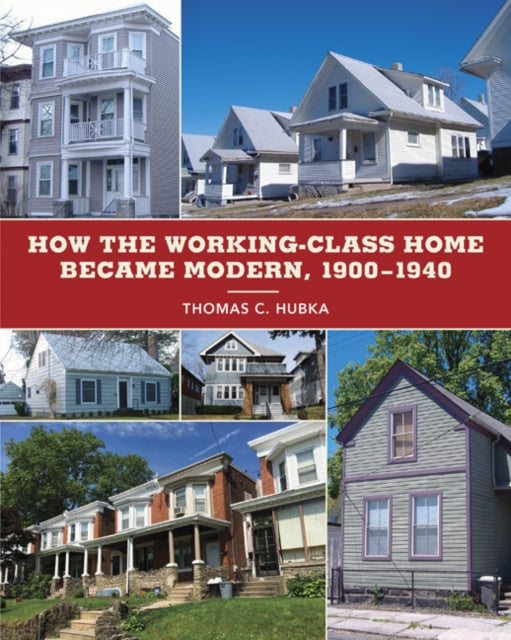
The transformation of average Americans' domestic lives, revealed through mechanical innovations and physical improvements of their homes, was largely missing from the story of domestic innovation and improvement in twentieth-century America. Thomas C. Hubka's work, focused on the broad central portion of the housing population, recalibrates longstanding ideas about the nature and development of the "middle class" and its new measure of improvement, "standards of living." His work traces changes in household hygiene, sociability, and privacy practices that launched large portions of the working classes into the middle class and reconfigures and enriches the standard account of the domestic transformation of the American home.
Format: Paperback / softback
Length: 320 pages
Publication date: 19 February 2022
Publisher: University of Minnesota Press
The transformation of average Americans' domestic lives, revealed through the mechanical innovations and physical improvements of their homes, has been a significant aspect of twentieth-century America. At the turn of the nineteenth century, the average American family still lived by kerosene light, ate in the kitchen, and used an outhouse. By 1940, electric lights, dining rooms, and bathrooms were the norm, as the traditional working-class home was fast becoming modern. However, this transformation has been largely missing from the story of domestic innovation and improvement in twentieth-century America, where such benefits seem to count primarily among the upper classes and the post–World War II denizens of suburbia. Examining the physical evidence of America's working-class houses, Thomas C. Hubka revises our understanding of how widespread domestic improvement transformed the lives of Americans in the modern era. His work, focused on the broad central portion of the housing population, recalibrates longstanding ideas about the nature and development of the "middle class" and its new measure of improvement, "standards of living." In How the Working-Class Home Became Modern, 1900–1940, Hubka analyzes a period when millions of average Americans saw accelerated improvement in their housing and domestic conditions. These improvements were intertwined with the acquisition of entirely new mechanical conveniences, new types of rooms and patterns of domestic life, and such innovations—from public utilities and kitchen appliances to remodeled and multi-unit housing—are at the center of the story Hubka tells. It is a narrative, amply illustrated and finely detailed, that traces changes in household hygiene, sociability, and privacy practices that launched large portions of the working classes into the middle class and that, in Hubka's telling, reconfigures and enriches the story of twentieth-century America.
The Transformation of Average Americans' Domestic Lives
At the turn of the nineteenth century, the average American family still lived by kerosene light, ate in the kitchen, and used an outhouse. By 1940, electric lights, dining rooms, and bathrooms were the norm, as the traditional working-class home was fast becoming modern. However, this transformation has been largely missing from the story of domestic innovation and improvement in twentieth-century America, where such benefits seem to count primarily among the upper classes and the post–World War II denizens of suburbia. Examining the physical evidence of America's working-class houses, Thomas C. Hubka revises our understanding of how widespread domestic improvement transformed the lives of Americans in the modern era. His work, focused on the broad central portion of the housing population, recalibrates longstanding ideas about the nature and development of the "middle class" and its new measure of improvement, "standards of living."
The Transformation of Average Americans' Domestic Lives
In How the Working-Class Home Became Modern, 1900–1940, Hubka analyzes a period when millions of average Americans saw accelerated improvement in their housing and domestic conditions. These improvements were intertwined with the acquisition of entirely new mechanical conveniences, new types of rooms and patterns of domestic life, and such innovations—from public utilities and kitchen appliances to remodeled and multi-unit housing—are at the center of the story Hubka tells. It is a narrative, amply illustrated and finely detailed, that traces changes in household hygiene, sociability, and privacy practices that launched large portions of the working classes into the middle class and that, in Hubka's telling, reconfigures and enriches the story of twentieth-century America.
Dimension: 254 x 203 x 38 (mm)
ISBN-13: 9780816693016
This item can be found in:
UK and International shipping information
UK and International shipping information
UK Delivery and returns information:
- Delivery within 2 - 3 days when ordering in the UK.
- Shipping fee for UK customers from £2.39. Fully tracked shipping service available.
- Returns policy: Return within 30 days of receipt for full refund.
International deliveries:
Shulph Ink now ships to Australia, Belgium, Canada, France, Germany, Ireland, Italy, India, Luxembourg Saudi Arabia, Singapore, Spain, Netherlands, New Zealand, United Arab Emirates, United States of America.
- Delivery times: within 5 - 10 days for international orders.
- Shipping fee: charges vary for overseas orders. Only tracked services are available for most international orders. Some countries have untracked shipping options.
- Customs charges: If ordering to addresses outside the United Kingdom, you may or may not incur additional customs and duties fees during local delivery.