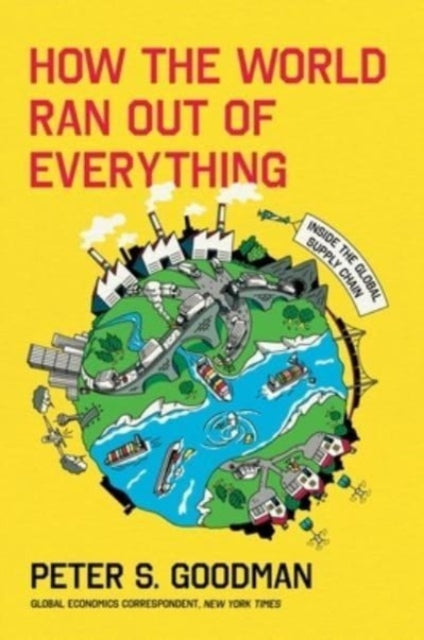
Peter S. Goodman
How the World Ran Out of Everything: Inside the Global Supply Chain
How the World Ran Out of Everything: Inside the Global Supply Chain
💎 Earn 88 Points (£0.88) on this item.
YOU SAVE £7.30
- Condition: Brand new
- UK Delivery times: Usually arrives within 2 - 3 working days
- UK Shipping: Fee starts at £2.39. Subject to product weight & dimension
Bulk ordering. Want 15 or more copies? Get a personalised quote and bigger discounts. Learn more about bulk orders.
Couldn't load pickup availability
- More about How the World Ran Out of Everything: Inside the Global Supply Chain
The global supply chain is complex and fragile, with enormous ships stuck at sea, warehouses overflowing, and delivery trucks stalled. This has led to a scarcity of everything from breakfast cereal to medical devices, from frivolous goods to lifesaving necessities. Peter S. Goodman's reporting takes readers deep into the elaborate system, showcasing the triumphs and struggles of the human players who operate it. He argues for reforming the supply chain to become truly reliable and resilient, demanding a radical redrawing of the bargain between labor and shareholders and deeper attention paid to how we get the things we need.
Format: Hardback
Length: 416 pages
Publication date: 20 June 2024
Publisher: HarperCollins Publishers Inc
By the New York Times Global Economics Correspondent, an extraordinary journey to understand the worldwide supply chain — exposing both the fascinating pathways of manufacturing and transportation that bring products to your doorstep, and the ruthless business logic that has left local communities at the mercy of a complex and fragile network for their basic necessities. A tale that will change how you look at the world. —Mark Leibovich One of Foreign Policy's Best Books of the Year How does the wealthiest country on earth run out of protective gear in the middle of a public health catastrophe? How do its parents find themselves unable to locate crucially needed infant formula? How do its largest companies spend billions of dollars making cars that no one can drive for a lack of chips? The last few years have radically highlighted the intricacy and fragility of the global supply chain. Enormous ships were stuck at sea, warehouses overflowed, and delivery trucks stalled. The result was a scarcity of everything from breakfast cereal to medical devices, from frivolous goods to lifesaving necessities. And while the scale of the pandemic shock was unprecedented, it underscored the troubling reality that the system was fundamentally at risk of descending into chaos all along. And it still is. Sabotaged by financial interests, loss of transparency in markets, and worsening working conditions for the people tasked with keeping the gears turning, our global supply chain has become perpetually on the brink of collapse. In How the World Ran Out of Everything, award-winning journalist Peter S. Goodman reveals the fascinating inner workings of our supply chain and the factors that have led to its constant, dangerous vulnerability. His reporting takes readers deep.
The Global Supply Chain: An Extraordinary Journey
The global supply chain is a complex and fragile network that connects manufacturers, transportation providers, and consumers around the world. It plays a crucial role in bringing products to your doorstep, but it is also vulnerable to a range of factors that can cause shortages and disruptions. In recent years, the global supply chain has been tested by a series of events, including the COVID-19 pandemic, which has highlighted the importance of supply chain resilience.
The Inner Workings of the Supply Chain
The global supply chain is made up of a complex web of suppliers, manufacturers, and distributors. Each link in the chain is responsible for producing, transporting, and delivering products to the next link in the chain. The supply chain is also characterized by a high level of specialization, with each link specializing in a specific product or service. This specialization allows for efficiency and cost savings, but it also makes the supply chain vulnerable to disruptions.
Factors that Have Led to the Fragility of the Supply Chain
There are several factors that have led to the fragility of the global supply chain. One of the most significant is the increasing globalization of the economy. As companies seek to expand their markets and reduce costs, they are increasingly outsourcing production to countries with lower labor costs and fewer regulations. This has led to a concentration of production in a few countries, which can make the supply chain vulnerable to disruptions in those countries.
The Pandemic Shock
The COVID-19 pandemic has been one of the most significant events to impact the global supply chain in recent years. The pandemic has caused a global shortage of protective gear, medical devices, and other essential products. This has led to shortages and price increases in many countries, and has also highlighted the vulnerability of the supply chain to disruptions.
The Role of Financial Interests
Financial interests have played a significant role in the fragility of the global supply chain. Many companies are focused on short-term profits, and are willing to cut corners on safety and quality to achieve these profits. This has led to a lack of transparency in markets, and has made it difficult for consumers to make informed decisions about the products they purchase.
Loss of Transparency in Markets
Loss of transparency in markets has also contributed to the fragility of the global supply chain. Many companies are not transparent about their supply chains, and this makes it difficult for consumers to know where their products come from and how they are produced. This can lead to consumer mistrust and a lack of confidence in the supply chain.
Worsening Working Conditions for Supply Chain Workers
Worsening working conditions for supply chain workers have also contributed to the fragility of the global supply chain. Many workers are paid low wages, work long hours, and are exposed to dangerous working conditions. This can lead to worker dissatisfaction and a lack of motivation, which can in turn lead to disruptions in the supply chain.
The Need for Resilience
In order to address the fragility of the global supply chain, it is necessary to build resilience into the system. This can be done by increasing transparency in markets, improving working conditions for supply chain workers, and diversifying supply chains. Diversification can be done by sourcing products from a wider range of suppliers and manufacturers, and by developing new supply chains that are more resilient to disruptions.
Conclusion
The global supply chain is a complex and fragile network that connects manufacturers, transportation providers, and consumers around the world. It plays a crucial role in bringing products to your doorstep, but it is also vulnerable to a range of factors that can cause shortages and disruptions. In recent years, the global supply chain has been tested by a series of events, including the COVID-19 pandemic, which has highlighted the importance of supply chain resilience. By building resilience into the system, we can ensure that the global supply chain remains stable and reliable in the future.
Weight: 616g
Dimension: 160 x 238 x 37 (mm)
ISBN-13: 9780063257924
This item can be found in:
UK and International shipping information
UK and International shipping information
UK Delivery and returns information:
- Delivery within 2 - 3 days when ordering in the UK.
- Shipping fee for UK customers from £2.39. Fully tracked shipping service available.
- Returns policy: Return within 30 days of receipt for full refund.
International deliveries:
Shulph Ink now ships to Australia, Belgium, Canada, France, Germany, Ireland, Italy, India, Luxembourg Saudi Arabia, Singapore, Spain, Netherlands, New Zealand, United Arab Emirates, United States of America.
- Delivery times: within 5 - 10 days for international orders.
- Shipping fee: charges vary for overseas orders. Only tracked services are available for most international orders. Some countries have untracked shipping options.
- Customs charges: If ordering to addresses outside the United Kingdom, you may or may not incur additional customs and duties fees during local delivery.