Celeste Winston
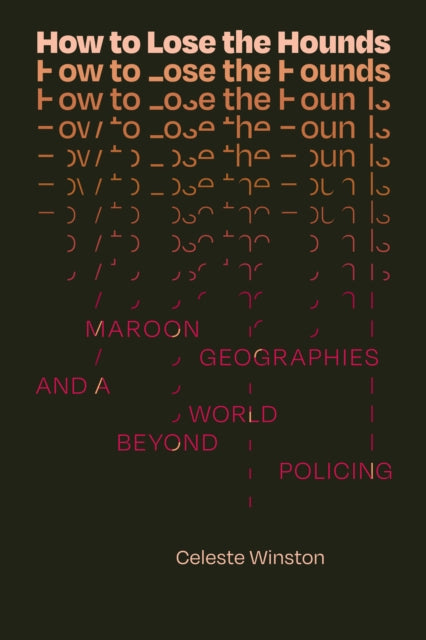
How to Lose the Hounds: Maroon Geographies and a World beyond Policing
How to Lose the Hounds: Maroon Geographies and a World beyond Policing
💎 Earn 357 Points (£3.57) on this item.
YOU SAVE £8.60
- Condition: Brand new
- UK Delivery times: Usually arrives within 2 - 3 working days
- UK Shipping: Fee starts at £2.39. Subject to product weight & dimension
Bulk ordering. Want 15 or more copies? Get a personalised quote and bigger discounts. Learn more about bulk orders.
Couldn't load pickup availability
- More about How to Lose the Hounds: Maroon Geographies and a World beyond Policing
Celeste Winston's book "How to Lose the Hounds" explores marronage, the practice of flight from and placemaking beyond slavery, as a guide to police abolition. She examines historically Black maroon communities in the Maryland suburbs of Washington, DC, that have been subjected to violent excesses of police power from slavery until the present day, and shows how marronage provides critical lessons for reimagining public safety and community well-being. Maroon geographies constitute part of a Black placemaking tradition that asserts life-affirming forms of community.
Format: Hardback
Length: 192 pages
Publication date: 13 October 2023
Publisher: Duke University Press
Celeste Winston delves into the concept of marronage, which encompasses the act of fleeing from and creating new spaces beyond slavery. Through her exploration, she offers a valuable guide to the abolition of the police. Winston focuses on historically Black maroon communities in the Maryland suburbs of Washington, DC, which have faced relentless and abusive police power from slavery to the present day. By tracing the long and ongoing historical geography of Black freedom struggles in these communities, Winston demonstrates how marronage holds critical insights for reimagining public safety and community well-being. These freedom struggles unfold within what Winston refers to as maroon geographies, which are sites of escape from slavery and the spaces of freedom created by multigenerational Black communities. Maroon geographies constitute an integral part of a Black placemaking tradition that upholds life-affirming forms of community. Winston argues that maroon geographies serve as a primary means of Black flight, securing ground and constructing places of freedom that envision and plan a world beyond policing.
Introduction:
Marronage, as explored by Celeste Winston, represents a profound and multifaceted concept that encompasses the act of fleeing from and creating new spaces beyond slavery. It serves as a guide to the abolition of the police, offering valuable insights into the historical geography of Black freedom struggles and the potential for reimagining public safety and community well-being. In this essay, we will delve into the essence of marronage, its historical context, and its implications for the future of Black communities.
Historical Context:
Marronage has a rich historical legacy, dating back to the era of slavery when Black individuals sought refuge in remote and hidden locations to escape the oppressive conditions of captivity. These communities, known as maroon communities, emerged as a response to the brutalities of slavery and the relentless pursuit of freedom by Black people. Maroon communities were characterized by their self-sufficiency, resilience, and resistance to the dominant society.
Maroon Geographies:
Maroon geographies are sites of flight from slavery and the spaces of freedom produced in multigenerational Black communities. These geographies are not limited to physical spaces but also include the cultural, social, and political dimensions of Black existence. Maroon geographies operate as a central method of Black flight, holding ground and constructing places of freedom in ways that imagine and plan a world beyond policing.
Black Placemaking Tradition:
Maroon geographies constitute part of a Black placemaking tradition that asserts life-affirming forms of community. Black placemaking is a practice that seeks to create spaces that celebrate Black identity, culture, and heritage while promoting social justice and equity. It involves the active participation of Black communities in the design, planning, and management of their spaces, ensuring that their voices and perspectives are heard and valued.
Implications for Police Abolition:
The lessons learned from marronage provide critical insights for reimagining public safety and community well-being. Marronage highlights the need to address the root causes of police violence, such as systemic racism, economic inequality, and the militarization of law enforcement. It emphasizes the importance of community-driven solutions and the empowerment of Black communities to take control of their own safety and well-being.
Conclusion:
In conclusion, marronage offers a powerful framework for understanding the historical geography of Black freedom struggles and the potential for creating a world beyond policing. By recognizing the significance of maroon geographies and the Black placemaking tradition, we can work towards building safer, more inclusive, and equitable communities for all. The lessons learned from marronage can serve as a catalyst for transformative change and a roadmap for building a future free from the oppressive forces of police violence.
Weight: 454g
Dimension: 229 x 152 (mm)
ISBN-13: 9781478020509
This item can be found in:
UK and International shipping information
UK and International shipping information
UK Delivery and returns information:
- Delivery within 2 - 3 days when ordering in the UK.
- Shipping fee for UK customers from £2.39. Fully tracked shipping service available.
- Returns policy: Return within 30 days of receipt for full refund.
International deliveries:
Shulph Ink now ships to Australia, Belgium, Canada, France, Germany, Ireland, Italy, India, Luxembourg Saudi Arabia, Singapore, Spain, Netherlands, New Zealand, United Arab Emirates, United States of America.
- Delivery times: within 5 - 10 days for international orders.
- Shipping fee: charges vary for overseas orders. Only tracked services are available for most international orders. Some countries have untracked shipping options.
- Customs charges: If ordering to addresses outside the United Kingdom, you may or may not incur additional customs and duties fees during local delivery.