Robyn Silverman PhD
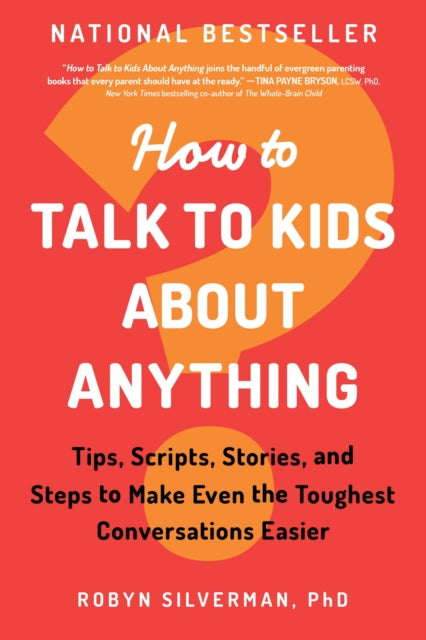
How to Talk to Kids about Anything: Tips, Scripts, Stories, and Steps to Make Even the Toughest Conversations Easier
How to Talk to Kids about Anything: Tips, Scripts, Stories, and Steps to Make Even the Toughest Conversations Easier
💎 Earn 45 Points (£0.45) on this item.
YOU SAVE £3.80
- Condition: Brand new
- UK Delivery times: Usually arrives within 2 - 3 working days
- UK Shipping: Fee starts at £2.39. Subject to product weight & dimension
Bulk ordering. Want 15 or more copies? Get a personalised quote and bigger discounts. Learn more about bulk orders.
Couldn't load pickup availability
- More about How to Talk to Kids about Anything: Tips, Scripts, Stories, and Steps to Make Even the Toughest Conversations Easier
Dr. Robyn Silverman, a child development specialist, and mom, guides parents through the spectrum of kids' curious questions in her book, How to Talk to Kids About Anything. She provides strategies and scripts to prepare for challenging conversations, such as death, sex, friendship, divorce, and money, based on the expertise of dozens of experts and her own experience.
Format: Paperback / softback
Length: 400 pages
Publication date: 11 January 2024
Publisher: Sourcebooks, Inc
When people die, where do they go?
This is a question that has puzzled humans for centuries, and it is one that parents often find difficult to answer to their children. While there are many different religious and philosophical beliefs about the afterlife, there is still no definitive scientific answer to this question.
One approach that parents can take is to be honest with their children about the fact that death is a natural part of life. They can explain that when someone dies, their body stops functioning and their soul or spirit leaves their body. They can also talk about the different ways that people believe the soul or spirit may continue to exist, such as in heaven, hell, or reincarnation.
Another approach is to use storytelling to help children understand the concept of death. Parents can read books or tell stories about people who have died and how they have affected the lives of others. This can help children to see that death is not something to be feared or avoided, but rather a natural part of life that can bring people closer together.
It is also important for parents to be sensitive to their children's feelings and to provide them with support and comfort during this difficult time. They can offer hugs, kisses, and words of encouragement, and they can also seek out professional help if they are struggling to cope with their grief or loss.
In conclusion, answering children's questions about death can be a challenging task, but it is an important one that parents must take seriously. By being honest, sensitive, and supportive, parents can help their children to understand the concept of death and to cope with their grief and loss in a healthy and positive way.
Why is her skin darker than mine?
This is a question that many people of different races and ethnicities have asked at some point in their lives. The answer to this question is complex and multifaceted, and it is influenced by a wide range of factors, including genetics, environment, and culture.
One of the main factors that contributes to skin color is genetics. Skin color is determined by a combination of genes that are passed down from parents to their children. These genes can be influenced by a variety of factors, including race, ethnicity, and geographic location. For example, people of African descent tend to have darker skin color than people of European descent because they have a higher percentage of melanin, the pigment that gives skin its color.
Another factor that contributes to skin color is environment. Exposure to sunlight, for example, can darken the skin. People who live in areas with high levels of ultraviolet radiation, such as the tropics or the southern United States, are more likely to have darker skin than people who live in areas with lower levels of ultraviolet radiation, such as the northern United States or Europe.
Culture also plays a role in skin color. In some cultures, lighter skin is considered more attractive than darker skin, and people may use skin-lightening products or engage in practices such as sun tanning to achieve a lighter skin tone. In other cultures, darker skin is considered more beautiful and is seen as a sign of strength and resilience.
It is important to note that skin color is not a definitive indicator of a person's character or worth. Everyone has unique physical characteristics that make them who they are, and it is important to celebrate and appreciate these differences.
In conclusion, the question of why skin color is different between people is complex and multifaceted. Genetics, environment, and culture all play a role in determining skin color, and it is important to approach this question with sensitivity and respect for all individuals.
But how does the baby get in there?
This is a question that many people have asked at some point in their lives, and it is one that can be confusing and difficult to answer. The process of childbirth is a complex and intricate one, and it involves a number of different stages and processes.
In the beginning, the fertilized egg, or zygote, travels down the fallopian tube and implants itself in the lining of the uterus. This process, known as implantation, usually takes place
approximately 9-12 days after fertilization. Once the zygote has implanted itself in the uterus, it begins to divide and grow into a fetus, which is a developing baby. The fetus is surrounded by a fluid-filled sac called the amniotic sac, which provides protection and support for the growing baby.
During the first trimester of pregnancy, the fetus is primarily composed of cells that will eventually form the baby's organs and tissues. The baby's head, body, and limbs begin to develop, and the heart begins to beat. By the end of the first trimester, the fetus is approximately the size of a grape.
During the second trimester of pregnancy, the fetus continues to grow and develop. The baby's organs and tissues continue to form, and the baby's face begins to take shape. The baby's arms and legs begin to grow, and the baby's brain begins to develop. By the end of the second trimester, the fetus is approximately the size of a banana.
During the third trimester of pregnancy, the fetus continues to grow and develop. The baby's organs and tissues continue to mature, and the baby's weight increases. The baby's skin becomes more wrinkled and pink, and the baby's hair begins to grow. By the end of the third trimester, the fetus is approximately the size of a watermelon.
During childbirth, the baby is born through the vagina. The process of childbirth can vary depending on the individual and the circumstances of the pregnancy, but it generally involves a number of different stages. The first stage of childbirth is labor, which is the process of contractions that occur as the baby's head passes through the cervix and into the vagina. Labor can last for hours or days, and it is often accompanied by pain and discomfort.
During the second stage of childbirth, the baby is born. This stage involves the delivery of the placenta, which is the organ that connects the mother and the baby and provides the baby with oxygen and nutrients. The placenta is usually delivered after the baby has been born, but it can sometimes be delivered before the baby has been born.
After the baby has been born, the mother and the baby are cared for in a hospital or birthing center. The mother may receive pain medication, antibiotics, and other medications to help her recover from childbirth. The baby may also receive nutrition and care, including breastfeeding, which is the best way to provide the baby with the nutrients and antibodies that they need to grow and develop.
In conclusion, the process of childbirth is a complex and intricate one that involves a number of different stages and processes. It is important for parents to be informed about the process of childbirth and to seek out information and support from their healthcare providers before and during childbirth. By being informed and prepared, parents can help ensure that childbirth is a safe and healthy experience for themselves and their babies.
Don't panic. While we know that the first step to connecting deeply with our kids is being able to communicate, empathize, and answer their biggest queries, what do you do when that tricky-to-answer question comes out of the blue? Sometimes we just don't know what to say, so we simply change the subject or give a quick, throwaway answer-and hope it doesn't come up again. Dr. Robyn Silverman, host of the How to Talk to Kids About Anything Parenting Podcast, gets it. A child development specialist and mom, she'll stick with you every step of the way. In this book, Dr. Robyn takes you through the whole spectrum of kids' curious questions, giving you the strategies and scripts to prepare you for life's most challenging conversations. That way, your kids get age-appropriate information straight from you, their trusted source, rather than from peers, the media, or the internet. You'll learn how to develop calm, well-thought-out answers to tricky questions on subjects including:
Death
Sex
Friendship
Divorce
Money
And more!
Drawing on the expertise of dozens of well-known experts, Dr. Robyn's decades of working with children and teens, and her personal experience as a mom, How to Talk to Kids About Anything is a vital resource for parents who value having honest, meaningful conversations with their kids. When you just can't find the right words, this book will be your guide to talking to your kids about anything as they grow from toddlers to teens... and beyond.
In conclusion, answering children's questions about death, skin color, and childbirth can be challenging, but it is an important part of being a parent. By being honest, sensitive, and supportive, parents can help their children to understand the world around them and to develop the skills and knowledge they need to navigate the challenges of life.
Weight: 576g
Dimension: 210 x 140 x 27 (mm)
ISBN-13: 9781728246987
UK and International shipping information
UK and International shipping information
UK Delivery and returns information:
- Delivery within 2 - 3 days when ordering in the UK.
- Shipping fee for UK customers from £2.39. Fully tracked shipping service available.
- Returns policy: Return within 30 days of receipt for full refund.
International deliveries:
Shulph Ink now ships to Australia, Belgium, Canada, France, Germany, Ireland, Italy, India, Luxembourg Saudi Arabia, Singapore, Spain, Netherlands, New Zealand, United Arab Emirates, United States of America.
- Delivery times: within 5 - 10 days for international orders.
- Shipping fee: charges vary for overseas orders. Only tracked services are available for most international orders. Some countries have untracked shipping options.
- Customs charges: If ordering to addresses outside the United Kingdom, you may or may not incur additional customs and duties fees during local delivery.