Lee Alan Dugatkin,Lyudmila Trut
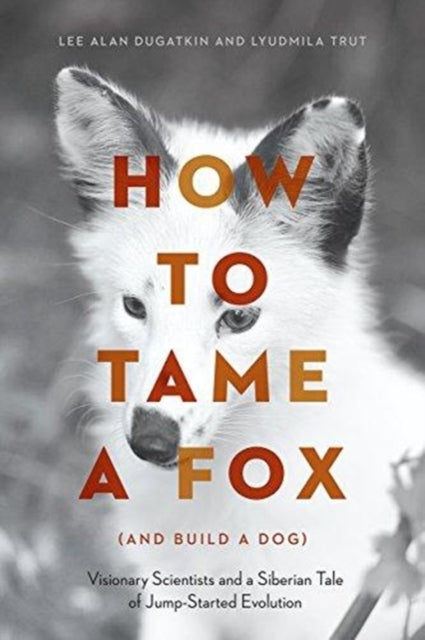
How to Tame a Fox (and Build a Dog): Visionary Scientists and a Siberian Tale of Jump-Started Evolution
How to Tame a Fox (and Build a Dog): Visionary Scientists and a Siberian Tale of Jump-Started Evolution
💎 Earn 79 Points (£0.79) on this item.
YOU SAVE £2.07
- Condition: Brand new
- UK Delivery times: Usually arrives within 2 - 3 working days
- UK Shipping: Fee starts at £2.39. Subject to product weight & dimension
Bulk ordering. Want 15 or more copies? Get a personalised quote and bigger discounts. Learn more about bulk orders.
Couldn't load pickup availability
- More about How to Tame a Fox (and Build a Dog): Visionary Scientists and a Siberian Tale of Jump-Started Evolution
Siberian foxes, bred by biologists Dmitri Belyaev and Lyudmila Trut in 1959, are the result of an astonishing experiment in breeding. In just a decade, they evolved into puppy-like foxes with floppy ears, piebald spots, and curly tails, and became increasingly interested in human companionship. Fifty-six generations of foxes have been domesticated, and the study continues to teach us about the genetic and behavioral evolution of domesticated animals.
\n Format: Paperback / softback
\n Length: 240 pages
\n Publication date: 06 October 2018
\n Publisher: The University of Chicago Press
\n
Tucked away in the remote reaches of Siberia, there exists a remarkable creature that resembles a cross between a dog and a fox. These furry, four-legged beings possess wagging tails and floppy ears, exuding an air of docile and friendly demeanor reminiscent of a beloved lapdog. However, it's important to note that these are not dogs but rather foxes, the result of an extraordinary experiment in breeding that spans thousands of years of evolution in just a few decades. In 1959, renowned biologists Dmitri Belyaev and Lyudmila Trut embarked on a mission to recreate the evolution of wolves into dogs in real time, hoping to witness the process of domestication firsthand. This extraordinary undertaking is the subject of How to Tame a Fox, a captivating book written by Lee Dugatkin and Trut.
The natural evolution of wolves is typically attributed to a span of approximately 15,000 years, but Belyaev and Trut's fox breeding experiments achieved a remarkable feat within just a decade. Through meticulous selection and breeding, they succeeded in creating foxes that bore physical characteristics reminiscent of puppies, including floppy ears, piebald spots, and curly tails. Alongside these physical transformations, genetic and behavioral changes also occurred. The foxes were selectively bred for tameness, and with each generation, they grew increasingly interested in forming bonds with humans. Trut, who has been a key scientist in this work since Belyaev's passing in 1985, alongside science writer Lee Dugatkin, shares the captivating story behind this adventure, science, politics, and the profound love that drove it.
How to Tame a Fox takes readers on a journey into the heart of this groundbreaking experiment, unfolding the scientific intricacies and the profound implications it holds. The authors vividly describe the challenges and rewards of domestication, shedding light on the complex interplay between genetics, behavior, and human intervention. By studying the fifty-six generations of domesticated foxes, researchers have gained valuable insights into the genetic and behavioral evolution of domesticated animals. This knowledge has far-reaching implications for animal welfare, agriculture, and our understanding of the origins of domestication itself.
The domestication of foxes has opened up new avenues for research and innovation. Scientists have explored the potential of using foxes as models for studying diseases, such as cancer and diabetes, as they share genetic similarities with humans. Additionally, foxes have shown promise in various fields, including therapy, companionship, and even as pest control agents. The journey of taming foxes has not been without its controversies, however. Some critics argue that the experiment is unethical, as it involves manipulating the natural evolution of animals. Others raise concerns about the potential impact on the ecosystem if these domesticated foxes were to escape into the wild.
Despite these debates, the domestication of foxes continues to be a topic of intense interest and study. The remarkable achievements of Belyaev and Trut in recreating the evolution of wolves into dogs in real time have left a lasting legacy in scientific history. How to Tame a Fox is a captivating book that delves into the science, politics, and love that drove this extraordinary endeavor. It serves as a reminder of the incredible power of human ingenuity and the endless possibilities that arise when we push the boundaries of knowledge.
In conclusion, the domestication of foxes is a testament to the remarkable capabilities of human science and innovation. Through the meticulous breeding of foxes, researchers have unlocked valuable insights into the genetic and behavioral evolution of domesticated animals. While there are debates and controversies surrounding this experiment, it continues to inspire and drive scientific progress. How to Tame a Fox is a captivating book that offers a deep dive into the world of fox domestication, providing readers with a fascinating glimpse into the past, present, and future of this remarkable endeavor.
\n Weight: 384g\n
Dimension: 220 x 160 x 15 (mm)\n
ISBN-13: 9780226599717\n \n
UK and International shipping information
UK and International shipping information
UK Delivery and returns information:
- Delivery within 2 - 3 days when ordering in the UK.
- Shipping fee for UK customers from £2.39. Fully tracked shipping service available.
- Returns policy: Return within 30 days of receipt for full refund.
International deliveries:
Shulph Ink now ships to Australia, Belgium, Canada, France, Germany, Ireland, Italy, India, Luxembourg Saudi Arabia, Singapore, Spain, Netherlands, New Zealand, United Arab Emirates, United States of America.
- Delivery times: within 5 - 10 days for international orders.
- Shipping fee: charges vary for overseas orders. Only tracked services are available for most international orders. Some countries have untracked shipping options.
- Customs charges: If ordering to addresses outside the United Kingdom, you may or may not incur additional customs and duties fees during local delivery.