Naomi S.Baron
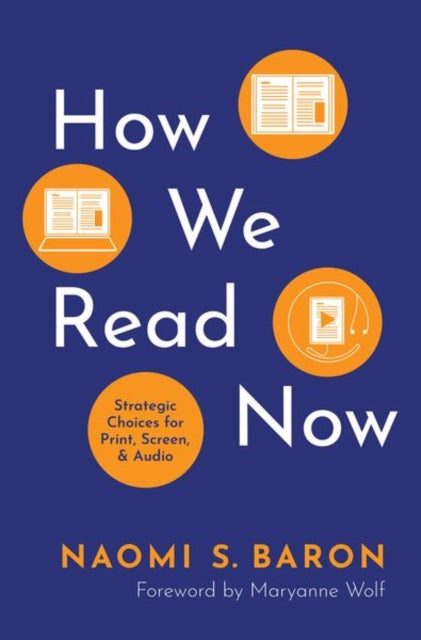
How We Read Now: Strategic Choices for Print, Screen, and Audio
How We Read Now: Strategic Choices for Print, Screen, and Audio
💎 Earn 127 Points (£1.27) on this item.
YOU SAVE £1.51
- Condition: Brand new
- UK Delivery times: Usually arrives within 2 - 3 working days
- UK Shipping: Fee starts at £2.39. Subject to product weight & dimension
Bulk ordering. Want 15 or more copies? Get a personalised quote and bigger discounts. Learn more about bulk orders.
Couldn't load pickup availability
- More about How We Read Now: Strategic Choices for Print, Screen, and Audio
The digital revolution has transformed reading, and with the recent turn to remote learning, onscreen reading may seem like the only viable option. However, selecting digital is often based on cost or convenience rather than educational evidence. How We Read Now, by Naomi Baron, explains how reading medium impacts learning and offers practical approaches for maximizing learning with print, digital text, audio, and video.
\n Format: Hardback
\n Length: 320 pages
\n Publication date: 30 July 2021
\n Publisher: Oxford University Press Inc
\n
The impact of reading medium on learning is a complex and multifaceted topic that requires careful consideration. In the digital age, where remote learning has become the norm, onscreen reading has become the predominant method of reading. However, the selection of digital reading materials is often driven by cost or convenience rather than by educational evidence. This has led to a growing need for understanding how different reading mediums affect learning and what strategies can be employed to read effectively in all formats.
In her book, How We Read Now, Naomi Baron, a foremost expert in the field, delves into the intricacies of reading and learning across various formats. Drawing on a wealth of knowledge and research, Baron explores important differences in the way we concentrate, understand, and remember information. She addresses key challenges such as student complaints about print being boring and the hazards of digital reading for critical thinking. Rather than advocating for one format over another, Baron explains how we read and learn in different settings, shedding new light on the current state of reading.
The book then connects research insights to practical applications, offering practical approaches for maximizing learning with print, digital text, audio, and video. Since screens and audio are now entrenched platforms for reading, it is crucial to rethink ways of helping readers at all stages use them more wisely. How We Read Now provides valuable guidance on how to achieve this.
One of the key insights of the book is that reading is a multi-sensory experience that involves more than just the visual sense. Baron emphasizes the importance of considering the auditory and tactile aspects of reading, such as the sound of pages turning and the physical sensation of holding a book. By engaging multiple senses, readers can enhance their comprehension and retention of information.
Another important aspect of the book is the recognition of the role of context in reading. Baron argues that the reading environment, including the physical setting, the time of day, and the individual reader's mood, can have a significant impact on their reading experience. By adapting the reading environment to suit the reader's needs, educators can create a more conducive learning environment.
In addition to the impact of reading medium on learning, Baron also explores the role of technology in shaping reading practices. She discusses the benefits and challenges of digital reading, including the potential for distraction and the need for digital literacy skills. Baron advocates for a balanced approach to technology use in reading, where it is used as a tool to enhance learning rather than as a replacement for traditional reading practices.
The book also highlights the importance of reading for pleasure and personal growth. Baron argues that reading can be a source of joy, relaxation, and intellectual stimulation, and that it can play a crucial role in developing critical thinking skills and empathy. By promoting a culture of reading for pleasure, educators can encourage lifelong learning and promote a more engaged and literate society.
In conclusion, How We Read Now is an engaging and authoritative guide to the impact of reading medium on learning. By drawing on a wealth of knowledge and research, Baron provides valuable insights into the differences in the way
The impact of reading medium on learning is a complex and multifaceted topic that requires careful consideration. In the digital age, where remote learning has become the norm, onscreen reading has become the predominant method of reading. However, the selection of digital reading materials is often driven by cost or convenience rather than by educational evidence. This has led to a growing need for understanding how different reading mediums affect learning and what strategies can be employed to read effectively in all formats.
In her book, How We Read Now, Naomi Baron, a foremost expert in the field, delves into the intricacies of reading and learning across various formats. Drawing on a wealth of knowledge and research, Baron explores important differences in the way that we concentrate, understand, and remember information. She addresses key challenges such as student complaints about print being boring and the hazards of digital reading for critical thinking. Rather than advocating for one format over another, Baron explains how we read and learn in different settings, shedding new light on the current state of reading.
The book then connects research insights to practical applications, offering practical approaches for maximizing learning with print, digital text, audio, and video. Since screens and audio are now entrenched platforms for reading, it is crucial to rethink ways of helping readers at all stages use them more wisely. How We Read Now provides valuable guidance on how to achieve this.
One of the key insights of the book is that reading is a multi-sensory experience that involves more than just the visual sense. Baron emphasizes the importance of considering the auditory and tactile aspects of reading, such as the sound of pages turning and the physical sensation of holding a book. By engaging multiple senses, readers can enhance their comprehension and retention of information.
Another important aspect of the book is the recognition of the role of context in reading. Baron argues that the reading environment, including the physical setting, the time of day, and the individual reader's mood, can have a significant impact on their reading experience. By adapting the reading environment to suit the reader's needs, educators can create a more conducive learning environment.
In addition to the impact of reading medium on learning, Baron also explores the role of technology in shaping reading practices. She discusses the benefits and challenges of digital reading, including the potential for distraction and the need for digital literacy skills. Baron advocates for a balanced approach to technology use in reading, where it is used as a tool to enhance learning rather than as a replacement for traditional reading practices.
The book also highlights the importance of reading for pleasure and personal growth. Baron argues that reading can be a source of joy, relaxation, and intellectual stimulation, and that it can play a crucial role in developing critical thinking skills and empathy. By promoting a culture of reading for pleasure, educators can encourage lifelong learning and promote a more engaged and literate society.
In conclusion, How We Read Now is an engaging and authoritative guide to the impact of reading medium on learning. By drawing on a wealth of knowledge and research, Baron provides valuable insights into the differences in the way
The impact of reading medium on learning is a complex and multifaceted topic that requires careful consideration. In the digital age, where remote learning has become the norm, onscreen reading has become the predominant method of reading. However, the selection of digital reading materials is often driven by cost or convenience rather than by educational evidence. This has led to a growing need for understanding how different reading mediums affect learning and what strategies can be employed to read effectively in all formats.
In her book, How We Read Now, Naomi Baron, a foremost expert in the field, delves into the intricacies of reading and learning across various formats. Drawing on a wealth of knowledge and research, Baron explores important differences in the way that we concentrate, understand, and remember information. She addresses key challenges such as student complaints about print being boring and the hazards of digital reading for critical thinking. Rather than advocating for one format over another, Baron explains how we read and learn in different settings, shedding new light on the current state of reading.
The book then connects research insights to practical applications, offering practical approaches for maximizing learning with print, digital text, audio, and video. Since screens and audio are now entrenched platforms for reading, it is crucial to rethink ways of helping readers at all stages use them more wisely. How We Read Now provides valuable guidance on how to achieve this.
One of the key insights of the book is that reading is a multi-sensory experience that involves more than just the visual sense. Baron emphasizes the importance of considering the auditory and tactile aspects of reading, such as the sound of pages turning and the physical sensation of holding a book. By engaging multiple senses, readers can enhance their comprehension and retention of information.
Another important aspect of the book is the recognition of the role of context in reading. Baron argues that the reading environment, including the physical setting, the time of day, and the individual reader's mood, can have a significant impact on their reading experience. By adapting the reading environment to suit the reader's needs, educators can create a more conducive learning environment.
In addition to the impact of reading medium on learning, Baron also explores the role of technology in shaping reading practices. She discusses the benefits and challenges of digital reading, including the potential for distraction and the need for digital literacy skills. Baron advocates for a balanced approach to technology use in reading, where it is used as a tool to enhance learning rather than as a replacement for traditional reading practices.
The book also highlights the importance of reading for pleasure and personal growth. Baron argues that reading can be a source of joy, relaxation, and intellectual stimulation, and that it can play a crucial role in developing critical thinking skills and empathy. By promoting a culture of reading for pleasure, educators can encourage lifelong learning and promote a more engaged and literate society.
In conclusion, How We Read Now is an engaging and authoritative guide to the impact of reading medium on learning. By drawing on a wealth of knowledge and research, Baron provides valuable insights into the differences in the way
The impact of reading medium on learning is a complex and multifaceted topic that requires careful consideration. In the digital age, where remote learning has become the norm, onscreen reading has become the predominant method of reading. However, the selection of digital reading materials is often driven by cost or convenience rather than by educational evidence. This has led to a growing need for understanding how different reading mediums affect learning and what strategies can be employed to read effectively in all formats.
In her book, How We Read Now, Naomi Baron, a foremost expert in the field, delves into the intricacies of reading and learning across various formats. Drawing on a wealth of knowledge and research, Baron explores important differences in the way that we concentrate, understand, and remember information. She addresses key challenges such as student complaints about print being boring and the hazards of digital reading for critical thinking. Rather than advocating for one format over another, Baron explains how we read and learn in different settings, shedding new light on the current state of reading.
The book then connects research insights to practical applications, offering practical approaches for maximizing learning with print, digital text, audio, and video. Since screens and audio are now entrenched platforms for reading, it is crucial to rethink ways of helping readers at all stages use them more wisely. How We Read Now provides valuable guidance on how to achieve this.
One of the key insights of the book is that reading is a multi-sensory experience that involves more than just the visual sense. Baron emphasizes the importance of considering the auditory and tactile aspects of reading, such as the sound of pages turning and the physical sensation of holding a book. By engaging multiple senses, readers can enhance their comprehension and retention of information.
Another important aspect of the book is the recognition of the role of context in reading. Baron argues that the reading environment, including the physical setting, the time of day, and the individual reader's mood, can have a significant impact on their reading experience. By adapting the reading environment to suit the reader's needs, educators can create a more conducive learning environment.
In addition to the impact of reading medium on learning, Baron also explores the role of technology in shaping reading practices. She discusses the benefits and challenges of digital reading, including the potential for distraction and the need for digital literacy skills. Baron advocates for a balanced approach to technology use in reading, where it is used as a tool to enhance learning rather than as a replacement for traditional reading practices.
The book also highlights the importance of reading for pleasure and personal growth. Baron argues that reading can be a source of joy, relaxation, and intellectual stimulation, and that it can play a crucial role in developing critical thinking skills and empathy. By promoting a culture of reading for pleasure, educators can encourage lifelong learning and promote a more engaged and literate society.
In conclusion, How We Read Now is an engaging and authoritative guide to the impact of reading medium on learning. By drawing on a wealth of knowledge and research, Baron provides valuable insights into the differences in the way
The impact of reading medium on learning is a complex and multifaceted topic that requires careful consideration. In the digital age, where remote learning has become the norm, onscreen reading has become the predominant method of reading. However, the selection of digital reading materials is often driven by cost or convenience rather than by educational evidence. This has led to a growing need for understanding how different reading mediums affect learning and what strategies can be employed to read effectively in all formats.
In her book, How We Read Now, Naomi Baron, a foremost expert in the field, delves into the intricacies of reading and learning across various formats. Drawing on a wealth of knowledge and research, Baron explores important differences in the way that we concentrate, understand, and remember information. She addresses key challenges such as student complaints about print being boring and the hazards of digital reading for critical thinking. Rather than advocating for one format over another, Baron explains how we read and learn in different settings, shedding new light on the current state of reading.
The book then connects research insights to practical applications, offering practical approaches for maximizing learning with print, digital text, audio, and video. Since screens and audio are now entrenched platforms for reading, it is crucial to rethink ways of helping readers at all stages use them more wisely. How We Read Now provides valuable guidance on how to achieve this.
One of the key insights of the book is that reading is a multi-sensory experience that involves more than just the visual sense. Baron emphasizes the importance of considering the auditory and tactile aspects of reading, such as the sound of pages turning and the physical sensation of holding a book. By engaging multiple senses, readers can enhance their comprehension and retention of information.
Another important aspect of the book is the recognition of the role of context in reading. Baron argues that the reading environment, including the physical setting, the time of day, and the individual reader's mood, can have a significant impact on their reading experience. By adapting the reading environment to suit the reader's needs, educators can create a more conducive learning environment.
In addition to the impact of reading medium on learning, Baron also explores the role of technology in shaping reading practices. She discusses the benefits and challenges of digital reading, including the potential for distraction and the need for digital literacy skills. Baron advocates for a balanced approach to technology use in reading, where it is used as a tool to enhance learning rather than as a replacement for traditional reading practices.
The book also highlights the importance of reading for pleasure and personal growth. Baron argues that reading can be a source of joy, relaxation, and intellectual stimulation, and that it can play a crucial role in developing critical thinking skills and empathy. By promoting a culture of reading for pleasure, educators can encourage lifelong learning and promote a more engaged and literate society.
In conclusion, How We Read Now is an engaging and authoritative guide to the impact of reading medium on learning. By drawing on a wealth of knowledge and research, Baron provides valuable insights into the differences in the way
\n Weight: 628g\n
Dimension: 165 x 350 x 31 (mm)\n
ISBN-13: 9780190084097\n \n
This item can be found in:
UK and International shipping information
UK and International shipping information
UK Delivery and returns information:
- Delivery within 2 - 3 days when ordering in the UK.
- Shipping fee for UK customers from £2.39. Fully tracked shipping service available.
- Returns policy: Return within 30 days of receipt for full refund.
International deliveries:
Shulph Ink now ships to Australia, Belgium, Canada, France, Germany, Ireland, Italy, India, Luxembourg Saudi Arabia, Singapore, Spain, Netherlands, New Zealand, United Arab Emirates, United States of America.
- Delivery times: within 5 - 10 days for international orders.
- Shipping fee: charges vary for overseas orders. Only tracked services are available for most international orders. Some countries have untracked shipping options.
- Customs charges: If ordering to addresses outside the United Kingdom, you may or may not incur additional customs and duties fees during local delivery.