Fabian A Borges
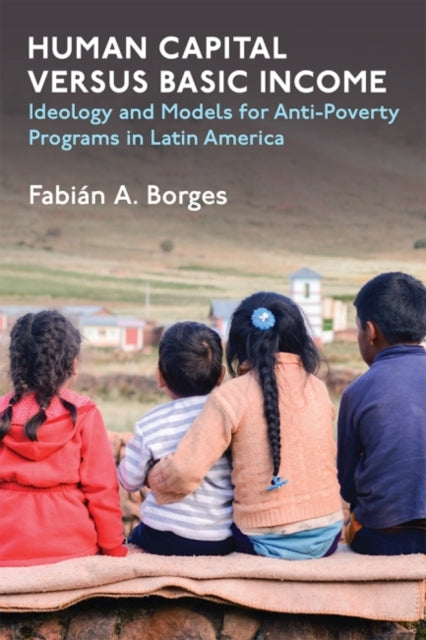
Human Capital versus Basic Income: Ideology and Models of Anti-Poverty Programs in Latin America
Human Capital versus Basic Income: Ideology and Models of Anti-Poverty Programs in Latin America
💎 Earn 146 Points (£1.46) on this item.
- Condition: Brand new
- UK Delivery times: Usually arrives within 2 - 3 working days
- UK Shipping: Fee starts at £2.39. Subject to product weight & dimension
Bulk ordering. Want 15 or more copies? Get a personalised quote and bigger discounts. Learn more about bulk orders.
Couldn't load pickup availability
- More about Human Capital versus Basic Income: Ideology and Models of Anti-Poverty Programs in Latin America
Latin America experienced two major transformations in the 2000s: the election of left-leaning presidents and the diffusion of conditional cash transfer programs (CCTs). Fabián A. Borges' book challenges the conventional wisdom that these two transformations were unrelated and demonstrates that ideology greatly influenced both the adoption and design of CCTs. There were two distinct models of CCTs: a "human capital" model based on means-tested targeting and strict enforcement of program conditions, and a more universalistic "basic income" model with more permissive enforcement of conditionality. The existence of two distinct types of CCTs and their relation to ideology is supported by quantitative analyses covering the entire region and in-depth case studies based on field research in three countries. Left-wing governments operate CCTs that cover more people and spend more on those programs than their center or right-wing counterparts.
Format: Paperback / softback
Length: 280 pages
Publication date: 23 February 2022
Publisher: The University of Michigan Press
Latin America experienced significant transformations during the 2000s, marked by the election of left-leaning presidents and the widespread adoption of conditional cash transfer programs (CCTs). These innovative social programs provide regular stipends to poor families on the condition that their children attend school. A book titled "Human Capital versus Basic Income: Ideology and Models of Anti-Poverty Programs in Latin America" challenges the conventional wisdom that these two transformations were unrelated. Author Fabián A. Borges demonstrates that this ideology significantly influenced the adoption and design of CCTs. The book identifies two distinct models of CCTs: a "human capital" model based on means-tested targeting and strict enforcement of program conditions, exemplified by the program launched by Mexico's right-wing government, and a more universalistic "basic income" model with more permissive enforcement of conditionality, exemplified by Brazil's program under Lula. These two models then spread across the region. Right-wing and center governments, with assistance from international financial institutions, enacted CCTs based on the human capital model, while the left, with assistance from Brazil, enacted CCTs based on the basic income model. The existence of two distinct types of CCTs and their relation to ideology is supported by quantitative analyses covering the entire region and in-depth case studies based on field research in three countries. Left-wing governments operate CCTs that cover more people and spend more on those programs than their center or right-wing counterparts. Beyond coverage, a subsequent analysis of the 10 national programs ad.
Weight: 472g
Dimension: 227 x 151 x 26 (mm)
ISBN-13: 9780472038978
This item can be found in:
UK and International shipping information
UK and International shipping information
UK Delivery and returns information:
- Delivery within 2 - 3 days when ordering in the UK.
- Shipping fee for UK customers from £2.39. Fully tracked shipping service available.
- Returns policy: Return within 30 days of receipt for full refund.
International deliveries:
Shulph Ink now ships to Australia, Belgium, Canada, France, Germany, Ireland, Italy, India, Luxembourg Saudi Arabia, Singapore, Spain, Netherlands, New Zealand, United Arab Emirates, United States of America.
- Delivery times: within 5 - 10 days for international orders.
- Shipping fee: charges vary for overseas orders. Only tracked services are available for most international orders. Some countries have untracked shipping options.
- Customs charges: If ordering to addresses outside the United Kingdom, you may or may not incur additional customs and duties fees during local delivery.