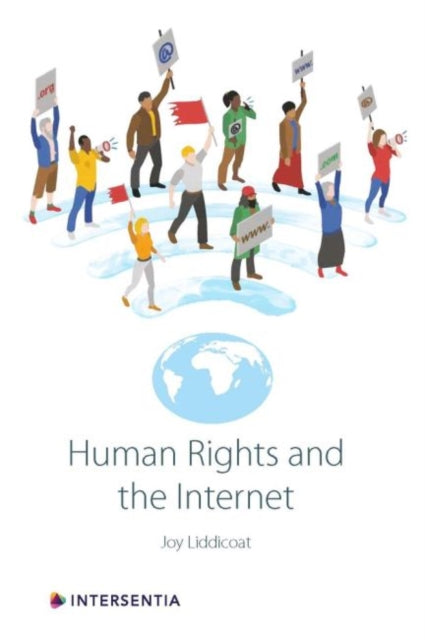
Joy Liddicoat
Human Rights and the Internet
Human Rights and the Internet
💎 Earn 181 Points (£1.81) on this item.
YOU SAVE £10.65
- Condition: Brand new
- UK Delivery times: Usually arrives within 2 - 3 working days
- UK Shipping: Fee starts at £2.39. Subject to product weight & dimension
Bulk ordering. Want 15 or more copies? Get a personalised quote and bigger discounts. Learn more about bulk orders.
Couldn't load pickup availability
- More about Human Rights and the Internet
The past decade has seen the unprecedented use of the Internet for both advancing and suppressing human rights, leading to complex new issues. This book provides a short and accessible introduction to the concepts of human rights, the Internet, and the emergence of an era of human rights online as a new legal challenge. It is of interest to a broad range of readers, including policy makers, lawyers, and academics.
Format: Paperback / softback
Length: 184 pages
Publication date: 29 July 2021
Publisher: Intersentia Ltd
The past decade has seen an extraordinary surge in the use of the Internet for both advancing and suppressing human rights, giving rise to a host of complex and multifaceted issues that have the potential to both inspire and overwhelm. As concerns about the (non-)regulation of our digital environment continue to grow, it is surprising that the theoretical and practical application of human rights to the Internet and our online lives remain somewhat unclear. This book serves as a concise and accessible introduction to the concepts of human rights, the Internet, and the emergence of an era of human rights online as a novel legal challenge. It will appeal to a wide range of readers, including policy makers, informed citizens, lawyers working with human rights defenders, and legal and human rights academics who are exploring the development of this emerging legal field.
The Internet has revolutionized the way we interact, communicate, and access information, and it has also played a significant role in shaping the development of human rights. However, the rapid pace of technological change has created new challenges and complexities for the application of human rights in the digital age. One of the key challenges is the lack of a clear and comprehensive legal framework for regulating the Internet and online activities. This has led to a situation where different countries and regions have adopted different approaches to regulating the Internet, resulting in a patchwork of laws and regulations that can be difficult to navigate and enforce.
Another challenge is the issue of privacy and data protection. With the increasing amount of personal information and data being collected and stored online, there are growing concerns about the potential for misuse, exploitation, and violation of privacy rights. This has led to the development of new legal frameworks, such as the General Data Protection Regulation (GDPR) in Europe, aimed at protecting the rights of individuals and ensuring that their data is used responsibly and transparently.
The right to freedom of expression and access to information is also a significant concern in the digital age. The Internet has provided a platform for individuals and groups to express their opinions and share information, but it has also been used to suppress freedom of speech and limit access to information by governments and other actors. This has led to the development of new legal frameworks, such as the International Covenant on Civil and Political Rights (ICCPR) and the Universal Declaration of Human Rights (UDHR), which protect the right to freedom of expression and access to information.
The right to privacy and data protection is also a significant concern in the digital age. With the increasing amount of personal information and data being collected and stored online, there are growing concerns about the potential for misuse, exploitation, and violation of privacy rights. This has led to the development of new legal frameworks, such as the General Data Protection Regulation (GDPR) in Europe, aimed at protecting the rights of individuals and ensuring that their data is used responsibly and transparently.
The right to freedom of expression and access to information is also a significant concern in the digital age. The Internet has provided a platform for individuals and groups to express their opinions and share information, but it has also been used to suppress freedom of speech and limit access to information by governments and other actors. This has led to the development of new legal frameworks, such as the International Covenant on Civil and Political Rights (ICCPR) and the Universal Declaration of Human Rights (UDHR), which protect the right to freedom of expression and access to information.
The use of the Internet for advancing and suppressing human rights has also raised questions about the role of technology in shaping human rights. Some argue that technology can be a powerful tool for promoting human rights, while others argue that it can be used to undermine and suppress human rights. For example, the use of social media and other online platforms has been used to mobilize protests and raise awareness about human rights issues, but it has also been used by governments to monitor and control their citizens.
The role of technology in shaping human rights is a complex and multifaceted issue that requires careful consideration. While technology can be a powerful tool for promoting human rights, it can also be used to undermine and suppress human rights. It is important for policymakers, technologists, and human rights activists to work together to develop policies and technologies that promote human rights and protect the rights of individuals and groups in the digital age.
In conclusion, the past decade has seen an unprecedented use of the Internet for both advancing and suppressing human rights, giving rise to complex new issues that can both inspire and overwhelm. As concerns about the (non-)regulation of our digital environment continue to grow, it is important that we develop a clear and comprehensive legal framework for regulating the Internet and online activities. We must also address the issue of privacy and data protection, the right to freedom of expression and access to information, and the role of technology in shaping human rights. By working together, we can create a digital environment that promotes human rights and protects the rights of individuals and groups in the 21st century.
Weight: 282g
Dimension: 151 x 230 x 14 (mm)
ISBN-13: 9781839700590
This item can be found in:
UK and International shipping information
UK and International shipping information
UK Delivery and returns information:
- Delivery within 2 - 3 days when ordering in the UK.
- Shipping fee for UK customers from £2.39. Fully tracked shipping service available.
- Returns policy: Return within 30 days of receipt for full refund.
International deliveries:
Shulph Ink now ships to Australia, Belgium, Canada, France, Germany, Ireland, Italy, India, Luxembourg Saudi Arabia, Singapore, Spain, Netherlands, New Zealand, United Arab Emirates, United States of America.
- Delivery times: within 5 - 10 days for international orders.
- Shipping fee: charges vary for overseas orders. Only tracked services are available for most international orders. Some countries have untracked shipping options.
- Customs charges: If ordering to addresses outside the United Kingdom, you may or may not incur additional customs and duties fees during local delivery.