George Kallander
Human-Animal Relations and the Hunt in Korea and Northeast Asia
Human-Animal Relations and the Hunt in Korea and Northeast Asia
💎 Earn 383 Points (£3.83) on this item.
We can order this item for you. Delivery usually takes about 4 to 6 weeks.
This item is not held in our immediate stock. We will order it for you after checkout.
Estimated delivery: About 4 to 6 weeks
YOU SAVE £23.30
- Condition: Brand new
- UK Delivery times: Usually arrives within 2 - 3 working days
- UK Shipping: Fee starts at £3.89. Subject to product weight & dimension
Bulk ordering. Want 15 or more copies? Get a personalised quote and bigger discounts. Learn more about bulk orders.
Couldn't load pickup availability
- More about Human-Animal Relations and the Hunt in Korea and Northeast Asia
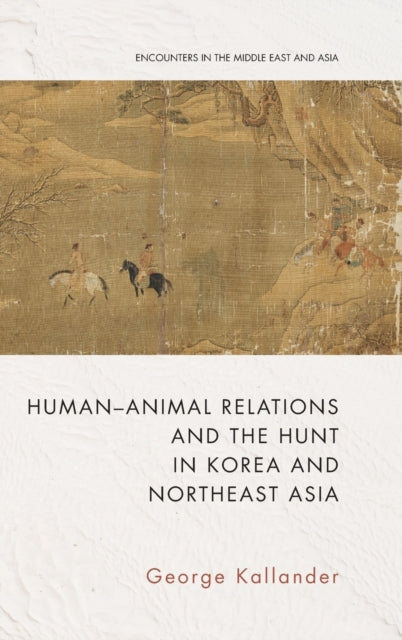
The book explores the hunt, animals, and how regional dynamics informed local cultural practices on the Korean peninsula during the transitional period from late Kory? to early Chos?n dynasty Korea. It highlights the significance of the peninsula in regional and Eurasian history, reframes the struggle between a kingship and a powerful bureaucracy, and explores political and military contacts across Northeast Asia. It also draws upon secondary sources across various fields to examine the circulation of ideas and intellectual contacts related to animals and hunting.
Format: Hardback
Length: 320 pages
Publication date: 31 May 2023
Publisher: Edinburgh University Press
The Korean peninsula has played a pivotal role in regional and Eurasian history, and its relationship with animals and the hunt has been largely overlooked by scholars. This book aims to rectify this oversight by exploring the significance of the peninsula in the context of animals and the hunt.
The Korean peninsula has been a hub of political and military activity throughout its history, and the interactions between Korean societies and other cultures, particularly those of the Yuan Mongols, Ming Chinese, Jurchen tribes, and Japanese, have been shaped by the presence of animals and the hunt. The book examines these interactions in the context of hunts, hunting grounds, and wild beasts, and seeks to understand how they contributed to the development of regional politics and culture.
One of the key themes of the book is the struggle between a kingship and a powerful bureaucracy competing for authority over an expanding state in the shifting geopolitics of Northeast Asia at the advent of the Little Ice Age. This struggle was played out on the Korean peninsula, where the kingship sought to maintain its control over the region while the bureaucracy sought to assert its power. Animals and the hunt were used as tools in this struggle, with kings and nobles using hunting expeditions to assert their authority and secure their territories, while the bureaucracy used hunting regulations to control the population and extract taxes.
Another theme of the book is the circulation of ideas and intellectual contacts across the region, particularly in the fields of Buddhism, Neo-Confucianism, and folk and shaman beliefs related to animals and hunting. The Korean peninsula was a crossroads of cultural flows, and the interactions between Korean and other cultures led to the development of new ideas and practices. Animals and the hunt were particularly significant in these cultural flows, as they were used in ritual sacrifices, submitted as tax tribute, exchanged in regional trade, and depicted in art and literature.
The book also explores the role of animals in Korean society and culture. Animals, both wild and domestic, were used for food, clothing, medicine, and other purposes, and their presence in Korean art and literature reflects their significance to Korean culture. The book examines the use of animals in ritual sacrifices, particularly in the context of Buddhism, and explores how the practice of hunting and the consumption of meat shaped Korean identities and values.
In conclusion, this book provides a comprehensive and interdisciplinary exploration of the relationship between animals and the hunt in Korean history. It sheds light on the significance of the peninsula in regional and Eurasian history, and demonstrates how the interactions between Korean societies and other cultures have been shaped by the presence of animals and the hunt. The book also explores the role of animals in Korean society and culture, and how they contributed to the development of Korean identities and values. This book will be of interest to scholars of Korean history, history, anthropology, and animal studies.
Dimension: 234 x 156 (mm)
ISBN-13: 9781399512091
UK and International shipping information
UK and International shipping information
We deliver throughout the United Kingdom and to 128 countries and territories worldwide, including the United States, Australia, Canada, Germany, Spain and France.