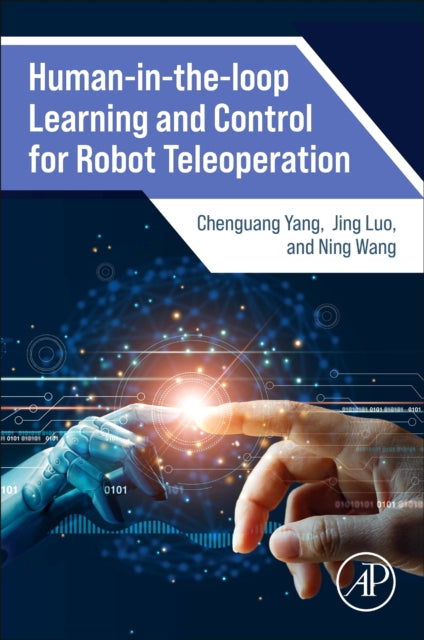
ChenguangYang,JingLuo,NingWang
Human-in-the-loop Learning and Control for Robot Teleoperation
Human-in-the-loop Learning and Control for Robot Teleoperation
YOU SAVE £16.67
- Condition: Brand new
- UK Delivery times: Usually arrives within 2 - 3 working days
- UK Shipping: Fee starts at £3.89. Subject to product weight & dimension
Bulk ordering. Want 15 or more copies? Get a personalised quote and bigger discounts. Learn more about bulk orders.
Couldn't load pickup availability
- More about Human-in-the-loop Learning and Control for Robot Teleoperation
Human-in-the-loop Learning and Control for Robot Teleoperation is a book that discusses the latest research progress in teleoperation and robots, focusing on human-robot interaction, learning, and control algorithms. It aims to bridge the gap between human desired manufacturing effects and robot capabilities by integrating advanced learning and control techniques.
Format: Paperback / softback
Length: 266 pages
Publication date: 13 April 2023
Publisher: Elsevier Science & Technology
The field of human-in-the-loop learning and control for robot teleoperation has witnessed significant advancements in recent years, encompassing a wide range of topics related to teleoperation and robots. This comprehensive book delves into the intricate aspects of human-robot interaction, learning, and control, with a particular focus on intelligent learning techniques. By integrating cutting-edge research on various algorithms for robot teleoperation, including neural motor learning control, wave variable enhancement, EMG-based teleoperation control, and more, the book offers a comprehensive understanding of the key aspects involved in robot technology.
Moreover, it provides practical implementation tactics and ample application examples to illustrate the practical implications of these algorithms. The book serves as a valuable resource for researchers, engineers, and practitioners in the field of robot teleoperation, enabling them to stay updated with the latest developments and apply them to real-world scenarios.
Robots have found widespread applications in industrial processes due to their ability to reduce labor costs and enhance work efficiency. However, most robots are limited in their capabilities to work on repetitive and fixed tasks, which can hinder the desired manufacturing effect. By incorporating human-in-the-loop learning and control, robots can be designed to adapt to changing environments and perform tasks more effectively, closer to the human-like manufacturing process.
One of the key challenges in robot teleoperation is the development of effective learning algorithms that can adapt to the dynamic and unpredictable nature of the human-robot interaction. Neural motor learning control, for instance, has shown promising results in enabling robots to learn from human demonstrations and improve their performance over time. Wave variable enhancement algorithms, on the other hand, can improve the stability and accuracy of robot teleoperation by modifying the control signals based on the feedback from the human operator.
EMG-based teleoperation control is another area of research that has gained significant attention in recent years. By using electromyographic (EMG) signals to measure the muscle activity of the human operator, robots can interpret the operator's intentions and adjust their behavior accordingly. This approach can enhance the safety and reliability of robot teleoperation, particularly in hazardous or high-risk environments.
In addition to these algorithms, the book also discusses other key aspects related to robot technology, such as task planning, trajectory optimization, and human-robot interaction design. By integrating these aspects into the learning and control process, robots can be designed to work more collaboratively with human operators, improving their efficiency and productivity.
Overall, human-in-the-loop learning and control for robot teleoperation presents a promising avenue for improving the efficiency and effectiveness of industrial processes. By leveraging intelligent learning techniques and integrating various aspects of robot technology, researchers and practitioners can develop robots that can work more closely with human operators, achieving higher levels of productivity and safety.
The field of human-in-the-loop learning and control for robot teleoperation has witnessed significant advancements in recent years, encompassing a wide range of topics related to teleoperation and robots. This comprehensive book delves into the intricate aspects of human-robot interaction, learning, and control, with a particular focus on intelligent learning techniques. By integrating cutting-edge research on various algorithms for robot teleoperation, including neural motor learning control, wave variable enhancement, EMG-based teleoperation control, and more, the book offers a comprehensive understanding of the key aspects involved in robot technology.
Moreover, it provides practical implementation tactics and ample application examples to illustrate the practical implications of these algorithms. The book serves as a valuable resource for researchers, engineers, and practitioners in the field of robot teleoperation, enabling them to stay updated with the latest developments and apply them to real-world scenarios.
Robots have found widespread applications in industrial processes due to their ability to reduce labor costs and enhance work efficiency. However, most robots are limited in their capabilities to work on repetitive and fixed tasks, which can hinder the desired manufacturing effect. By incorporating human-in-the-loop learning and control, robots can be designed to adapt to changing environments and perform tasks more effectively, closer to the human-like manufacturing process.
One of the key challenges in robot teleoperation is the development of effective learning algorithms that can adapt to the dynamic and unpredictable nature of the human-robot interaction. Neural motor learning control, for instance, has shown promising results in enabling robots to learn from human demonstrations and improve their performance over time. Wave variable enhancement algorithms, on the other hand, can improve the stability and accuracy of robot teleoperation by modifying the control signals based on the feedback from the human operator.
EMG-based teleoperation control is another area of research that has gained significant attention in recent years. By using electromyographic (EMG) signals to measure the muscle activity of the human operator, robots can interpret the operator's intentions and adjust their behavior accordingly. This approach can enhance the safety and reliability of robot teleoperation, particularly in hazardous or high-risk environments.
In addition to these algorithms, the book also discusses other key aspects related to robot technology, such as task planning, trajectory optimization, and human-robot interaction design. By integrating these aspects into the learning and control process, robots can be designed to work more collaboratively with human operators, improving their efficiency and productivity.
Overall, human-in-the-loop learning and control for robot teleoperation presents a promising avenue for improving the efficiency and effectiveness of industrial processes. By leveraging intelligent learning techniques and integrating various aspects of robot technology, researchers and practitioners can develop robots that can work more closely with human operators, achieving higher levels of productivity and safety.
The field of human-in-the-loop learning and control for robot teleoperation has witnessed significant advancements in recent years, encompassing a wide range of topics related to teleoperation and robots. This comprehensive book delves into the intricate aspects of human-robot interaction, learning, and control, with a particular focus on intelligent learning techniques. By integrating cutting-edge research on various algorithms for robot teleoperation, including neural motor learning control, wave variable enhancement, EMG-based teleoperation control, and more, the book offers a comprehensive understanding of the key aspects involved in robot technology.
Moreover, it provides practical implementation tactics and ample application examples to illustrate the practical implications of these algorithms. The book serves as a valuable resource for researchers, engineers, and practitioners in the field of robot teleoperation, enabling them to stay updated with the latest developments and apply them to real-world scenarios.
Robots have found widespread applications in industrial processes due to their ability to reduce labor costs and enhance work efficiency. However, most robots are limited in their capabilities to work on repetitive and fixed tasks, which can hinder the desired manufacturing effect. By incorporating human-in-the-loop learning and control, robots can be designed to adapt to changing environments and perform tasks more effectively, closer to the human-like manufacturing process.
One of the key challenges in robot teleoperation is the development of effective learning algorithms that can adapt to the dynamic and unpredictable nature of the human-robot interaction. Neural motor learning control, for instance, has shown promising results in enabling robots to learn from human demonstrations and improve their performance over time. Wave variable enhancement algorithms, on the other hand, can improve the stability and accuracy of robot teleoperation by modifying the control signals based on the feedback from the human operator.
EMG-based teleoperation control is another area of research that has gained significant attention in recent years. By using electromyographic (EMG) signals to measure the muscle activity of the human operator, robots can interpret the operator's intentions and adjust their behavior accordingly. This approach can enhance the safety and reliability of robot teleoperation, particularly in hazardous or high-risk environments.
In addition to these algorithms, the book also discusses other key aspects related to robot technology, such as task planning, trajectory optimization, and human-robot interaction design. By integrating these aspects into the learning and control process, robots can be designed to work more collaboratively with human operators, improving their efficiency and productivity.
Overall, human-in-the-loop learning and control for robot teleoperation presents a promising avenue for improving the efficiency and effectiveness of industrial processes. By leveraging intelligent learning techniques and integrating various aspects of robot technology, researchers and practitioners can develop robots that can work more closely with human operators, achieving higher levels of productivity and safety.
The field of human-in-the-loop learning and control for robot teleoperation has witnessed significant advancements in recent years, encompassing a wide range of topics related to teleoperation and robots. This comprehensive book delves into the intricate aspects of human-robot interaction, learning, and control, with a particular focus on intelligent learning techniques. By integrating cutting-edge research on various algorithms for robot teleoperation, including neural motor learning control, wave variable enhancement, EMG-based teleoperation control, and more, the book offers a comprehensive understanding of the key aspects involved in robot technology.
Moreover, it provides practical implementation tactics and ample application examples to illustrate the practical implications of these algorithms. The book serves as a valuable resource for researchers, engineers, and practitioners in the field of robot teleoperation, enabling them to stay updated with the latest developments and apply them to real-world scenarios.
Robots have found widespread applications in industrial processes due to their ability to reduce labor costs and enhance work efficiency. However, most robots are limited in their capabilities to work on repetitive and fixed tasks, which can hinder the desired manufacturing effect. By incorporating human-in-the-loop learning and control, robots can be designed to adapt to changing environments and perform tasks more effectively, closer to the human-like manufacturing process.
One of the key challenges in robot teleoperation is the development of effective learning algorithms that can adapt to the dynamic and unpredictable nature of the human-robot interaction. Neural motor learning control, for instance, has shown promising results in enabling robots to learn from human demonstrations and improve their performance over time. Wave variable enhancement algorithms, on the other hand, can improve the stability and accuracy of robot teleoperation by modifying the control signals based on the feedback from the human operator.
EMG-based teleoperation control is another area of research that has gained significant attention in recent years. By using electromyographic (EMG) signals to measure the muscle activity of the human operator, robots can interpret the operator's intentions and adjust their behavior accordingly. This approach can enhance the safety and reliability of robot teleoperation, particularly in hazardous or high-risk environments.
In addition to these algorithms, the book also discusses other key aspects related to robot technology, such as task planning, trajectory optimization, and human-robot interaction design. By integrating these aspects into the learning and control process, robots can be designed to work more collaboratively with human operators, improving their efficiency and productivity.
Overall, human-in-the-loop learning and control for robot teleoperation presents a promising avenue for improving the efficiency and effectiveness of industrial processes. By leveraging intelligent learning techniques and integrating various aspects of robot technology, researchers and practitioners can develop robots that can work more closely with human operators, achieving higher levels of productivity and safety.
The field of human-in-the-loop learning and control for robot teleoperation has witnessed significant advancements in recent years, encompassing a wide range of topics related to teleoperation and robots. This comprehensive book delves into the intricate aspects of human-robot interaction, learning, and control, with a particular focus on intelligent learning techniques. By integrating cutting-edge research on various algorithms for robot teleoperation, including neural motor learning control, wave variable enhancement, EMG-based teleoperation control, and more, the book offers a comprehensive understanding of the key aspects involved in robot technology.
Moreover, it provides practical implementation tactics and ample application examples to illustrate the practical implications of these algorithms. The book serves as a valuable resource for researchers, engineers, and practitioners in the field of robot teleoperation, enabling them to stay updated with the latest developments and apply them to real-world scenarios.
Robots have found widespread applications in industrial processes due to their ability to reduce labor costs and enhance work efficiency. However, most robots are limited in their capabilities to work on repetitive and fixed tasks, which can hinder the desired manufacturing effect. By incorporating human-in-the-loop learning and control, robots can be designed to adapt to changing environments and perform tasks more effectively, closer to the human-like manufacturing process.
One of the key challenges in robot teleoperation is the development of effective learning algorithms that can adapt to the dynamic and unpredictable nature of the human-robot interaction. Neural motor learning control, for instance, has shown promising results in enabling robots to learn from human demonstrations and improve their performance over time. Wave variable enhancement algorithms, on the other hand, can improve the stability and accuracy of robot teleoperation by modifying the control signals based on the feedback from the human operator.
EMG-based teleoperation control is another area of research that has gained significant attention in recent years. By using electromyographic (EMG) signals to measure the muscle activity of the human operator, robots can interpret the operator's intentions and adjust their behavior accordingly. This approach can enhance the safety and reliability of robot teleoperation, particularly in hazardous or high-risk environments.
In addition to these algorithms, the book also discusses other key aspects related to robot technology, such as task planning, trajectory optimization, and human-robot interaction design. By integrating these aspects into the learning and control process, robots can be designed to work more collaboratively with human operators, improving their efficiency and productivity.
Overall, human-in-the-loop learning and control for robot teleoperation presents a promising avenue for improving the efficiency and effectiveness of industrial processes. By leveraging intelligent learning techniques and integrating various aspects of robot technology, researchers and practitioners can develop robots that can work more closely with human operators, achieving higher levels of productivity and safety.
Weight: 426g
Dimension: 153 x 228 x 17 (mm)
ISBN-13: 9780323951432
UK and International shipping information
UK and International shipping information
We deliver throughout the United Kingdom and to 128 countries and territories worldwide, including the United States, Australia, Canada, Germany, Spain and France.