Shulph Ink
Humankind and Humanity in the Philosophy of the Enlightenment: From Locke to Kant
Humankind and Humanity in the Philosophy of the Enlightenment: From Locke to Kant
💎 Earn 477 Points (£4.77) on this item.
We can order this item for you. Delivery usually takes about 4 to 6 weeks.
This item is not held in our immediate stock. We will order it for you after checkout.
Estimated delivery: About 4 to 6 weeks
- Condition: Brand new
- UK Delivery times: Usually arrives within 2 - 3 working days
- UK Shipping: Fee starts at £2.39. Subject to product weight & dimension
Bulk ordering. Want 15 or more copies? Get a personalised quote and bigger discounts. Learn more about bulk orders.
Couldn't load pickup availability
- More about Humankind and Humanity in the Philosophy of the Enlightenment: From Locke to Kant
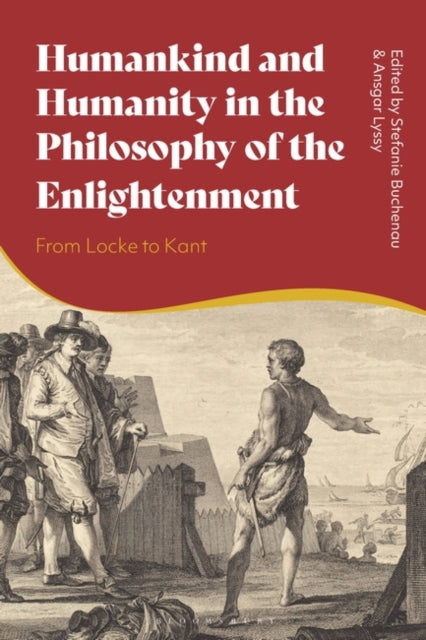
The book explores the concept of humanity in the European Enlightenment, examining the ideas of major figures such as Montesquieu, Diderot, Rousseau, Locke, Hume, Ferguson, Kant, Herder, Blumenbach, and the Comte de Buffon. It presents a novel interpretation of the Enlightenment as a distinct form of humanism, offering a clear and comprehensive view of the period.
Format: Hardback
Length: 280 pages
Publication date: 21 September 2023
Publisher: Bloomsbury Publishing PLC
The question of what makes us human beings is a complex and multifaceted one that has been explored by philosophers and thinkers throughout history. While some may argue that it is solely a matter of physical existence, others suggest that it is a combination of various mental capacities, languages, moral agency, and social life. One particularly interesting aspect of this debate is the question of whether there is a gendered bias within the concept of humanity.
Throughout the European Enlightenment, there was a growing preoccupation with the concepts of humankind and humanity. This volume seeks to provide some answers to these fundamental questions by examining the philosophical concerns of major figures across Western Europe. The chapters in this book explore the ideas of Montesquieu, Diderot, Rousseau, Locke, Hume, Ferguson, Kant, Herder, Johann Friedrich Blumenbach, and the Comte de Buffon, among others.
These philosophers developed important descriptive and comparative approaches to the human species and moral and social ideals of humanity. They presented a view of the Enlightenment project as a particular kind of humanism that was different from its Ancient and Renaissance predecessors.
One of the key themes of this book is the idea that the Enlightenment was a movement that sought to promote the values of reason, liberty, and equality. The authors argue that the Enlightenment thinkers believed that these values were essential for the development of human society and that they should be applied to all individuals, regardless of their gender, race, or social status.
Another important theme of this book is the idea that the Enlightenment was a movement that sought to challenge the traditional religious and political institutions of the time. The authors argue that the Enlightenment thinkers believed that these institutions were often oppressive and that they were responsible for the suffering of many individuals.
The authors of this book also offer a novel interpretation of the Enlightenment that is both clear in focus and impressive in scope. They argue that the Enlightenment was a movement that was driven by a desire to understand the natural world and to use this understanding to improve the lives of individuals. The authors suggest that the Enlightenment thinkers were not necessarily atheists or materialists, but rather that they were interested in exploring the possibilities of a spiritual and ethical life that was compatible with scientific knowledge.
Overall, this volume provides a valuable contribution to the study of the European Enlightenment. It offers a fresh perspective on the movement and its philosophical concerns, and it challenges some of the traditional interpretations of the Enlightenment. The authors of this book are a team of internationally recognized scholars, and their contributions are sure to interest scholars and researchers in the field
The question of what makes us human beings field is a complex and multifaceted one that has been explored by philosophers and thinkers. While some may argue that it is solely a matter of physical existence, others suggest that it is a combination of various mental capacities, languages, moral agency, and social life. One particularly interesting aspect of this debate is the question of whether there is a gendered bias within the concept of humanity.
Throughout the European Enlightenment, there was a growing preoccupation with the concepts of humankind
The question of what makes us human beings is a complex and multifaceted one that has been explored by philosophers and thinkers throughout history. While some may argue that it is solely a matter of physical existence, others suggest that it is a combination of various mental capacities, languages, moral agency, and social life. One particularly interesting aspect of this debate is the question of whether there is a gendered bias within the concept of humanity.
Throughout the European Enlightenment, there was a growing preoccupation with the concepts of humankind
The question of what makes us human beings is a complex and multifaceted one that has been explored by philosophers and thinkers throughout history. While some may argue that it is solely a matter of physical existence, others suggest that it is a combination of various mental capacities, languages, moral agency, and social life. One particularly interesting aspect of this debate is the question of whether there is a gendered bias within the concept of humanity.
Throughout the European Enlightenment, there was a growing preoccupation with the concepts of humankind
The question of what makes us human beings is a complex and multifaceted one that has been explored by philosophers and thinkers throughout history. While some may argue that it is solely a matter of physical existence, others suggest that it is a combination of various mental capacities, languages, moral agency, and social life. One particularly interesting aspect of this debate is the question of whether there is a gendered bias within the concept of humanity.
Throughout the European Enlightenment, there was a growing preoccupation with the concepts of humankind
The question of what makes us human beings is a complex and multifaceted one that has been explored by philosophers and thinkers throughout history. While some may argue that it is solely a matter of physical existence, others suggest that it is a combination of various mental capacities, languages, moral agency, and social life. One particularly interesting aspect of this debate is the question of whether there is a gendered bias within the concept of humanity.
Throughout the European Enlightenment, there was a growing preoccupation with the concepts of humankind
The question of what makes us human beings is a complex and multifaceted one that has been explored by philosophers and thinkers throughout history. While some may argue that it is solely a matter of physical existence, others suggest that it is a combination of various mental capacities, languages, moral agency, and social life. One particularly interesting aspect of this debate is the question of whether there is a gendered bias within the concept of humanity.
Throughout the European Enlightenment, there was a growing preoccupation with the concepts of humankind
The question of what makes us human beings is a complex and multifaceted one that has been explored by philosophers and thinkers throughout history. While some may argue that it is solely a matter of physical existence, others suggest that it is a combination of various mental capacities, languages, moral agency, and social life. One particularly interesting aspect of this debate is the question of whether there is a gendered bias within the concept of humanity.
Throughout the European Enlightenment, there was a growing preoccupation with the concepts of humankind
The question of what makes us human beings is a complex and multifaceted one that has been explored by philosophers and thinkers throughout history. While some may argue that it is solely a matter of physical existence, others suggest that it is a combination of various mental capacities, languages, moral agency, and social life. One particularly interesting aspect of this debate is the question of whether there is a gendered bias within the concept of humanity.
Throughout the European Enlightenment, there was a growing preoccupation with the concepts of humankind and humanity. This volume seeks to provide some answers to these fundamental questions by examining the philosophical concerns of major figures across Western Europe. The chapters in this book explore the ideas of Montesquieu, Diderot, Rousseau, Locke, Hume, Ferguson, Kant, Herder, Johann Friedrich Blumenbach, and the Comte de Buffon, among others.
These philosophers developed important descriptive and comparative approaches to the human species and moral and social ideals of humanity. They presented a view of the Enlightenment project as a particular kind of humanism that was different from its Ancient and Renaissance predecessors.
One of the key themes of this book is the idea that the Enlightenment was a movement that sought to promote the values of reason, liberty, and equality. The authors argue that the Enlightenment thinkers believed that these values were essential for the development of human society.
Another important theme of this book is the idea that the Enlightenment was a movement that sought to challenge the traditional religious and political institutions of the time. The authors argue that the Enlightenment thinkers believed that these institutions were often oppressive and that they were responsible for the suffering of many individuals.
The authors of this book also offer a novel interpretation of the Enlightenment that is both clear in focus and impressive in scope. They argue that the Enlightenment was a movement that was driven by a desire to understand the natural world and to use this understanding to improve the lives of individuals. The authors suggest that the Enlightenment thinkers were not necessarily atheists or materialists, but rather that they were interested in exploring the possibilities of a spiritual and ethical life that was compatible with scientific knowledge.
Overall, this volume provides a valuable contribution to the study of the European Enlightenment. It offers a fresh perspective on the movement and its philosophical concerns, and it challenges some of the traditional interpretations of the Enlightenment. The authors of this book are a team of internationally recognized scholars, and their contributions are sure to interest scholars and researchers in the field of history.
Dimension: 234 x 156 (mm)
ISBN-13: 9781350142930
This item can be found in:
UK and International shipping information
UK and International shipping information
UK Delivery and returns information:
- Delivery within 2 - 3 days when ordering in the UK.
- Shipping fee for UK customers from £2.39. Fully tracked shipping service available.
- Returns policy: Return within 30 days of receipt for full refund.
International deliveries:
Shulph Ink now ships to Australia, Belgium, Canada, France, Germany, Ireland, Italy, India, Luxembourg Saudi Arabia, Singapore, Spain, Netherlands, New Zealand, United Arab Emirates, United States of America.
- Delivery times: within 5 - 10 days for international orders.
- Shipping fee: charges vary for overseas orders. Only tracked services are available for most international orders. Some countries have untracked shipping options.
- Customs charges: If ordering to addresses outside the United Kingdom, you may or may not incur additional customs and duties fees during local delivery.