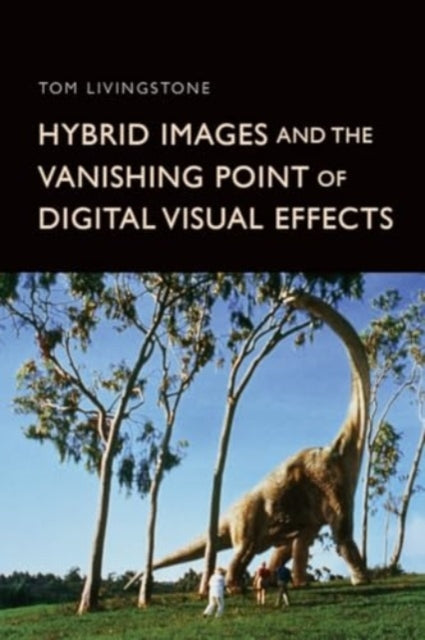
Tom Livingstone
Hybrid Images and the Vanishing Point of Digital Visual Effects
Hybrid Images and the Vanishing Point of Digital Visual Effects
💎 Earn 364 Points (£3.64) on this item.
We can order this item for you. Delivery usually takes about 4 to 6 weeks.
This item is not held in our immediate stock. We will order it for you after checkout.
Estimated delivery: About 4 to 6 weeks
YOU SAVE £22.13
- Condition: Brand new
- UK Delivery times: Usually arrives within 2 - 3 working days
- UK Shipping: Fee starts at £2.39. Subject to product weight & dimension
Bulk ordering. Want 15 or more copies? Get a personalised quote and bigger discounts. Learn more about bulk orders.
Couldn't load pickup availability
- More about Hybrid Images and the Vanishing Point of Digital Visual Effects
Hybrid Images and the Vanishing Point of Digital Visual Effects explores how digital effects shape our relationship with the image and the world, highlighting the relationship between mainstream visual culture and digital technology and culture.
Format: Hardback
Length: 242 pages
Publication date: 31 October 2024
Publisher: Edinburgh University Press
Digital effects such as colourisation, time-ramping, compositing, and photo-realistic rendering have become increasingly prevalent in our visual culture, transforming the way we engage with images and the world they represent. This monograph explores the impact of these post-photographic procedures on our relationship with the image and the reality it represents. By examining case studies, the book connects the dominant techniques of hybridisation with emerging ways of being in our increasingly hybrid physical-digital world. It highlights the relationship between mainstream visual culture and the manifold imperatives of digital technology and digital culture, and how a handful of digital visual effects are coming to shape the way we live.
Digital effects have become an integral part of our visual culture, transforming the way we engage with images and the world they represent. This monograph explores the impact of these post-photographic procedures on our relationship with the image and the reality it represents. By examining case studies, the book connects the dominant techniques of hybridisation with emerging ways of being in our increasingly hybrid physical-digital world. It highlights the relationship between mainstream visual culture and the manifold imperatives of digital technology and digital culture, and how a handful of digital visual effects are coming to shape the way we live.
One of the key challenges of digital effects is the ability to critically engage with the digital techniques that mediate perceptions of reality. While digital effects can create stunning and immersive experiences, they can also be used to manipulate and distort the truth. This can have serious consequences, particularly in the fields of journalism, advertising, and entertainment. For example, colourisation can be used to make historical events appear more colourful and exciting, but it can also erase the cultural and historical context of the event. Time-ramping can be used to create dramatic effects, but it can also create a sense of disorientation and confusion. Compositing can be used to create seamless and realistic images, but it can also be used to create false or misleading images. Photo-realistic rendering can be used to create lifelike images, but it can also be used to create unrealistic or unrealistic images.
To address these challenges, the book proposes a series of strategies for critically engaging with digital effects. These strategies include:
1. Understanding the Techniques: Digital effects are complex and require a deep understanding of the techniques used to create them. This includes understanding the principles of colour theory, lighting, and composition, as well as the software and hardware used to create them.
2. Critical Analysis: Critical analysis involves evaluating the ethical and aesthetic implications of digital effects. This includes examining the impact of digital effects on the viewer, the cultural and historical context of the event, and the broader social and political implications of the event.
3. Transparency: Transparency involves making the techniques used to create digital effects transparent to the viewer. This includes providing information about the techniques used to create the effect, as well as providing access to the raw data used to create the effect.
4. Education: Education involves teaching people about the techniques used to create digital effects. This includes providing training programs, workshops, and online resources.
5. Regulation: Regulation involves setting standards and regulations for the use of digital effects. This includes ensuring that digital effects are used ethically and responsibly, and that they are not used to manipulate or distort the truth.
6. Collaboration: Collaboration involves working with other professionals to create digital effects. This includes working with photographers, filmmakers, and designers to create seamless and realistic images.
7. Innovation: Innovation involves developing new techniques and technologies for creating digital effects. This includes developing new software and hardware, as well as developing new techniques for creating realistic and immersive experiences.
8. Ethical Considerations: Ethical considerations involve considering the impact of digital effects on the environment, human rights, and social justice. This includes ensuring that digital effects are used in a way that is respectful of these values.
9. Cultural Preservation: Cultural preservation involves preserving the cultural and historical context of images. This includes ensuring that digital effects are used in a way that does not erode the cultural and historical significance of the image.
10. Accessibility: Accessibility involves making digital effects accessible to people with disabilities. This includes providing access to the raw data used to create the effect, as well as providing access to training programs and online resources.
In conclusion, digital effects have become an integral part of our visual culture, transforming the way we engage with images and the world they represent. While they can create stunning and immersive experiences, they can also be used to manipulate and distort the truth. To address these challenges, the book proposes a series of strategies for critically engaging with digital effects. These strategies include understanding the techniques, critical analysis, transparency, education, regulation, collaboration, innovation, ethical considerations, cultural preservation, and accessibility. By implementing these strategies, we can ensure that digital effects are used in a way that is respectful of the values of the viewer, the cultural and historical context of the event, and the broader social and political implications of the event.
Dimension: 234 x 156 (mm)
ISBN-13: 9781399523301
This item can be found in:
UK and International shipping information
UK and International shipping information
UK Delivery and returns information:
- Delivery within 2 - 3 days when ordering in the UK.
- Shipping fee for UK customers from £2.39. Fully tracked shipping service available.
- Returns policy: Return within 30 days of receipt for full refund.
International deliveries:
Shulph Ink now ships to Australia, Belgium, Canada, France, Germany, Ireland, Italy, India, Luxembourg Saudi Arabia, Singapore, Spain, Netherlands, New Zealand, United Arab Emirates, United States of America.
- Delivery times: within 5 - 10 days for international orders.
- Shipping fee: charges vary for overseas orders. Only tracked services are available for most international orders. Some countries have untracked shipping options.
- Customs charges: If ordering to addresses outside the United Kingdom, you may or may not incur additional customs and duties fees during local delivery.