Shulph Ink
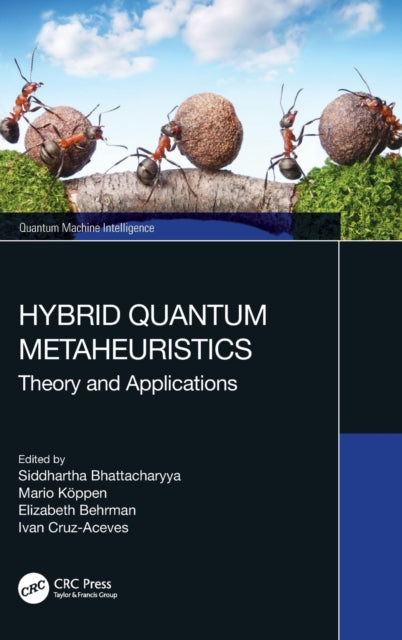
Hybrid Quantum Metaheuristics: Theory and Applications
Hybrid Quantum Metaheuristics: Theory and Applications
💎 Earn 689 Points (£6.89) on this item.
We can order this item for you. Delivery usually takes about 4 to 6 weeks.
This item is not held in our immediate stock. We will order it for you after checkout.
Estimated delivery: About 4 to 6 weeks
YOU SAVE £8.18
- Condition: Brand new
- UK Delivery times: Usually arrives within 2 - 3 working days
- UK Shipping: Fee starts at £2.39. Subject to product weight & dimension
Bulk ordering. Want 15 or more copies? Get a personalised quote and bigger discounts. Learn more about bulk orders.
Couldn't load pickup availability
- More about Hybrid Quantum Metaheuristics: Theory and Applications
The book discusses quantum mechanical principles and their application to hybrid metaheuristics, with a focus on their use in real-world engineering and scientific problems. It includes video demonstrations and comparative statistical test analysis.
Format: Hardback
Length: 276 pages
Publication date: 10 May 2022
Publisher: Taylor & Francis Ltd
The principles of quantum mechanics are applied to evolve hybrid metaheuristics-based optimization techniques that are useful for real-world engineering and scientific problems. This text covers advances and trends in methodological approaches, theoretical studies, mathematical and applied techniques related to hybrid quantum metaheuristics, and their applications to engineering problems. The book will be accompanied by additional resources, including video demonstrations for each chapter, making it a valuable resource for graduate students and professional practitioners in the fields of electrical engineering, electronics and communications engineering, and computer science engineering.
Quantum mechanics is a fundamental theory of physics that describes the behavior of matter and energy at the atomic and subatomic levels. It is a branch of physics that emerged in the early 20th century as a result of a series of experiments and theoretical developments. The principles of quantum mechanics are based on the wave-particle duality concept, which states that all matter and energy can be described in terms of either waves or particles, but not both.
One of the key concepts of quantum mechanics is the principle of superposition, which states that a particle can exist in multiple states at the same time. This is in contrast to classical physics, which states that a particle can only exist in one state at a time. For example, a photon can exist as a wave or as a particle, depending on the experiment that is performed to observe it.
Another key concept of quantum mechanics is the principle of entanglement, which states that particles can become entangled with each other in such a way that their states cannot be described independently of each other. This is a phenomenon that is observed in many physical systems, such as quantum dots and photons.
Quantum mechanics has many applications in fields such as physics, chemistry, and engineering. For example, it is used to explain the behavior of atoms and molecules, the properties of materials, and the behavior of lasers and other optical devices. It is also used to develop new technologies, such as quantum cryptography and quantum computing, which have the potential to revolutionize the way.
In recent years, there has been a growing interest in applying the principles of quantum mechanics to develop hybrid metaheuristics-based optimization techniques that are useful for solving complex engineering and scientific problems. Hybrid quantum metaheuristics are a type of optimization technique that combines the principles of quantum mechanics with the principles of traditional optimization techniques, such as genetic algorithms, simulated annealing, and particle swarm.
One of the key advantages of hybrid quantum metaheuristics is that they can solve complex optimization problems that are difficult to solve using traditional optimization techniques. For example, they can be used to optimize complex systems, such as power systems, logistics systems, and financial systems. They can also be used to optimize complex processes, such as chemical reactions, material synthesis, and manufacturing processes.
In this text, we will discuss the principles of quantum mechanics in detail, emphasizing the recent and upcoming hybrid quantum metaheuristics in a comprehensive manner. We will provide comparative statistical test analysis with conventional hybrid metaheuristics, highlighting real-life case studies, applications, and video demonstrations.
Quantum mechanics is a fundamental theory of physics that describes the behavior of matter and energy at the atomic and subatomic levels. It is a branch of physics that emerged in the early 20th century as a result of a series of experiments and theoretical developments. The principles of quantum mechanics are based on the wave, which states that all matter and energy can be described in terms.
One of the key concepts of quantum mechanics is the principle.
Another key concept of quantum mechanics is the principle, which states that particles can become entangled with each other in such a way.
Quantum mechanics has many applications in fields such as physics, chemistry, and engineering.
For example, it is used to explain the behavior of atoms and molecules, the properties of materials, and the behavior of lasers and other optical devices.
It is also used to develop new technologies, such as quantum cryptography and quantum computing, which have the potential to revolution.
In recent years, there has been a growing interest in applying the principles of quantum mechanics to develop hybrid metaheuristics-based optimization techniques that are useful for solving complex engineering and scientific problems.
Hybrid quantum metaheuristics are a type of optimization technique that combines the principles of quantum mechanics with the principles of traditional optimization techniques, such as genetic algorithms, simulated annealing, and particle.
One of the key advantages of hybrid quantum metaheuristics is that they can solve complex optimization problems that are difficult to solve using traditional optimization techniques.
For example, they can be used to optimize complex systems, such as power systems, logistics systems, and financial systems.
They can also be used to optimize complex processes, such as chemical reactions, material, and manufacturing processes.
In this text, we will discuss the principles of quantum mechanics in detail, emphasizing the recent and upcoming hybrid quantum metaheuristics in a comprehensive manner.
We will provide comparative statistical test analysis with conventional hybrid metaheuristics, highlighting real-life case studies, applications, and video demonstrations.
Quantum mechanics is a fundamental theory of physics that describes the behavior of matter and energy at the atomic and subatomic levels.
It is a branch of physics that emerged in the early 20th century as a result of a series of experiments and theoretical developments.
The principles of quantum mechanics are based on the wave-particle duality concept, which states that all matter and energy can be described in terms of either waves or particles, but not both.
One of the key concepts of quantum mechanics is the principle.
Another key concept of quantum mechanics is the principle, which states that particles can become entangled with each other in such a way.
Quantum mechanics has many applications in fields such as physics, chemistry, and engineering.
For example, it is used to explain the behavior of atoms, the properties of materials, and the behavior of lasers and other optical devices.
It is also used to develop new technologies, such as quantum cryptography and quantum computing, which have the potential.
In recent years, there has been a growing interest in applying the principles of quantum mechanics to develop hybrid metaheuristics-based optimization techniques that are useful for solving complex engineering and scientific problems.
Hybrid quantum metaheuristics are a type of optimization technique that combines the principles of quantum mechanics with the principles of traditional optimization techniques, such as genetic algorithms, simulated annealing, and particle.
One of the key advantages of hybrid quantum metaheuristics is that they can solve complex optimization problems that are difficult to solve using traditional optimization techniques.
For example, they can be used to optimize complex systems, such as power systems, logistics systems, and financial systems.
They can also be used to optimize complex processes, such as chemical reactions, material, and manufacturing processes.
In this text, we will discuss the principles of quantum mechanics in detail, emphasizing the recent and upcoming hybrid quantum metaheuristics in a comprehensive manner.
We will provide comparative statistical test analysis with conventional hybrid metaheuristics, highlighting real-life case studies, applications, and video demonstrations.
Quantum mechanics is a fundamental theory of physics that describes the behavior of matter and energy at the atomic and subatomic levels.
It is a branch of physics that emerged in the early 20th century as a result of a series of experiments and theoretical developments.
The principles of quantum mechanics are based on the wave.
Another key concept of quantum mechanics is the, which states that particles can become entangled with each other in such a way.
Quantum mechanics has many applications in fields such as physics, chemistry, and engineering.
For example, it is used to explain the behavior of atoms and molecules, the properties of materials, and the behavior of lasers and other optical devices.
It is also used to develop new technologies, such as quantum cryptography and quantum computing, which have the potential.
In recent years, there has been a growing interest in applying the principles of quantum mechanics to develop hybrid metaheuristics-based optimization techniques that are useful for solving complex engineering and scientific problems.
Hybrid quantum metaheuristics are a type of optimization technique that combines the principles of quantum mechanics with the principles of traditional optimization techniques, such as genetic algorithms, simulated annealing, and particle.
One of the key advantages of hybrid quantum metaheuristics is that they can solve complex optimization problems that are difficult to solve using traditional optimization techniques.
For example, they can be used to optimize complex systems, such as power systems, logistics systems, and financial systems.
They can also be used to optimize complex processes, such as chemical reactions, material, and manufacturing processes.
In this text, we will discuss the principles of quantum mechanics in detail, emphasizing the recent and upcoming hybrid quantum metaheuristics in a comprehensive manner.
We will provide comparative statistical test analysis with conventional hybrid metaheuristics, highlighting real-life case studies, applications, and video demonstrations.
Quantum mechanics is a fundamental theory of physics that describes the behavior of matter and energy at the atomic and subatomic levels.
It is a branch of physics that emerged in the early 20th century as a result of a series of experiments and theoretical developments.
The principles of quantum mechanics are based on the wave-particle duality concept, which states that all matter and energy can be described in terms of either waves or particles, but not both.
One of the key concepts of quantum mechanics is the.
Another key concept of quantum mechanics is the, which states that particles can become entangled with each other in such a way.
Quantum mechanics has many applications in fields such as physics, chemistry, and engineering.
For example, it is used to explain the behavior of atoms and molecules, the properties of materials, and the behavior of lasers and other optical devices.
It is also used to develop new technologies, such as quantum cryptography and quantum computing, which have the potential.
In recent years, there has been a growing interest in applying the principles of quantum mechanics to develop hybrid metaheuristics-based optimization techniques that are useful for solving complex engineering and scientific problems.
Hybrid quantum metaheuristics are a type of optimization technique that combines the principles of quantum mechanics with the principles of traditional optimization techniques, such as genetic algorithms, simulated annealing, and particle.
One of the key advantages of hybrid quantum metaheuristics is that they can solve complex optimization problems that are difficult to solve using traditional optimization techniques.
For example, they can be used to optimize complex systems, such as power systems, logistics systems, and financial systems.
They can also be used to optimize complex processes, such as chemical reactions, material, and manufacturing processes.
In this text, we will discuss the principles of quantum mechanics in detail, emphasizing the recent and upcoming hybrid quantum metaheuristics in a comprehensive manner.
We will provide comparative statistical test analysis with conventional hybrid metaheuristics, highlighting real-life case studies, applications, and video demonstrations.
Quantum mechanics is a fundamental theory of physics that describes the behavior of matter and energy at the atomic and subatomic levels.
It is a branch of physics that emerged in the early 20th century as a result of a series of experiments and theoretical developments.
The principles of quantum mechanics are based on the wave-particle duality concept, which states that all matter and energy can be described in terms of either waves or particles, but not both.
One of the key concepts of quantum mechanics is the.
Another key concept of quantum mechanics is the, which states that particles can become entangled with each other in such a way.
Quantum mechanics has many applications in fields such as physics, chemistry, and engineering.
For example, it is used to explain the behavior of atoms and molecules, the properties of materials, and the behavior of lasers and other optical devices.
It is also used to develop new technologies, such as quantum cryptography and quantum computing, which have the potential.
In recent years, there has been a growing interest in applying the principles of quantum mechanics to develop hybrid metaheuristics-based optimization techniques that are useful for solving complex engineering and scientific problems.
Hybrid quantum metaheuristics are a type of optimization technique that combines the principles of quantum mechanics with the principles of traditional optimization techniques, such as genetic algorithms, simulated annealing, and particle.
One of the key advantages of hybrid quantum metaheuristics is that they can solve complex optimization problems that are difficult to solve using traditional optimization techniques.
For example, they can be used to optimize complex systems, such as power systems, logistics systems, and financial systems.
They can also be used to optimize complex processes, such as chemical reactions, material, and manufacturing processes.
In this text, we will discuss the principles of quantum mechanics in detail, emphasizing the recent and upcoming hybrid quantum metaheuristics in a comprehensive manner.
We will provide comparative statistical test analysis with conventional hybrid metaheuristics, highlighting real-life case studies, applications, and video demonstrations.
Quantum mechanics is a fundamental theory of physics that describes the behavior of matter and energy at the atomic and subatomic levels.
It is a branch of physics that emerged in the early 20th century as a result of a series of experiments and theoretical developments.
The principles of quantum mechanics are based on the wave-particle duality concept, which states that all matter and energy can be described in terms of either waves or particles, but not both.
One of the key concepts of quantum mechanics is the.
Another key concept of quantum mechanics is the, which states that particles can become entangled with each other in such a way.
Quantum mechanics has many applications in fields such as physics, chemistry, and engineering.
For example, it is used to explain the behavior of atoms and molecules, the properties of materials, and the behavior of lasers and other optical devices.
It is also used to develop new technologies, such as quantum cryptography and quantum computing, which have the potential.
In recent years, there has been a growing interest in applying the principles of quantum mechanics to develop hybrid metaheuristics-based optimization techniques that are useful for solving complex engineering and scientific problems.
Hybrid quantum metaheuristics are a type of optimization technique that combines the principles of quantum mechanics with the principles of traditional optimization techniques, such as genetic algorithms, simulated annealing, and particle.
One of the key advantages of hybrid quantum metaheuristics is that they can solve complex optimization problems that are difficult to solve using traditional optimization techniques.
For example, they can be used to optimize complex systems, such as power systems, logistics systems, and financial systems.
They can also be used to optimize complex processes, such as chemical reactions, material, and manufacturing processes.
In this text, we will discuss the principles of quantum mechanics in detail, emphasizing the recent and upcoming hybrid quantum metaheuristics in a comprehensive manner.
We will provide comparative statistical test analysis with conventional hybrid metaheuristics, highlighting real-life case studies, applications, and video demonstrations.
Weight: 521g
Dimension: 234 x 156 (mm)
ISBN-13: 9780367751562
This item can be found in:
UK and International shipping information
UK and International shipping information
UK Delivery and returns information:
- Delivery within 2 - 3 days when ordering in the UK.
- Shipping fee for UK customers from £2.39. Fully tracked shipping service available.
- Returns policy: Return within 30 days of receipt for full refund.
International deliveries:
Shulph Ink now ships to Australia, Belgium, Canada, France, Germany, Ireland, Italy, India, Luxembourg Saudi Arabia, Singapore, Spain, Netherlands, New Zealand, United Arab Emirates, United States of America.
- Delivery times: within 5 - 10 days for international orders.
- Shipping fee: charges vary for overseas orders. Only tracked services are available for most international orders. Some countries have untracked shipping options.
- Customs charges: If ordering to addresses outside the United Kingdom, you may or may not incur additional customs and duties fees during local delivery.