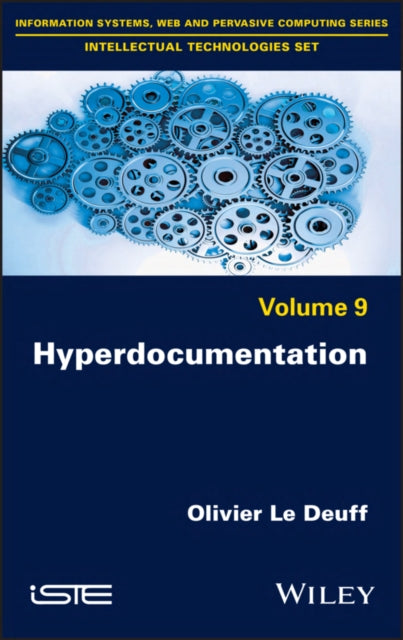
Olivier Le Deuff
Hyperdocumentation
Hyperdocumentation
💎 Earn 589 Points (£5.89) on this item.
We can order this item for you. Delivery usually takes about 4 to 6 weeks.
This item is not held in our immediate stock. We will order it for you after checkout.
Estimated delivery: About 4 to 6 weeks
YOU SAVE £20.00
- Condition: Brand new
- UK Delivery times: Usually arrives within 2 - 3 working days
- UK Shipping: Fee starts at £3.89. Subject to product weight & dimension
Bulk ordering. Want 15 or more copies? Get a personalised quote and bigger discounts. Learn more about bulk orders.
Couldn't load pickup availability
- More about Hyperdocumentation
The term "hyperdocumentation" refers to the paradox of expanding and extending documentation in its functionalities and prerogatives, leading to the hyperdocumentation of lives. Coined by Paul Otlet in 1934, it involves the increasing quantity and scope of information processed, integrating previously poorly documented or undocumented areas.
Format: Hardback
Length: 288 pages
Publication date: 22 October 2021
Publisher: ISTE Ltd
The term "hyperdocumentation" is a hyperbole that appears to encapsulate a paradoxical phenomenon. The central discussions on this subject encompass a wide range of ideas, including those related to data, the allure of Big Data, cloud computing, artificial intelligence, algorithmic processing, the flow of information, and the remarkable achievements of disinformation.
The primary objective of this book is to establish that the current state of documentation represents merely another chapter in the ongoing human construction that has spanned millennia and has accelerated significantly since the end of the 19th century. Coined by Paul Otlet in 1934 in his Traite de Documentation, "hyperdocumentation" refers to the idea of documentation that is continually expanding and extending its functionalities and prerogatives. While, according to Otlet, virtually everything could potentially be documented in this manner, we increasingly observe that our lives are being hyperdocumented.
Hyperdocumentation manifests as a rise in both the quantity and scope of information processed. This phenomenon involves the gradual integration of information across previously poorly documented or entirely undocumented areas. It signifies a shift towards a more comprehensive and interconnected approach to documentation, where information is seamlessly shared and integrated across various domains.
The implications of hyperdocumentation are profound and far-reaching. On the one hand, it enables individuals and organizations to access and utilize a vast array of knowledge and resources, fostering innovation, learning, and progress. On the other hand, it raises concerns about information overload, privacy, and the potential for misinformation to thrive in an environment where vast amounts of data are readily available.
To navigate the complexities of hyperdocumentation, it is essential to adopt a balanced approach. This involves developing effective strategies for managing and organizing information, ensuring the accuracy and reliability of the data, and promoting critical thinking and media literacy to empower individuals to discern between credible and unreliable sources.
Furthermore, hyperdocumentation presents opportunities for new forms of documentation and storytelling. With the rise of digital technologies, we can now create and share information in diverse formats, such as videos, podcasts, interactive infographics, and virtual reality experiences. These new mediums allow for more immersive and engaging ways of documenting and sharing stories, enabling individuals and communities to connect and engage with information in novel and meaningful ways.
In conclusion, hyperdocumentation is a term that captures the paradoxical nature of our increasingly information-driven world. It represents a significant step in the ongoing human construction of documentation, driven by the advancements in technology and the growing demand for knowledge. While hyperdocumentation brings with it immense benefits, it is crucial to approach it with caution, adopting a balanced approach that prioritizes information accuracy, privacy, and critical thinking. By harnessing the potential of hyperdocumentation while addressing its challenges, we can create a more informed and connected society that thrives in the age of information.
Weight: 548g
Dimension: 243 x 166 x 23 (mm)
ISBN-13: 9781786306449
UK and International shipping information
UK and International shipping information
We deliver throughout the United Kingdom and to 128 countries and territories worldwide, including the United States, Australia, Canada, Germany, Spain and France.