Dave Thompson
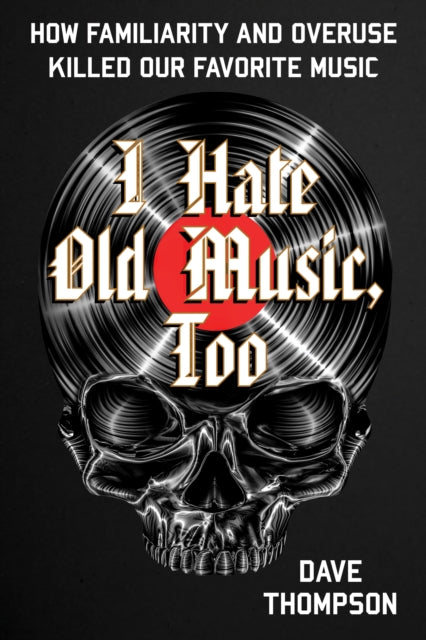
I Hate Old Music, Too: How Familiarity & Overuse Killed Our Favorite Music
I Hate Old Music, Too: How Familiarity & Overuse Killed Our Favorite Music
💎 Earn 84 Points (£0.84) on this item.
We can order this item for you. Delivery usually takes about 4 to 6 weeks.
This item is not held in our immediate stock. We will order it for you after checkout.
Estimated delivery: About 4 to 6 weeks
YOU SAVE £2.19
- Condition: Brand new
- UK Delivery times: Usually arrives within 2 - 3 working days
- UK Shipping: Fee starts at £2.39. Subject to product weight & dimension
Bulk ordering. Want 15 or more copies? Get a personalised quote and bigger discounts. Learn more about bulk orders.
Couldn't load pickup availability
- More about I Hate Old Music, Too: How Familiarity & Overuse Killed Our Favorite Music
Dave Thompson's I Hate New Music: The Classic Rock Manifesto in 2008 sparked debates and divided the world of rock reading. Fifteen years later, much has changed, and the classics have lost some of their bite. Thompson's new book, I Hate Old Music, Too, recasts the story of "classic rock" in the 21st century, targeting lavish box sets, comebacks and reunions, the dark side of the "vinyl revival," and the continued cult of The Beatles.
Format: Paperback / softback
Length: 282 pages
Publication date: 20 February 2024
Publisher: Globe Pequot Press
Edgy, witty, and opinionated, Dave Thompson's "I Hate New Music: The Classic Rock Manifesto" in 2008 shook the world of rock reading, sparking debates and leaving readers divided. With over 150 music books to his name, Thompson's book received the strongest reader response of any he had written, and it continues to be a topic of discussion in author interviews today. However, much has changed in the past fifteen years, and the classics have lost some of their bite. In "I Hate Old Music, Too," Thompson recasts the story of "classic rock" in the 21st century, targeting lavish box sets that duplicate albums, comebacks and reunions featuring fewer band members, the dark side of the "vinyl revival," and the continued cult of The Beatles.
Thompson's book challenges the notion that "classic rock" is a timeless genre that can be enjoyed without any criticism. He argues that the music industry has exploited the nostalgia associated with classic rock to make money, and that many of the bands and artists who were once considered "classic" are now seen as outdated and irrelevant. He also criticizes the way that "classic rock" has been marketed to younger generations, often through nostalgia-driven advertising and merchandise.
One of the key themes of "I Hate Old Music, Too" is the commodification of music. Thompson argues that the music industry has become increasingly focused on making money, and that this has led to a decline in the quality of music. He points to the rise of streaming services, which have made it easier for people to access music, but have also reduced the revenue that artists receive. He also criticizes the way that music is marketed to younger generations, often through nostalgia-driven advertising and merchandise.
Thompson also takes a critical look at the "vinyl revival." While he acknowledges that vinyl has a unique sound and can be a great way to listen to music, he argues that it is not a sustainable format. He points to the environmental impact of producing vinyl, and the fact that it is not accessible to many people. He also criticizes the way that vinyl has been marketed to younger generations, often through nostalgia-driven advertising and merchandise.
Another target of Thompson's criticism is the continued cult of The Beatles. While he acknowledges that The Beatles were a groundbreaking band, he argues that they have been over-exposed and over-commercialized. He points to the fact that The Beatles have been used in countless advertisements, and that their music has been played on countless radio stations. He also criticizes the way that The Beatles have been marketed to younger generations, often through nostalgia-driven advertising and merchandise.
Despite his criticism, Thompson does not completely dismiss "classic rock." He acknowledges that there are still some great bands and artists who are making music today, and that there is still a lot of value in the music that was created in the past. He also argues that "classic rock" can be a valuable tool for teaching students about music history and culture.
However, Thompson believes that the music industry needs to change in order to ensure that "classic rock" remains relevant in the 21st century. He suggests that the music industry should focus on creating new music that is innovative and exciting, rather than relying on nostalgia to sell music. He also suggests that the music industry should be more transparent about its business practices, and that artists should be paid more for their work.
In conclusion, Dave Thompson's "I Hate New Music: The Classic Rock Manifesto" in 2008 shook the world of rock reading, sparking debates and leaving readers divided. While much has changed in the past fifteen years, the classics have lost some of their bite. Thompson's book challenges the notion that "classic rock" is a timeless genre that can be enjoyed without any criticism, and he argues that the music industry has exploited the nostalgia associated with classic rock to make money. He also takes a critical look at the "vinyl revival," the continued cult of The Beatles, and the commodification of music. While he acknowledges that there are still some great bands and artists who are making music today, he believes that the music industry needs to change in order to ensure that "classic rock" remains relevant in the 21st century.
Weight: 445g
Dimension: 229 x 152 x 28 (mm)
ISBN-13: 9781493073511
UK and International shipping information
UK and International shipping information
UK Delivery and returns information:
- Delivery within 2 - 3 days when ordering in the UK.
- Shipping fee for UK customers from £2.39. Fully tracked shipping service available.
- Returns policy: Return within 30 days of receipt for full refund.
International deliveries:
Shulph Ink now ships to Australia, Belgium, Canada, France, Germany, Ireland, Italy, India, Luxembourg Saudi Arabia, Singapore, Spain, Netherlands, New Zealand, United Arab Emirates, United States of America.
- Delivery times: within 5 - 10 days for international orders.
- Shipping fee: charges vary for overseas orders. Only tracked services are available for most international orders. Some countries have untracked shipping options.
- Customs charges: If ordering to addresses outside the United Kingdom, you may or may not incur additional customs and duties fees during local delivery.