Shulph Ink
Imagination in German Idealism and Romanticism
Imagination in German Idealism and Romanticism
💎 Earn 160 Points (£1.60) on this item.
We can order this item for you. Delivery usually takes about 4 to 6 weeks.
This item is not held in our immediate stock. We will order it for you after checkout.
Estimated delivery: About 4 to 6 weeks
YOU SAVE £1.90
- Condition: Brand new
- UK Delivery times: Usually arrives within 2 - 3 working days
- UK Shipping: Fee starts at £2.39. Subject to product weight & dimension
Bulk ordering. Want 15 or more copies? Get a personalised quote and bigger discounts. Learn more about bulk orders.
Couldn't load pickup availability
- More about Imagination in German Idealism and Romanticism
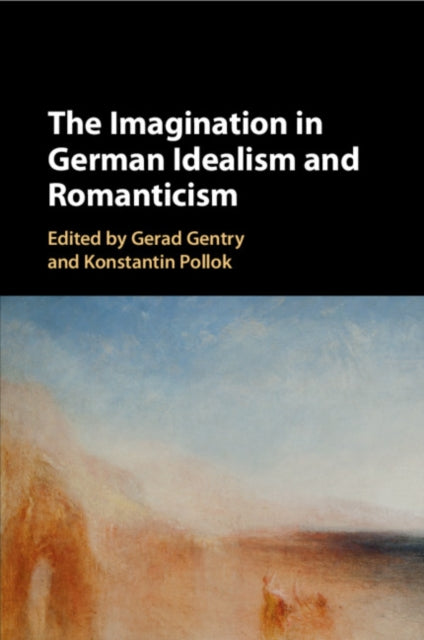
The imagination is essential to German idealism and early German romanticism, and this volume of essays explores its many and varied uses and discusses whether they form a coherent notion or embody points of philosophical divergence.
\n Format: Paperback / softback
\n Length: 279 pages
\n Publication date: 08 April 2021
\n Publisher: Cambridge University Press
\n
For philosophers of German idealism and early German romanticism, the imagination holds a paramount significance in addressing a wide array of philosophical concerns, spanning from hermeneutics to transcendental logic, ethics, and aesthetics. This groundbreaking collection of new essays brings together comprehensive and critical examinations of the profound implications of the imagination during this transformative period. The essays explore the diverse applications of the imagination and delve into the question of whether they constitute a cohesive or shared notion or whether they represent points of philosophical divergence within these traditions. By shedding new light on this enigmatic aspect of human nature, as interpreted within the context of a profoundly influential era of western thought, the essays contribute to a deeper understanding of the human condition.
The significance of the imagination for philosophers of German idealism and early German romanticism cannot be overstated. It serves as a catalyst for their intellectual pursuits, enabling them to delve into the depths of human consciousness, explore the boundaries of knowledge, and grapple with the complexities of existence. The imagination, as envisioned by these thinkers, is not merely a passive tool for creating mental images or narratives but a powerful force that shapes our understanding of the world and influences our moral and ethical decisions.
In the realm of hermeneutics, the imagination plays a crucial role in the interpretation of texts and symbols. Philosophers such as Kant and Hegel argue that the imagination is essential for the understanding of language and meaning. Through the imaginative faculty, we are able to perceive the underlying structures and patterns that give meaning to words and symbols, allowing us to interpret texts in a more profound and nuanced manner. The imagination enables us to connect with the author's intentions and to engage with the text on a personal level, fostering a deeper understanding of its significance.
Furthermore, the imagination is central to the development of transcendental logic. Kant, in particular, emphasizes the role of the imagination in the construction of the transcendental subject, which is the foundation of his philosophical system. Through the imaginative faculty, we are able to transcend the limitations of empirical experience and to access the realm of pure reason, where we can discover the fundamental principles of reality and the nature of consciousness. The imagination allows us to imagine the possibilities of a world beyond our own and to explore the potentialities of human existence.
In the field of ethics, the imagination plays a crucial role in shaping our moral judgments and values. Philosophers such as Kant and Hegel argue that the imagination is capable of inspiring moral virtue and promoting the development of a sense of empathy and compassion. Through the imaginative faculty, we are able to envision the consequences of our actions and to consider the impact they have on others. The imagination enables us to imagine alternative scenarios and to weigh the moral implications of our decisions, leading us to make choices that are more ethical and just.
Similarly, in the realm of aesthetics, the imagination is essential for the appreciation and creation of art. Philosophers such as Kant and Hegel argue that art is not merely a subjective experience but a means of expressing the universal principles of beauty and harmony. Through the imaginative faculty, we are able to perceive the aesthetic qualities of objects and to experience the emotions and ideas that they convey. The imagination enables us to connect with the artist's intentions and to appreciate the beauty and significance of their work.
However, the significance of the imagination for philosophers of German idealism and early German romanticism extends beyond these specific domains. It is a fundamental aspect of human nature that encompasses our capacity for creativity, imagination, and intuition. These thinkers argue that the imagination is not merely a tool for philosophical inquiry but a source of inspiration and wisdom that can guide us in our daily lives. The imagination enables us to envision new possibilities, to overcome obstacles, and to find meaning and purpose in our experiences.
In conclusion, the imagination holds a central place in the philosophical thought of German idealism and early German romanticism. It serves as a catalyst for intellectual inquiry, enabling philosophers to explore the depths of human consciousness, understand the nature of knowledge, and grapple with the complexities of existence. The imagination enables us to interpret texts, construct transcendental subjects, shape moral judgments, appreciate art, and tap into the universal principles of beauty and harmony. Moreover, the imagination is a fundamental aspect of human nature that encompasses our capacity for creativity, imagination, and intuition, providing us with inspiration and wisdom that can guide us in our daily lives. As we continue to engage with the ideas of these thinkers, we can deepen our understanding of the human condition and explore the boundless possibilities of the imagination.
\n Weight: 406g\n
Dimension: 152 x 229 x 19 (mm)\n
ISBN-13: 9781316647868\n \n
UK and International shipping information
UK and International shipping information
UK Delivery and returns information:
- Delivery within 2 - 3 days when ordering in the UK.
- Shipping fee for UK customers from £2.39. Fully tracked shipping service available.
- Returns policy: Return within 30 days of receipt for full refund.
International deliveries:
Shulph Ink now ships to Australia, Belgium, Canada, France, Germany, Ireland, Italy, India, Luxembourg Saudi Arabia, Singapore, Spain, Netherlands, New Zealand, United Arab Emirates, United States of America.
- Delivery times: within 5 - 10 days for international orders.
- Shipping fee: charges vary for overseas orders. Only tracked services are available for most international orders. Some countries have untracked shipping options.
- Customs charges: If ordering to addresses outside the United Kingdom, you may or may not incur additional customs and duties fees during local delivery.