Christopher Exley
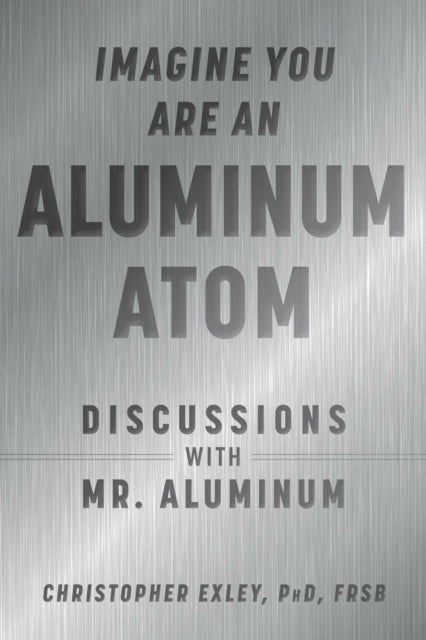
Imagine You Are An Aluminum Atom: Discussions With Mr. Aluminum
Imagine You Are An Aluminum Atom: Discussions With Mr. Aluminum
💎 Earn 60 Points (£0.60) on this item.
YOU SAVE £4.97
- Condition: Brand new
- UK Delivery times: Usually arrives within 2 - 3 working days
- UK Shipping: Fee starts at £2.39. Subject to product weight & dimension
Bulk ordering. Want 15 or more copies? Get a personalised quote and bigger discounts. Learn more about bulk orders.
Couldn't load pickup availability
- More about Imagine You Are An Aluminum Atom: Discussions With Mr. Aluminum
Professor Christopher Exley, a scientist who has dedicated his life to studying aluminum, believes that science is only useful when properly communicated. His book, "Imagine You Are An Aluminum Atom: Discussions With Mr. Aluminum," aims to educate readers about the science of aluminum and its potential dangers to human health, particularly in the context of the "Aluminum Age." The book discusses the abundance and reactivity of aluminum, its lack of biological function, and the adventitious, random, and chaotic encounters with it that we as humans face daily. It also includes personal recollections of events and reflections on how the politics of aluminum have influenced and interfered with scientific research.
Format: Hardback
Length: 176 pages
Publication date: 18 February 2021
Publisher: Skyhorse Publishing
Join Mr. Aluminum, a scientist who has made the study of aluminum his life's work, on a journey of discovery, reflection, and the science of aluminum.
Professor Christopher Exley is a firm believer that science is only useful when it is properly communicated. Scientific papers are difficult vehicles for the wider communication of science, and thus he has always endeavored to tell the story of his scientific research as widely as possible through myriad blogs, presentations, and interviews. Through a series of easy-reading entries written for non-scientists, Exley will educate readers about his lifelong scientific passion: aluminum.
In scientific circles, aluminum—in relation to human health specifically—has gone the way of the dinosaurs (though, unlike dinosaurs, there has not yet been a popular revival!). Yet aluminum is also the greatest untold story of science.
But why do we all need to know a little bit more about aluminum? Do we need a self-help guide for living in what Exley has coined The Aluminum Age? What is it about aluminum that makes it different? What about iron, copper, or any of the so-called heavy metals, like mercury, cadmium, or lead? Why must we pay particular attention to aluminum? Because its bio-geochemistry, its natural history, raises two red flags immediately and simultaneously.
These two danger signals are easily missed by all of us and easily dismissed by those whose interests are conflicted by aluminum's omnipresence in human life and consequently, are purposely blind to its danger signals. First, aluminum, in all of its myriad forms, is super abundant; it is the third most abundant element (after oxygen and silicon) of the Earth's crust. Second, aluminum is super reactive; it is both chemically and biologically reactive.
However, these two red flags are not the only ones that should concern us about aluminum. Aluminum is also a major environmental pollutant, and its production and use have significant impacts on the health of both humans and the environment.
One of the most significant environmental impacts of aluminum is its contribution to acid rain. Aluminum is released into the atmosphere during the production of aluminum oxide, which is used in the production of aluminum products such as aluminum cans, foil, and paint. When these products are exposed to rain, they release aluminum ions, which react with water molecules to form acid rain. Acid rain can have devastating effects on the environment, including damage to trees, crops, and aquatic life.
In addition to its environmental impacts, aluminum is also a human health hazard. Aluminum has been linked to a range of health problems, including Alzheimer's disease, cancer, and kidney disease. Aluminum has been shown to accumulate in the brain and other organs, and it has been linked to the development of Alzheimer's disease. Aluminum has also been linked to the development of cancer, particularly in the lungs and the gastrointestinal tract.
In addition to its environmental and health impacts, aluminum is also a significant economic burden. The production and use of aluminum require large amounts of energy and resources, and they contribute to greenhouse gas emissions. The production of aluminum also requires significant amounts of water, which can be a scarce resource in many parts of the world.
Despite these concerns, aluminum is still widely used in a variety of industries, including the production of cans, foil, and other packaging materials, as well as in the construction industry, where aluminum is used in the production of buildings and vehicles. However, there are efforts underway to reduce the use of aluminum and to find alternative materials that are less harmful to the environment and human health.
One of the most promising alternatives to aluminum is steel. Steel is a stronger and more durable material than aluminum, and it is less expensive to produce. Steel is also recyclable, which means that it can be reused and recycled multiple times, reducing the amount of waste that is produced during the production and use of the material.
In addition to steel, there are a range of other materials that are being developed as alternatives to aluminum. These include biodegradable materials, such as cornstarch and bamboo, as well as materials that are made from recycled materials, such as plastic bottles and paper.
In conclusion, aluminum is a fascinating material that has played a significant role in human history and technology. However, its bio-geochemistry, its natural history, and its environmental and health impacts make it a material that requires careful consideration and management. There are efforts underway to reduce the use of aluminum and to find alternative materials that are less harmful to the environment and human health. By working together, we can ensure that aluminum continues to play a significant role in our world while also protecting the health of both humans and the environment.
Weight: 342g
Dimension: 161 x 236 x 21 (mm)
ISBN-13: 9781510762534
UK and International shipping information
UK and International shipping information
UK Delivery and returns information:
- Delivery within 2 - 3 days when ordering in the UK.
- Shipping fee for UK customers from £2.39. Fully tracked shipping service available.
- Returns policy: Return within 30 days of receipt for full refund.
International deliveries:
Shulph Ink now ships to Australia, Belgium, Canada, France, Germany, Ireland, Italy, India, Luxembourg Saudi Arabia, Singapore, Spain, Netherlands, New Zealand, United Arab Emirates, United States of America.
- Delivery times: within 5 - 10 days for international orders.
- Shipping fee: charges vary for overseas orders. Only tracked services are available for most international orders. Some countries have untracked shipping options.
- Customs charges: If ordering to addresses outside the United Kingdom, you may or may not incur additional customs and duties fees during local delivery.