Shulph Ink
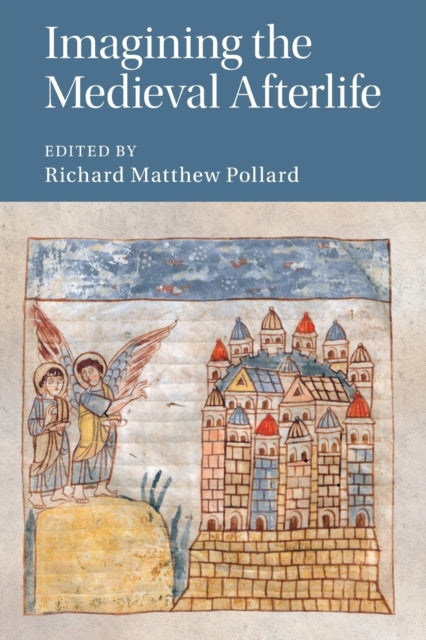
Imagining the Medieval Afterlife
Imagining the Medieval Afterlife
💎 Earn 118 Points (£1.18) on this item.
We can order this item for you. Delivery usually takes about 4 to 6 weeks.
This item is not held in our immediate stock. We will order it for you after checkout.
Estimated delivery: About 4 to 6 weeks
YOU SAVE £1.40
- Condition: Brand new
- UK Delivery times: Usually arrives within 2 - 3 working days
- UK Shipping: Fee starts at £2.39. Subject to product weight & dimension
Bulk ordering. Want 15 or more copies? Get a personalised quote and bigger discounts. Learn more about bulk orders.
Couldn't load pickup availability
- More about Imagining the Medieval Afterlife
This book explores the European Middle Ages' diverse answers to the universal question of where we go after we die, focusing on visions of the afterlife in texts, art, and theology. Contributors from various disciplines offer a new perspective on the afterlives of the early and later Middle Ages, highlighting their importance and imagination.
Format: Paperback / softback
Length: 376 pages
Publication date: 10 November 2022
Publisher: Cambridge University Press
This book delves into the rich tapestry of European Middle Ages, exploring the diverse and evolving responses to the profound question of "Where do we go after we die?" Spanning from ancient times to the sixteenth century, it reflects a multitude of issues and advancements. Focusing on texts that depict visions of the afterlife, alongside art and theology, this volume explores the realms of heaven, hell, and purgatory as they were envisioned across Europe, as well as by renowned authors such as Gregory the Great and Dante. A collaborative effort by a diverse team of contributors, including historians, literary scholars, classicists, art historians, and theologians, this book offers not only a captivating sketch of medieval perceptions but also a much-needed fresh perspective. Contrary to popular belief, the essays presented here reveal that the afterlives of the early and later Middle Ages were far more intricate and imaginative than previously thought.
Where the twelfth century was once considered the pinnacle of the medieval afterlife, the essays in this collection demonstrate that the afterlives of the early and later Middle Ages were far more significant and imaginative than previously believed.
The European Middle Ages witnessed a remarkable exploration of the afterlife, with a rich tapestry of beliefs and visions emerging. From ancient times to the sixteenth century, the Middle Ages evolved to address a wide range of problems and developments, shaping the way people understood the ultimate destination of their souls.
One of the key themes in medieval afterlife discourse was the concept of heaven. Heaven was often portrayed as a place of eternal bliss, where souls would be rewarded for their good deeds and punished for their sins. The idea of heaven was deeply rooted in Christian theology and was influenced by various religious traditions, including Judaism and Islam.
Heaven was often depicted as a place of magnificent beauty, with lush gardens, sparkling rivers, and radiant skies. It was believed that souls would ascend to heaven upon their death, where they would dwell with God and other righteous individuals for all eternity. The inhabitants of heaven were described as joyful and content, living in a state of perfect harmony with the divine.
In contrast to heaven, hell was portrayed as a place of eternal torment and suffering. It was believed that souls would be condemned to hell for their sins, where they would endure unimaginable pain and suffering for all eternity. Hell was often depicted as a fiery pit, with demons and other evil spirits torturing the souls of the damned.
The concept of hell was a powerful tool for moral guidance and control in the Middle Ages. It was used to scare people into behaving properly and to justify the actions of religious authorities. However, some scholars and theologians questioned the fairness and justice of a system that punished people for their sins after they had died.
Purgatory was another important concept in medieval afterlife discourse. Purgatory was believed to be a place where souls would undergo a purification process after their death, cleansing them of their sins and preparing them for heaven. The idea of purgatory was derived from Roman Catholic theology and was often depicted as a place of suffering and torment, where souls would pay for their sins before entering heaven.
Purgatory was a popular concept among medieval Christians, as it offered a way to reconcile the idea of eternal punishment with the idea of a loving and merciful God. It was believed that souls could repent of their sins and be saved from hell by undergoing purification in purgatory.
In addition to visions of heaven, hell, and purgatory, medieval literature and art also played a significant role in shaping the understanding of the afterlife. Works such as Dante's Divine Comedy, which depicted the journey of the soul through hell and purgatory, and the Book of Revelation, which described the ultimate fate of the soul, had a profound impact on medieval thought.
The European Middle Ages were a time of great intellectual and cultural growth, and the question of the afterlife was a central aspect of this period. The diverse and evolving responses to this question reflect the complex and multifaceted nature of medieval society and culture.
In conclusion, this book offers a fascinating exploration of the European Middle Ages' rich tapestry of beliefs and visions of the afterlife. From the concept of heaven to the idea of hell and purgatory, medieval society and culture were deeply invested in understanding the ultimate destination of their souls. Through a cross-disciplinary approach, this book provides a much-needed new perspective on the medieval afterlife, shedding light on the complex and multifaceted nature of this period.
ISBN-13: 9781316630785
UK and International shipping information
UK and International shipping information
UK Delivery and returns information:
- Delivery within 2 - 3 days when ordering in the UK.
- Shipping fee for UK customers from £2.39. Fully tracked shipping service available.
- Returns policy: Return within 30 days of receipt for full refund.
International deliveries:
Shulph Ink now ships to Australia, Belgium, Canada, France, Germany, Ireland, Italy, India, Luxembourg Saudi Arabia, Singapore, Spain, Netherlands, New Zealand, United Arab Emirates, United States of America.
- Delivery times: within 5 - 10 days for international orders.
- Shipping fee: charges vary for overseas orders. Only tracked services are available for most international orders. Some countries have untracked shipping options.
- Customs charges: If ordering to addresses outside the United Kingdom, you may or may not incur additional customs and duties fees during local delivery.