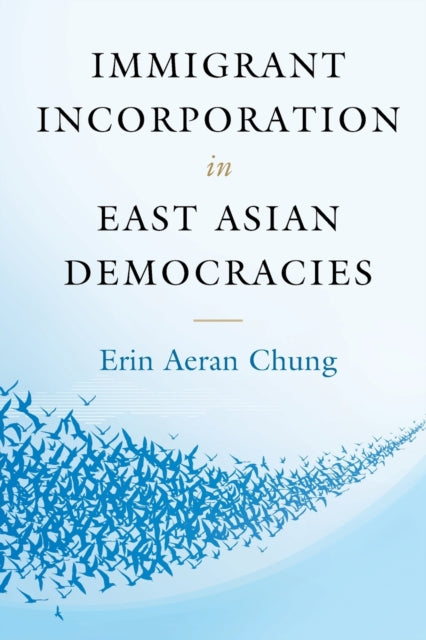
Erin AeranChung
Immigrant Incorporation in East Asian Democracies
Immigrant Incorporation in East Asian Democracies
💎 Earn 160 Points (£1.60) on this item.
We can order this item for you. Delivery usually takes about 4 to 6 weeks.
This item is not held in our immediate stock. We will order it for you after checkout.
Estimated delivery: About 4 to 6 weeks
YOU SAVE £1.90
- Condition: Brand new
- UK Delivery times: Usually arrives within 2 - 3 working days
- UK Shipping: Fee starts at £3.89. Subject to product weight & dimension
Bulk ordering. Want 15 or more copies? Get a personalised quote and bigger discounts. Learn more about bulk orders.
Couldn't load pickup availability
- More about Immigrant Incorporation in East Asian Democracies
This book explores how restrictive immigration policies and exclusionary practices in Japan, South Korea, and Taiwan until the early 2000s led to divergent patterns of immigrant incorporation. It shows how civil society actors, including immigrants themselves, mobilized immigrant actors and shaped public debate and policy on immigration, challenging the dominant scholarship that focuses on culture, domestic political elites, and international norms.
Format: Paperback / softback
Length: 270 pages
Publication date: 08 October 2020
Publisher: Cambridge University Press
Despite facing labor shortages and rapidly shrinking working-age populations, Japan, South Korea, and Taiwan implemented restrictive immigration policies and exclusionary practices towards immigrants until the early 2000s. While Taiwan maintained this trajectory, Japan took incremental steps to expand immigrant services at the grassroots level, and South Korea enacted sweeping immigration reforms. How did convergent policies yield these divergent patterns of immigrant incorporation?
This book departs from the dominant scholarship that focuses on culture, domestic political elites, and international norms, highlighting the significant role of civil society actors, including immigrants themselves, in giving voice to immigrant interests, mobilizing immigrant actors, and shaping public debate and policy on immigration. Drawing from more than 150 in-depth interviews and focus groups with over twenty immigrant communities, Immigrant Incorporation in East Asian Democracies examines how the civic legacies of past struggles for democracy shape current movements for immigrant rights and recognition.
The book explores the complex interplay between national identity, political institutions, and social movements in shaping immigrant incorporation in East Asian democracies. It examines how the legacies of past authoritarian regimes, colonialism, and war influence the current immigration policies and practices in these countries. The book also explores the role of civil society organizations, including immigrant rights groups, in advocating for immigrant rights and promoting social inclusion.
One of the key findings of the book is that the civic legacies of past struggles for democracy play a significant role in shaping current movements for immigrant rights and recognition. For example, the Japanese experience with forced labor during World War II and the subsequent occupation has led to a strong sense of empathy and support for immigrants in Japan. This legacy has contributed to the development of a more inclusive and welcoming society for immigrants.
Similarly, the South Korean experience with civil rights movements and the struggle against authoritarianism has also shaped the country's approach to immigration. The country has enacted policies that prioritize social integration and human rights, and has developed a strong network of civil society organizations that advocate for immigrant rights.
However, the book also notes that the convergence of policies towards more inclusive immigration practices is not always straightforward. Political elites, cultural attitudes, and public opinion can all play a role in shaping immigration policies. For example, in South Korea, the conservative political establishment has been resistant to immigration reforms, while public opinion has been divided on the issue.
The book concludes by suggesting that policymakers and civil society actors need to work together to promote inclusive immigration policies and practices. This requires a nuanced understanding of the complex factors that shape immigration policies and a commitment to promoting social inclusion and human rights for all immigrants.
In conclusion, Immigrant Incorporation in East Asian Democracies provides a valuable contribution to the scholarship on immigration and integration in East Asia. By highlighting the role of civil society actors and the civic legacies of past struggles for democracy, the book offers a new perspective on the complex dynamics of immigrant incorporation in these countries. The book's findings suggest that policymakers and civil society actors need to work together to promote inclusive immigration policies and practices that reflect the values of social inclusion and human rights for all immigrants.
Weight: 428g
Dimension: 153 x 228 x 23 (mm)
ISBN-13: 9781107616967
UK and International shipping information
UK and International shipping information
We deliver throughout the United Kingdom and to 128 countries and territories worldwide, including the United States, Australia, Canada, Germany, Spain and France.