Shulph Ink
Improvement of Plant Production in the Era of Climate Change
Improvement of Plant Production in the Era of Climate Change
💎 Earn 811 Points (£8.11) on this item.
We can order this item for you. Delivery usually takes about 4 to 6 weeks.
This item is not held in our immediate stock. We will order it for you after checkout.
Estimated delivery: About 4 to 6 weeks
YOU SAVE £9.63
- Condition: Brand new
- UK Delivery times: Usually arrives within 2 - 3 working days
- UK Shipping: Fee starts at £2.39. Subject to product weight & dimension
Bulk ordering. Want 15 or more copies? Get a personalised quote and bigger discounts. Learn more about bulk orders.
Couldn't load pickup availability
- More about Improvement of Plant Production in the Era of Climate Change
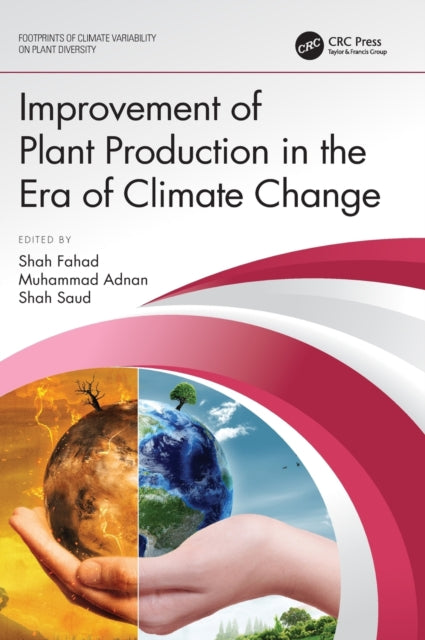
Global food production is unlikely to meet future demands under projected climate change scenarios unless the pace of plant improvement is accelerated. Plant production faces many challenges due to changing environmental conditions and the growing demand for new plant-derived materials. Sustainable food production poses a serious challenge to much of the world, particularly in emerging countries. This underscores the urgent need to find better ways to translate new advances in plant science into concrete successes in agricultural production. Improvement of Plant Production in the Era of Climate Change is a guide to the most advanced techniques that help in understanding plant response to abiotic stress, leading to new horizons and the strategy for the current translation studies application to overall solution to create a powerful production and crop improvement in such an adverse environment.
Format: Hardback
Length: 276 pages
Publication date: 20 July 2022
Publisher: Taylor & Francis Ltd
Current trends in population growth suggest that global food production is unlikely to meet future demands under projected climate change scenarios unless the pace of plant improvement is accelerated. Plant production is facing many challenges due to changing environmental conditions and the growing demand for new plant-derived materials. These challenges come at a time when plant science is making significant progress in understanding the basic processes of plant growth and development. Major abiotic stresses like drought, heat, cold, and salinity often cause a range of morphological, physiological, biochemical, and molecular changes affecting plant growth, development, and productivity; so sustainable food production poses a serious challenge to much of the world, particularly in emerging countries. This underscores the urgent need to find better ways to translate new advances in plant science into concrete successes in agricultural production. In order to overcome the negative effects of abiotic stress and to maintain food security in the face of these challenges, new, improved, and resilient plant varieties, contemporary breeding techniques, and a deep understanding of the mechanisms for offsetting harmful climate change are undoubtedly necessary. In this context, Improvement of Plant Production in the Era of Climate Change is a guide to the most advanced techniques that help in understanding plant response to abiotic stress, leading to new horizons and the strategy for the current translation studies application to overall solution to create a powerful production and crop improvement in such an adverse environment.
Current Trends in Population Growth and the Challenges Facing Plant Production:
The world's population is expected to continue to grow in the coming decades, which will put significant pressure on global food production. According to projections, the demand for food will increase by around 70% by 2050, while the available land and water resources are finite. This mismatch between supply and demand is likely to lead to food insecurity and malnutrition in many parts of the world.
Plant Production Challenges:
Plant production is facing a range of challenges due to changing environmental conditions and the growing demand for new plant-derived materials. These challenges include:
- Abiotic Stress: Abiotic stress, such as drought, heat, cold, and salinity, can have a significant impact on plant growth and productivity. These stresses can cause morphological, physiological, biochemical, and molecular changes in plants, which can reduce their growth and yield.
- Climate Change: Climate change is causing more frequent and severe weather events, such as droughts, floods, and heat waves, which are affecting plant growth and productivity. These events can lead to crop losses and reduced food security.
- Pest and Disease Pressure: Pests and diseases can also have a significant impact on plant growth and productivity. These pests and diseases can spread rapidly and can cause significant damage to crops.
- Limited Land and Water Resources: The availability of land and water resources is limited, which can limit the amount of food that can be produced. This is particularly a problem in developing countries, where land and water resources are often scarce.
Plant Science Advancements:
Despite these challenges, plant science is making significant progress in understanding the basic processes of plant growth and development. This knowledge is helping researchers develop new plant varieties that are more resistant to abiotic stress and climate change. For example, researchers are developing drought-resistant crop varieties that can withstand extreme weather events and reduce crop losses.
Sustainable Food Production:
Sustainable food production is essential to meeting the growing demand for food while minimizing the negative impact on the environment. This includes:
- Improved Breeding Techniques: Breeding techniques can be used to develop new plant varieties that are more resistant to abiotic stress and climate change. These techniques can include genetic engineering, marker-assisted selection, and phenotyping.
- Contemporary Farming Practices: Contemporary farming practices can be used to optimize plant growth and productivity. These practices include precision agriculture, conservation tillage, and crop rotation.
- Climate Change Mitigation: Climate change mitigation measures can be used to offset the negative effects of climate change on plant growth and productivity. These measures include reducing greenhouse gas emissions, promoting sustainable land use practices, and developing new crop varieties that are more resilient to climate change.
- Improved Storage and Transportation: Improved storage and transportation techniques can help to reduce food waste and improve the efficiency of food distribution. This includes developing new packaging materials, improving transportation infrastructure, and developing cold chain management systems.
Conclusion:
Current trends in population growth and climate change are presenting significant challenges to global food production. However, by using advanced plant science techniques and sustainable farming practices, it is possible to overcome these challenges and maintain food security in the face of these challenges. It is essential that governments, researchers, and farmers work together to develop and implement solutions that will help to ensure a sustainable and healthy food supply for future generations.
Weight: 700g
Dimension: 254 x 178 (mm)
ISBN-13: 9781032260716
This item can be found in:
UK and International shipping information
UK and International shipping information
UK Delivery and returns information:
- Delivery within 2 - 3 days when ordering in the UK.
- Shipping fee for UK customers from £2.39. Fully tracked shipping service available.
- Returns policy: Return within 30 days of receipt for full refund.
International deliveries:
Shulph Ink now ships to Australia, Belgium, Canada, France, Germany, Ireland, Italy, India, Luxembourg Saudi Arabia, Singapore, Spain, Netherlands, New Zealand, United Arab Emirates, United States of America.
- Delivery times: within 5 - 10 days for international orders.
- Shipping fee: charges vary for overseas orders. Only tracked services are available for most international orders. Some countries have untracked shipping options.
- Customs charges: If ordering to addresses outside the United Kingdom, you may or may not incur additional customs and duties fees during local delivery.