Shulph Ink
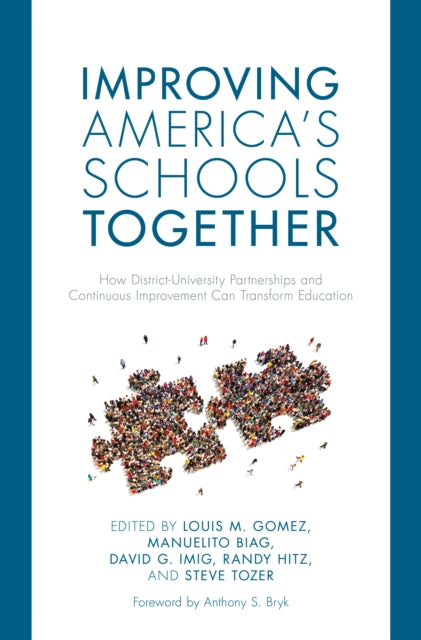
Improving America's Schools Together: How District-University Partnerships and Continuous Improvement Can Transform Education
Improving America's Schools Together: How District-University Partnerships and Continuous Improvement Can Transform Education
💎 Earn 141 Points (£1.41) on this item.
We can order this item for you. Delivery usually takes about 4 to 6 weeks.
This item is not held in our immediate stock. We will order it for you after checkout.
Estimated delivery: About 4 to 6 weeks
YOU SAVE £3.68
- Condition: Brand new
- UK Delivery times: Usually arrives within 2 - 3 working days
- UK Shipping: Fee starts at £2.39. Subject to product weight & dimension
Bulk ordering. Want 15 or more copies? Get a personalised quote and bigger discounts. Learn more about bulk orders.
Couldn't load pickup availability
- More about Improving America's Schools Together: How District-University Partnerships and Continuous Improvement Can Transform Education
Improving Americas Schools Together explores district-university partnerships and continuous improvement, offering practical tools and real-world cases to transform education. It highlights the role of improvement science in fostering leaders and educators and enhancing students' learning and opportunities.
Format: Paperback / softback
Length: 380 pages
Publication date: 05 May 2023
Publisher: Rowman & Littlefield
Improving Americas Schools Together: How District-University Partnerships and Continuous Improvement Can Transform Education is a groundbreaking book that explores the power of continuous improvement in school district-university partnerships. It provides a comprehensive overview of improvement methods, theory, research, and real-world cases from across the United States, offering practical improvement tools that can be applied to any educational setting. Through a series of in-depth stories, the book demonstrates how improvement science, as a shared method, can help universities, districts, and schools develop leaders and educators, and enhance students' learning and opportunities.
The book begins by introducing the concept of continuous improvement and its importance in education. It explains that continuous improvement is a systematic approach to improving processes and outcomes, and that it involves a cycle of planning, doing, studying, and acting. The authors highlight the benefits of continuous improvement, including increased student achievement, improved teacher effectiveness, and better resource allocation.
One of the key themes of the book is the role of district-university partnerships in continuous improvement. The authors argue that these partnerships can provide a unique opportunity for universities to work closely with school districts to improve education. They provide examples of successful partnerships that have led to significant improvements in student outcomes, such as the Partnership for Assessment of Readiness for College and Careers (PARCC) and the National Center for Education Statistics (NCES).
The book also discusses the theory of improvement science, which provides a framework for understanding and implementing improvement. The authors explain that improvement science involves a series of steps, including identifying the problem, developing a theory of change, testing interventions, and evaluating results. They provide examples of how improvement science has been used in education, such as in the development of new teaching strategies and the implementation of school-wide improvement initiatives.
In addition to the theory and practice of improvement science, the book also includes real-world cases of continuous improvement in school district-university partnerships. These cases provide a detailed look at the challenges and successes of these partnerships, and offer insights into how they can be replicated in other settings. The cases include examples from schools in urban, rural, and suburban areas, as well as from different types of schools, such as elementary, middle, and high schools.
One of the challenges that school district-university partnerships face is the need to align their goals and objectives. The authors argue that this alignment is essential for successful improvement, and that it requires a shared understanding of the problem and a commitment to working together. They provide examples of how partnerships have been successful in aligning their goals and objectives, such as through the use of shared data and metrics.
Another challenge that school district-university partnerships face is the need to address the diverse needs of their students. The authors argue that this requires a focus on equity and inclusion, and that it requires a commitment to providing high-quality education to all students. They provide examples of how partnerships have been successful in addressing the diverse needs of their students, such as through the use of culturally responsive teaching strategies and the implementation of school-wide interventions.
In addition to the challenges that school district-university partnerships face, the book also highlights the opportunities that they provide. The authors argue that these partnerships can provide a unique opportunity for universities to conduct research and development, and to share their expertise with school districts. They provide examples of how partnerships have been successful in conducting research and development, such as through the development of new teaching strategies and the implementation of school-wide improvement initiatives.
The book also provides practical improvement tools that can be used by universities, districts, and schools to improve their processes and outcomes. These tools include a variety of improvement methods, such as Lean, Six Sigma, and Design Thinking, as well as a variety of research-based strategies, such as feedback and coaching. The authors provide examples of how these tools have been used in education, and offer tips for how to implement them effectively.
In conclusion, Improving Americas Schools Together: How District-University Partnerships and Continuous Improvement Can Transform Education is a groundbreaking book that explores the power of continuous improvement in school district-university partnerships. It provides a comprehensive overview of improvement methods, theory, research, and real-world cases from across the United States, offering practical improvement tools that can be applied to any educational setting. Through a series of in-depth stories, the book demonstrates how improvement science can help universities, districts, and schools develop leaders and educators, and enhance students' learning and opportunities. Whether you are a teacher, administrator, or policymaker, this book is a must-read for anyone who is interested in improving education.
Weight: 780g
Dimension: 250 x 179 x 22 (mm)
ISBN-13: 9781538173220
UK and International shipping information
UK and International shipping information
UK Delivery and returns information:
- Delivery within 2 - 3 days when ordering in the UK.
- Shipping fee for UK customers from £2.39. Fully tracked shipping service available.
- Returns policy: Return within 30 days of receipt for full refund.
International deliveries:
Shulph Ink now ships to Australia, Belgium, Canada, France, Germany, Ireland, Italy, India, Luxembourg Saudi Arabia, Singapore, Spain, Netherlands, New Zealand, United Arab Emirates, United States of America.
- Delivery times: within 5 - 10 days for international orders.
- Shipping fee: charges vary for overseas orders. Only tracked services are available for most international orders. Some countries have untracked shipping options.
- Customs charges: If ordering to addresses outside the United Kingdom, you may or may not incur additional customs and duties fees during local delivery.