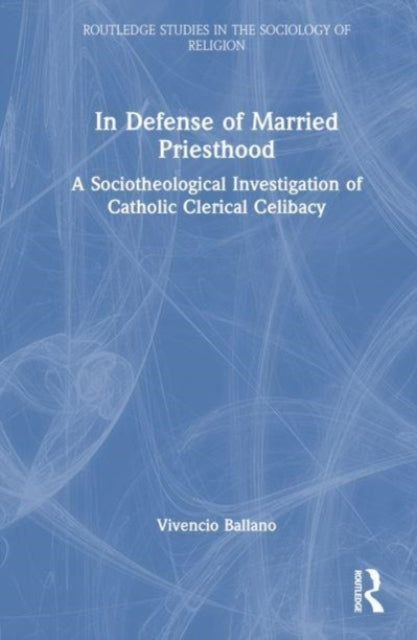
Vivencio O.Ballano
In Defense of Married Priesthood: A Sociotheological Investigation of Catholic Clerical Celibacy
In Defense of Married Priesthood: A Sociotheological Investigation of Catholic Clerical Celibacy
💎 Earn 811 Points (£8.11) on this item.
We can order this item for you. Delivery usually takes about 4 to 6 weeks.
This item is not held in our immediate stock. We will order it for you after checkout.
Estimated delivery: About 4 to 6 weeks
YOU SAVE £9.63
- Condition: Brand new
- UK Delivery times: Usually arrives within 2 - 3 working days
- UK Shipping: Fee starts at £3.89. Subject to product weight & dimension
Bulk ordering. Want 15 or more copies? Get a personalised quote and bigger discounts. Learn more about bulk orders.
Couldn't load pickup availability
- More about In Defense of Married Priesthood: A Sociotheological Investigation of Catholic Clerical Celibacy
This book explores the sociological, historical, and cultural factors behind mandatory clerical celibacy in the Roman Catholic Church and argues that married priesthood has always existed in some form. It suggests that the Roman Catholic Church should permit marriage to the priesthood to address challenges such as sexual abuse, clerical shortages, loneliness, and spiritual sloth.
Format: Hardback
Length: 208 pages
Publication date: 30 August 2023
Publisher: Taylor & Francis Ltd
This comprehensive book delves into the sociological, historical, and cultural underpinnings of mandatory clerical celibacy within the Roman Catholic Church, exploring its detrimental effects on the Catholic priesthood in our modern era. Drawing upon sociological theory, secondary qualitative data, and Church documents, the author argues that married priesthood has historically existed in various forms within the Catholic Church and that the imposition of universal celibacy is a result of cultural and sociological contingencies rather than solid doctrine. The book addresses a range of issues associated with priestly celibacy, including sexual abuse, clerical shortages, loneliness, and spiritual sloth. In Defense of Married Priesthood presents a sociologically informed alternative to prevailing theological perspectives on clerical celibacy, advocating for the allowance of marriage to the priesthood as a means to address the challenges of our time. The author defends the legitimacy of the married priesthood as a suitable way to live the vocation of Catholic priesthood, particularly in the contemporary world. This book will appeal to scholars and students of religion, theology, and sociology, offering a valuable contribution to the ongoing debate on clerical celibacy and its impact on the Catholic Church.
Introduction:
The Roman Catholic Church has maintained a tradition of mandatory clerical celibacy since its founding in the 1st century AD. While this celibacy has been a defining characteristic of the priesthood for centuries, it has also been subject to criticism and debate. This book aims to provide an in-depth analysis of the sociological, historical, and cultural factors that have shaped the practice of clerical celibacy in the Catholic Church and to examine the negative impact of celibacy on the Catholic priesthood in our contemporary age.
Sociological Factors:
Sociological theory provides valuable insights into the factors that have contributed to the persistence of mandatory clerical celibacy. One of the key sociological factors is the role of gender in religious institutions. Historically, religious institutions have been male-dominated, and the priesthood has been no exception. The Church has traditionally viewed celibacy as a way to maintain the purity and holiness of the priesthood, which is seen as essential for the spiritual guidance and leadership of the faithful. However, this view has been challenged by feminist scholars who argue that gender inequality and discrimination are prevalent within religious institutions and that mandatory celibacy perpetuates these problems.
Another sociological factor that has influenced the practice of clerical celibacy is the changing social norms and values regarding marriage and family. In many societies, marriage has become less important and less stable, leading to a decline in the number of people who choose to enter the priesthood. Additionally, the rise of secularism and the increasing acceptance of homosexuality and other forms of sexual orientation have challenged the Church's traditional teachings on sexuality and marriage. These changes have led some priests to question the relevance and effectiveness of mandatory celibacy in the modern world.
Historical Factors:
The history of clerical celibacy in the Catholic Church is complex and multifaceted. While some argue that celibacy has always been a part of the Church's tradition, others suggest that it was introduced during the Middle Ages as a way to control the power and wealth of the clergy. The practice of celibacy was reinforced by the Council of Trent in the 16th century, which declared that priests were not allowed to marry or have children. However, there have been exceptions to this rule.
Cultural Factors:
Cultural factors have also played a significant role in shaping the practice of clerical celibacy. In some cultures, such as India and China, celibacy has been seen as a way to promote spiritual devotion and asceticism, which are considered essential for achieving enlightenment and spiritual growth. In other cultures, such as the United States and Europe, celibacy has been associated with a sense of loneliness and isolation, particularly for priests who are unable to form meaningful relationships with others.
Negative Impact of Celibacy on the Catholic Priesthood:
The negative impact of celibacy on the Catholic priesthood is multifaceted and profound. One of the most significant problems is the issue of sexual abuse. While there have been cases of sexual abuse by priests throughout history, the prevalence of such abuse has increased in recent years. The celibacy requirement has been criticized for creating a culture of secrecy and silence, which makes it difficult for priests to report abuse and for the Church to address it effectively. Additionally, the celibacy requirement has been linked to a higher risk of depression and other mental health problems among priests, which can have a negative impact on their ability to provide spiritual guidance and support to the faithful.
Another problem associated with celibacy is the issue of clerical shortages. As the number of priests declines, particularly in developed countries, the Church is struggling to provide adequate spiritual guidance and support to the faithful. This has led to longer waiting times for confession and other sacramental services, as well as a shortage of priests to serve in rural and remote areas. Additionally, the celibacy requirement has been criticized for creating a culture of entitlement and privilege among priests, which can lead to a lack of accountability and transparency in their dealings with the Church and the faithful.
Conclusion:
In conclusion, this book offers an analysis of the sociological, historical, and cultural factors that lie behind mandatory clerical celibacy in the Roman Catholic Church and examines the negative impact of celibacy on the Catholic priesthood in our contemporary age. Drawing on sociological theory and secondary qualitative data, together with Church documents, it contends that married priesthood has always existed in some form in the Catholic Church and that mandatory universal celibacy is the product of cultural and sociological contingencies, rather than sound doctrine. With attention to a range of problems associated with priestly celibacy, including sexual abuse, clerical shortages, loneliness, and spiritual sloth, In Defense of Married Priesthood argues that the Roman Catholic Church should permit marriage to the priesthood in order to respond to the challenges of our age. Presenting a sociologically informed alternative to the popular theological perspectives on clerical celibacy, this book defends the notion of the married priesthood as legitimate means of living the vocation of Catholic priesthood—one which is eminently fitting for the contemporary world. It will therefore appeal to scholars and students of religion, theology, and sociology.
Weight: 580g
Dimension: 234 x 156 (mm)
ISBN-13: 9781032558868
UK and International shipping information
UK and International shipping information
We deliver throughout the United Kingdom and to 128 countries and territories worldwide, including the United States, Australia, Canada, Germany, Spain and France.