Ellen J.Ravndal
In the Beginning: Secretary-General Trygve Lie and the Establishment of the United Nations
In the Beginning: Secretary-General Trygve Lie and the Establishment of the United Nations
💎 Earn 351 Points (£3.51) on this item.
YOU SAVE £14.79
- Condition: Brand new
- UK Delivery times: Usually arrives within 2 - 3 working days
- UK Shipping: Fee starts at £2.39. Subject to product weight & dimension
Bulk ordering. Want 15 or more copies? Get a personalised quote and bigger discounts. Learn more about bulk orders.
Couldn't load pickup availability
- More about In the Beginning: Secretary-General Trygve Lie and the Establishment of the United Nations
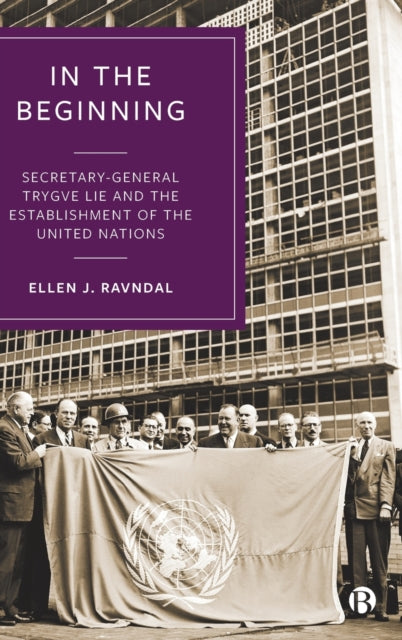
This book reviews the formative years of the United Nations (UN) under its first Secretary-General Trygve Lie, highlighting his greater contribution and the interplay of crisis decision-making, institutional constraints, and individuals involved in building the foundations for the UN organization. It also addresses wider questions of IGO creation, governance, and autonomy.
Format: Hardback
Length: 204 pages
Publication date: 24 January 2023
Publisher: Bristol University Press
This comprehensive book delves into the formative years of the United Nations (UN) under the leadership of its first Secretary-General, Trygve Lie. Through a detailed examination, it emerges that Lie's contribution to the organization was far more significant than previously recognized. The book explores the intricate interplay between crisis decision-making, institutional constraints, and the individuals involved, which laid the groundwork for the UN organization we know today. By addressing critical broader questions about the creation, governance, and autonomy of international organizations (IGOs), this insightful account provides a profound understanding of how the UN transitioned from mere paper to practical implementation under Lie's guidance.
The book begins by providing an overview of the political context in which the UN was established, highlighting the challenges and opportunities that faced the organization in its early years. Lie's appointment as Secretary-General was seen as a crucial step in shaping the UN's future, and the book examines his leadership style, decision-making processes, and the impact he had on the organization.
One of the key themes of the book is the expansion of the Secretary-General's role. Lie recognized the need for a more proactive and assertive Secretary-General who could navigate the complex political landscape and respond to emerging crises. He worked to strengthen the UN's capacity to act and make a difference in the world, advocating for a more decentralized and flexible organization.
The book also explores the challenges Lie faced during his tenure. One of the most significant was the Cold War, which posed a threat to international peace and security. Lie worked tirelessly to promote diplomacy and prevent conflict, but he also faced resistance from some member states who were more interested in pursuing their own national interests.
Another challenge was the need to establish a viable organizational structure and bureaucracy within the UN. Lie recognized the importance of efficient and effective administration, but he faced resistance from some who believed that the organization should be more focused on its humanitarian and developmental goals.
Despite these challenges, Lie's leadership was instrumental in shaping the UN's early development. He worked to establish a culture of professionalism and accountability within the organization, promoting a sense of unity and cooperation among its members. He also played a key role in developing the UN's Charter, which laid the foundation for its operations and principles.
In conclusion, this book provides a valuable insight into the formative years of the United Nations under the leadership of Trygve Lie. It demonstrates how the foundations for an expanded Secretary-General role were laid during this period, and how Lie's contribution was greater than has been acknowledged. The book explores the interplay of crisis decision-making, institutional constraints, and the individuals involved, which built the foundations for the UN organization we know today. By addressing critical broader questions about the creation, governance, and autonomy of international organizations, this insightful account provides a profound understanding of how the UN transitioned from mere paper to practical implementation under Lie's guidance.
Dimension: 234 x 156 (mm)
ISBN-13: 9781529210439
UK and International shipping information
UK and International shipping information
UK Delivery and returns information:
- Delivery within 2 - 3 days when ordering in the UK.
- Shipping fee for UK customers from £2.39. Fully tracked shipping service available.
- Returns policy: Return within 30 days of receipt for full refund.
International deliveries:
Shulph Ink now ships to Australia, Belgium, Canada, France, Germany, Ireland, Italy, India, Luxembourg Saudi Arabia, Singapore, Spain, Netherlands, New Zealand, United Arab Emirates, United States of America.
- Delivery times: within 5 - 10 days for international orders.
- Shipping fee: charges vary for overseas orders. Only tracked services are available for most international orders. Some countries have untracked shipping options.
- Customs charges: If ordering to addresses outside the United Kingdom, you may or may not incur additional customs and duties fees during local delivery.